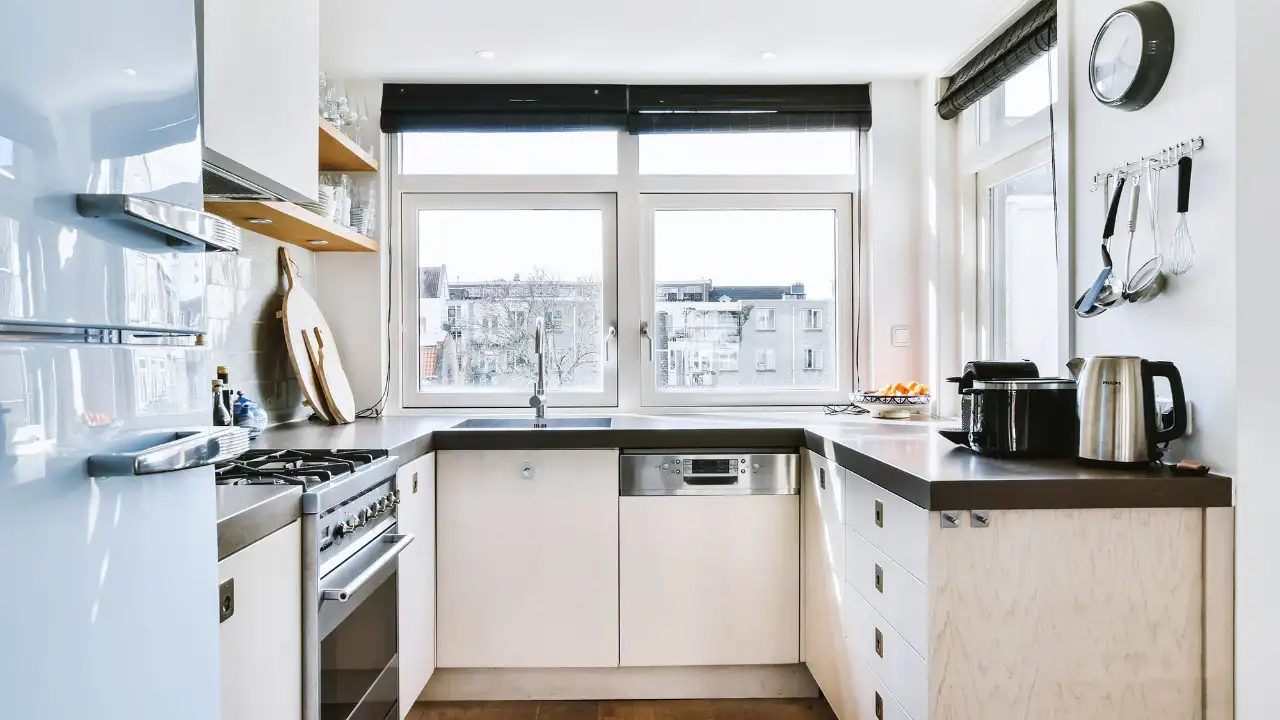
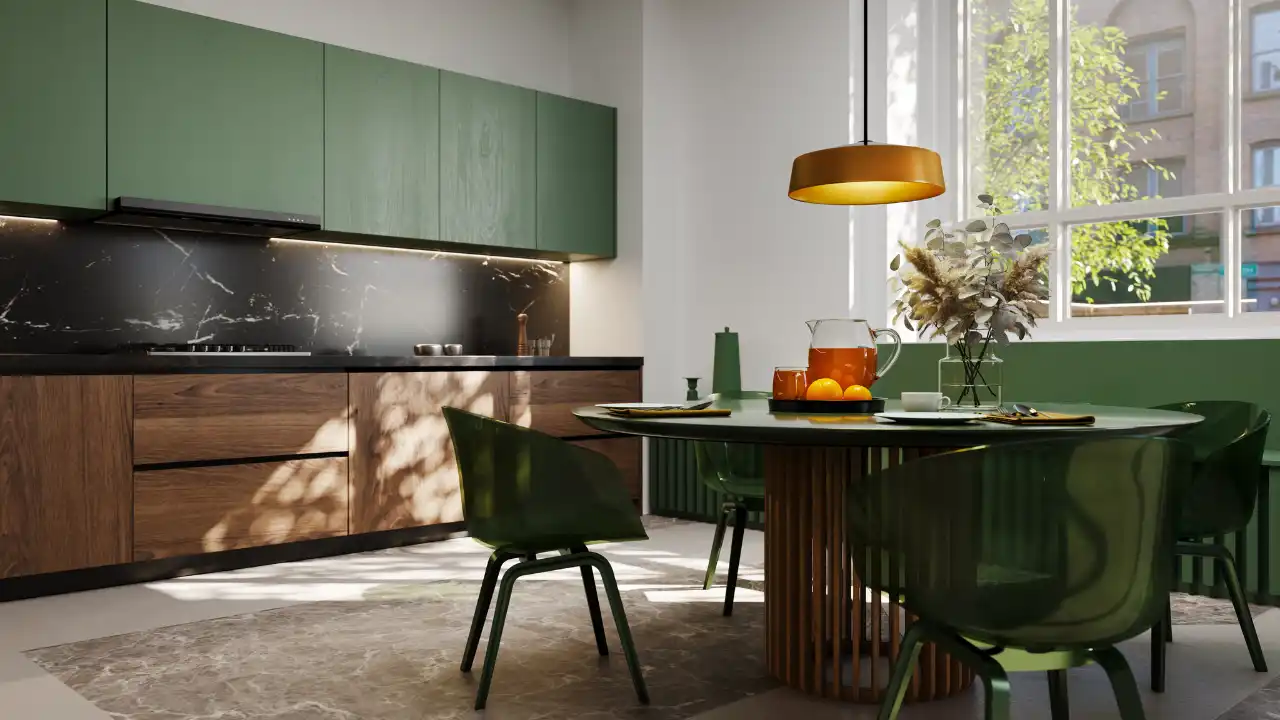
A small kitchen does not necessarily need more square footage. In many cases, it needs a better storage system.
When cabinets are crowded, countertops become dumping grounds, pantry items disappear behind one another, and awkward corners go unused. The result is a kitchen that feels smaller and harder to work in than it actually is.
The good news is that even a compact kitchen can become significantly more functional without a complete renovation. The key is to use storage space more intentionally. Walls, cabinet doors, deep drawers, corners, narrow gaps, and even the space beneath cabinets can all contribute to a better-organized kitchen.
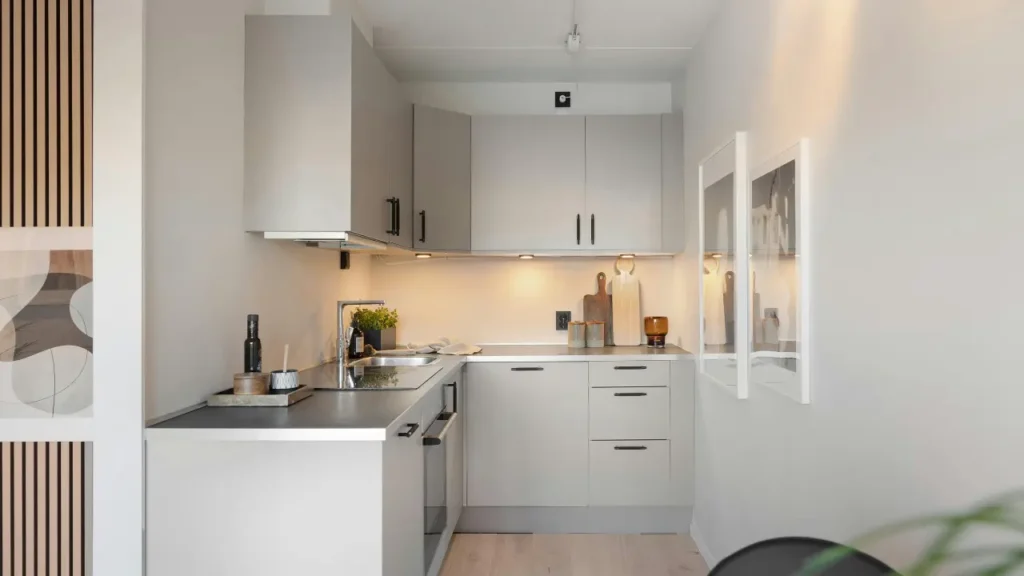
These small kitchen storage ideas cover practical solutions for cabinets, pantries, drawers, countertops, walls, apartments, and different kitchen layouts. Some require only inexpensive organizers, while others work best during a remodel.
What Makes Small Kitchen Storage Difficult?
Before adding storage products, it helps to understand why small kitchens become cluttered in the first place.
Limited Cabinet Space
Small kitchens often have fewer cabinets, but the bigger problem can be inefficient cabinet interiors. Tall shelves may leave unused vertical space, while deep cabinets can cause smaller items to disappear toward the back.
Shelf risers, pull-out organizers, and stackable containers can make the same cabinet considerably more useful.
Crowded Countertops
Countertops are valuable work surfaces, yet they often become permanent storage for coffee makers, toasters, cutting boards, utensils, food containers, and other everyday items.
Keeping frequently used items accessible is practical, but everything does not need to live on the counter.
Awkward Corners
Corner cabinets can be difficult to reach, particularly when they are deep. Narrow spaces beside refrigerators or cabinets can also become wasted gaps.
These areas need specialized solutions rather than ordinary shelves.
Lack of Pantry Space
Many small kitchens do not have a traditional walk-in or built-in pantry. Dry goods may end up scattered across several cabinets, making it difficult to see what is available.
A combination of pull-out storage, bins, and vertical organizers can create a pantry-like system without requiring a separate room.
Too Much Stuff for the Available Space
Sometimes the problem is not insufficient storage. It is simply too many items.
Duplicate utensils, rarely used appliances, excess cookware, and mismatched food containers can quickly consume the storage capacity of a small kitchen.
Before buying another organizer, take a close look at what you actually use.
25 Best Small Kitchen Storage Ideas for 2026
The best storage solution depends on your kitchen layout, cooking habits, available space, and budget. The following ideas cover everything from simple organization changes to built-in remodeling options.
1. Use the Inside of Cabinet Doors
The inside of a cabinet door is often completely unused.
A slim door-mounted organizer can hold measuring cups, spice packets, cleaning supplies, pot lids, or other lightweight items.
For shallow cabinets, choose a low-profile organizer that will not interfere with shelves when the door closes.
Practical tip: Measure the door and the clearance behind it before installing anything. A few inches of extra depth can determine whether the organizer works properly.
2. Install a Pull-Out Pantry
A narrow gap between cabinets or appliances can sometimes be transformed into useful pantry storage with a pull-out unit.
These slim cabinets are especially useful for:
- Canned goods
- Spices
- Cooking oils
- Sauces
- Pasta
- Packaged foods
Instead of reaching into a deep cabinet, you can pull the entire storage column forward and see its contents at once.
3. Maximize Vertical Cabinet Space
Many kitchen shelves have unused space above the items sitting on them.
Shelf risers and stackable organizers allow you to create multiple storage levels inside a single cabinet.
For example, plates can occupy the lower level while smaller bowls or cups sit above them.
Adjustable shelves are even more useful because they let you customize the interior based on the height of the items you actually store.
4. Add a Magnetic Knife Strip
A magnetic knife strip can free valuable drawer space while keeping frequently used knives accessible.
It works particularly well when countertop space is limited and there is an appropriate wall area away from children and high-traffic zones.
If you rent, look for mounting options that comply with your lease and avoid damaging the wall.
5. Use Wall-Mounted Shelves
When floor and cabinet space are limited, look upward.
Wall-mounted shelves can store:
- Everyday dishes
- Mugs
- Glassware
- Cookbooks
- Small containers
- Decorative kitchen pieces
Open shelving can also make a compact kitchen feel more visually open, but avoid filling every shelf. A small amount of breathing room helps prevent the wall from looking crowded.
6. Install a Pegboard Kitchen Organizer
A pegboard turns an empty wall into flexible storage.
Hooks and accessories can hold utensils, pans, cutting boards, measuring tools, and other lightweight kitchen equipment.
One advantage is flexibility. You can move the hooks as your storage needs change.
For a rental kitchen, removable or freestanding alternatives may be more appropriate than permanently mounted systems.
7. Add a Rolling Kitchen Cart
A rolling kitchen cart can provide both storage and additional workspace.
Use one for:
- Produce
- Cookbooks
- Appliances
- Baking supplies
- Pantry overflow
- Frequently used cookware
The biggest advantage is flexibility. You can move the cart when you need additional floor space or reposition it near your prep area.
8. Use Drawer Dividers
A drawer without compartments can quickly become a tangled collection of utensils.
Adjustable drawer dividers create separate zones for:
- Cooking utensils
- Measuring tools
- Cutlery
- Kitchen gadgets
- Serving pieces
Keep frequently used tools toward the front and less frequently used items toward the back.
9. Try Deep Drawer Storage for Pots and Pans
Deep drawers can be particularly useful for cookware.
Instead of stacking every pot and pan inside one another, use vertical dividers or racks where appropriate. This makes individual pieces easier to remove without disturbing everything else.
Pot lids can also be stored vertically if the drawer has enough height.
10. Use a Lazy Susan for Corner Cabinets
A Lazy Susan can make difficult corner storage much easier to access.
Use one for items such as:
- Cooking oils
- Sauces
- Canned foods
- Baking ingredients
- Small appliances
The rotating platform brings items from the back toward you, reducing the need to reach deep inside the cabinet.
11. Turn the Space Above Cabinets Into Storage
The space above upper cabinets can be useful for items you do not need every day.
Attractive baskets can hold:
- Seasonal kitchenware
- Serving pieces
- Extra linens
- Special-occasion items
However, avoid turning the top of the cabinets into a collection of random objects. Too much visual clutter can make a small kitchen feel even smaller.
12. Add Under-Sink Storage
The area beneath the sink is often awkward because of plumbing, but it can still become useful.
Try:
- Sliding bins
- Stackable shelves
- Cleaning-product caddies
- Door-mounted organizers
- Small pull-out drawers
Group cleaning products by purpose and keep potentially hazardous products away from children.
13. Use the Side of a Cabinet
The side of a cabinet can provide surprisingly useful storage when it is visible and accessible.
Depending on the available width, you could add:
- Narrow shelves
- Hooks
- Magnetic organizers
- Spice racks
- Kitchen towel holders
This works particularly well beside refrigerators, tall pantry cabinets, or exposed cabinet ends.
14. Install an Over-the-Sink Cutting Board
When counter space is extremely limited, an over-the-sink cutting board can temporarily extend the available prep surface.
It is especially useful in compact apartments and narrow kitchens.
Choose one that fits securely across your sink and does not interfere with the faucet or sink controls.
When you finish preparing food, simply remove it to restore access to the sink.
15. Use Stackable Food Containers
Uniform containers can make pantry and cabinet storage easier to manage.
Stackable containers use vertical space efficiently and can make it easier to see what you have.
Clear containers can be particularly useful for dry foods when appropriate, while labels can help distinguish similar ingredients.
Choose container sizes based on the actual shelves rather than buying a large set first and trying to make it fit later.
16. Create a Dedicated Spice Drawer
Spices can consume surprising amounts of cabinet space when they are stored randomly.
A shallow drawer can provide a convenient spice station.
Arrange containers so labels are visible from above. Group everyday spices together and place less frequently used varieties toward the back.
This is often easier to maintain than keeping dozens of spice jars scattered across several cabinets.
17. Use Hooks Under Cabinets
The underside of cabinets can provide storage without taking up additional floor space.
Small hooks can hold:
- Mugs
- Measuring cups
- Kitchen towels
- Lightweight utensils
Use this idea selectively. Too many hanging objects can make the kitchen look busy.
18. Add a Narrow Rolling Storage Tower
A slim rolling tower can make use of a narrow gap between appliances, cabinets, or walls.
These towers are useful for:
- Spices
- Canned goods
- Snacks
- Bottles
- Pantry overflow
Measure the gap carefully before purchasing one. Also check that there is enough clearance to pull the unit completely out.
19. Install Toe-Kick Drawers
The space beneath lower cabinets is usually overlooked.
During a remodel, toe-kick drawers can convert some of this hidden area into storage for flat or infrequently used items.
Good candidates include:
- Baking sheets
- Serving trays
- Placemats
- Cutting boards
- Extra linens
This is a more renovation-intensive solution, but it can add storage without changing the visible footprint of the kitchen.
20. Use a Fold-Down or Folding Table
A fixed dining table can consume valuable floor space in a tiny kitchen.
A wall-mounted folding table can provide temporary dining or preparation space and then fold away when it is no longer needed.
This can be especially useful in studio apartments and very narrow kitchens.
21. Choose Multi-Functional Kitchenware
Storage problems are often easier to solve when fewer items are required.
Consider:
- Nesting bowls
- Stackable cookware
- Collapsible colanders
- Multi-purpose appliances
- Measuring tools with compact storage
- Folding kitchen accessories
The goal is not to buy more “space-saving” products. It is to reduce the amount of physical space your kitchen equipment requires.
22. Use Corner Shelving
An unused kitchen corner can become functional with a small shelving system.
Corner shelves can hold:
- Mugs
- Small dishes
- Cookbooks
- Plants
- Decorative containers
If the kitchen already contains many open surfaces, choose a simple design that complements the existing cabinetry rather than adding visual noise.
23. Create a Coffee Station Inside a Cabinet
Coffee equipment can quickly dominate a small countertop.
If possible, create a dedicated coffee station inside a cabinet or appliance garage.
Keep together:
- Coffee maker
- Coffee beans or grounds
- Filters
- Mugs
- Spoons
- Sweeteners
When the station is not being used, the doors can close and visually hide the equipment.
24. Use Bins to Group Similar Items
Storage bins work best when they have a clear purpose.
Create categories such as:
- Baking supplies
- Snacks
- Breakfast foods
- Cooking oils
- Cleaning supplies
- Food storage accessories
Instead of placing unrelated items into the same basket, give each bin a specific job.
This makes both organizing and restocking easier.
25. Declutter Before Adding More Storage
This may be the most important idea on the list.
More organizers cannot solve an overcrowding problem if the kitchen contains too many rarely used items.
Start by removing:
- Duplicate utensils
- Broken cookware
- Expired food
- Appliances you rarely use
- Containers without matching lids
- Items that belong somewhere else
Once you know what actually needs to be stored, it becomes much easier to choose the right organizers.
Small Kitchen Cabinet Storage Ideas
Cabinets should be treated as storage zones rather than empty boxes where everything gets placed randomly.
Use Shelf Risers
Shelf risers create additional levels inside tall cabinets.
They are particularly useful for plates, bowls, mugs, cans, and smaller food containers.
Add Pull-Out Cabinet Organizers
Pull-out organizers can make deep cabinets easier to access.
Instead of reaching around items at the front, you can pull the storage section toward you.
Install Cabinet Door Racks
The inside of a cabinet door can hold lightweight items such as spices, wraps, cleaning supplies, or small kitchen tools.
Always check the door clearance before installation.
Use Stackable Bins
Stackable bins can separate categories and make vertical space more useful.
Use them for snacks, baking ingredients, packets, or smaller pantry products.
Create Zones Inside Cabinets
A simple zoning system makes everyday organization easier.
For example:
- Cooking: Pots, pans, oils, and utensils
- Baking: Flour, sugar, baking tools, and supplies
- Breakfast: Cereal, coffee, tea, and breakfast items
- Food storage: Containers, wraps, and bags
- Cleaning: Sponges, cloths, and cleaning products
Store the things you use together as close together as practical.
Small Kitchen Pantry Storage Ideas
A small kitchen can function well even without a traditional pantry.
Use Clear Storage Containers
Clear containers make dry goods easier to see and can create a more consistent pantry appearance.
Do not transfer every food product automatically, though. Keep original packaging when it provides important preparation, allergy, or expiration information.
Add Adjustable Pantry Shelves
Adjustable shelves let you change the configuration as your storage needs evolve.
Tall bottles may need more vertical clearance, while cans and small packages can use shorter shelf spacing.
Install Pull-Out Pantry Shelving
Pull-out shelves are especially useful for deep pantry cabinets.
They allow you to bring stored items forward instead of reaching into a dark, crowded cabinet.
Use Door-Mounted Pantry Storage
The pantry door can become useful storage for lightweight items.
Try slim racks for spices, packets, wraps, or small jars.
Organize Food by Category
A simple pantry system might look like:
Breakfast → Snacks → Baking → Canned Goods → Pasta & Grains
You can adjust the categories according to your household’s eating and cooking habits.
Small Kitchen Countertop Storage Ideas
A useful countertop should support cooking rather than become permanent storage.
Keep Only Everyday Appliances Out
If you use a coffee maker every morning, keeping it accessible makes sense.
An appliance used once every few weeks may deserve cabinet storage instead.
Use a Tiered Countertop Organizer
Tiered organizers can make use of vertical space for spices, oils, coffee supplies, or small cooking tools.
Create a Small Appliance Zone
Instead of scattering appliances across the kitchen, give them a defined area.
This makes the countertop easier to clean and visually calmer.
Use a Decorative Tray for Frequently Used Items
A tray can group oils, salt, pepper, or other daily-use items.
It also makes it easier to move several objects when you need more prep space.
Store Vertically Instead of Horizontally
Where practical, use vertical racks for cutting boards, baking sheets, trays, and similar items.
This can make cabinets and counters easier to navigate.
The countertop should support the kitchen—not become the kitchen’s storage room.
Small Kitchen Drawer Organization Ideas
Drawers are extremely valuable in compact kitchens because they make stored items easy to see and access.
Use Adjustable Drawer Dividers
Create dedicated sections instead of allowing utensils to mix together.
Create a Dedicated Utensil Drawer
Group everyday utensils such as spatulas, serving spoons, tongs, and whisks.
Organize Cooking Tools by Frequency of Use
Place the tools you reach for every day in the easiest-to-access section.
Less frequently used gadgets can go deeper or into another drawer.
Store Lids Vertically
If drawer height allows it, vertical dividers can keep cookware lids organized.
This is often easier than creating a tall, unstable stack.
Use Shallow Drawers for Small Items
Shallow drawers work well for:
- Measuring spoons
- Clips
- Kitchen towels
- Small gadgets
- Food-storage accessories
Small Kitchen Wall Storage Ideas
Walls can provide some of the most useful additional storage because they do not consume valuable floor space.
Floating Shelves
Use them for everyday dishes, mugs, or attractive containers.
Magnetic Storage
Magnetic systems can hold knives and certain metal kitchen accessories.
Pegboards
Pegboards provide flexible storage for utensils, pans, and tools.
Rail Systems With Hooks
A wall rail can hold lightweight utensils, towels, or small baskets.
Wall-Mounted Spice Racks
A compact spice rack can keep frequently used spices visible without occupying a drawer.
Hanging Baskets
Hanging baskets can provide extra storage for produce, towels, or lightweight kitchen supplies.
The key is to use vertical storage selectively. A wall packed with shelves and objects can solve one problem while creating another: visual clutter.
Small Kitchen Storage Ideas Without Cabinets
Not every kitchen has enough built-in cabinetry. Fortunately, you can create storage with furniture and wall-mounted solutions.
Consider:
- Rolling carts
- Freestanding shelves
- Open shelving
- Wall rails
- Pegboards
- Storage benches
- Narrow shelving towers
- Under-table baskets
- Decorative baskets
- Mobile kitchen islands
A freestanding piece is particularly useful in a rental because it can provide storage without permanently changing the kitchen.
Choose furniture based on the available floor width and walking clearance rather than simply choosing the largest unit that fits.
Small Apartment Kitchen Storage Ideas
Apartment kitchens often have limited cabinets, narrow layouts, and restrictions on permanent modifications.
Use Removable Organizers
Look for organizers that can be installed without permanent alterations when your lease requires it.
Maximize Vertical Walls
A suitable wall-mounted or freestanding system can provide additional storage without expanding the kitchen footprint.
Choose Portable Storage
Rolling carts and freestanding shelving can move with you if you relocate.
Use Over-the-Door Organizers
Doors can provide additional storage for lightweight kitchen supplies.
Choose Furniture With Hidden Storage
A small bench, cart, or table with integrated storage can serve more than one purpose.
Avoid Permanent Renovations When Renting
Before drilling, mounting, or modifying cabinets, check your rental agreement.
For renters, flexible storage often provides a better long-term solution than a permanent installation.
Small Kitchen Storage Ideas on a Budget
You do not need an expensive kitchen remodel to make a small kitchen more organized.
| Storage Solution | Budget Level | Best For |
|---|---|---|
| Drawer dividers | Low | Utensils |
| Adhesive hooks | Low | Small tools |
| Shelf risers | Low | Cabinets |
| Baskets | Low | Pantry |
| Magnetic strip | Low–Medium | Knives |
| Rolling cart | Medium | Extra storage |
| Pull-out organizer | Medium | Cabinets |
| Custom cabinetry | High | Major remodel |
Start with inexpensive improvements before investing in built-in storage.
For example, reorganizing a cabinet and adding a shelf riser may solve a problem that initially appeared to require new cabinetry.
Small Kitchen Storage Ideas for Different Kitchen Layouts
Different layouts create different storage challenges.
| Kitchen Layout | Best Storage Solutions |
|---|---|
| Galley kitchen | Vertical storage, pull-outs, wall rails |
| One-wall kitchen | Open shelving, rolling carts, upper cabinets |
| L-shaped kitchen | Corner storage, Lazy Susans, cabinet organizers |
| U-shaped kitchen | Drawer systems, corner cabinets, vertical storage |
| Apartment kitchen | Portable carts, removable organizers, wall storage |
| Tiny kitchen | Multi-functional furniture, fold-down surfaces, vertical storage |
Galley Kitchens
Keep walkways clear and favor slim pull-outs, wall storage, and vertical organization.
One-Wall Kitchens
Use the wall above the counter and consider a rolling cart for additional storage.
L-Shaped Kitchens
Make corner cabinets more accessible with rotating or pull-out storage.
U-Shaped Kitchens
Use drawer systems and carefully planned corner storage so that every section remains accessible.
Tiny Kitchens
Prioritize multi-functional furniture and storage that uses vertical or hidden space without reducing movement.
How to Organize a Small Kitchen Step by Step
A successful organization system starts with what you already own.
Step 1 — Remove Everything You Rarely Use
Take out items that are broken, duplicated, expired, or almost never used.
Do not organize clutter before deciding whether the clutter deserves storage space.
Step 2 — Measure Available Storage
Measure:
- Cabinet width
- Cabinet depth
- Shelf height
- Drawer dimensions
- Narrow gaps
- Wall areas
- Under-sink clearance
Accurate measurements prevent wasted purchases.
Step 3 — Group Similar Items
Put similar things together.
For example, collect all baking supplies in one area instead of storing flour in one cabinet, measuring tools in another, and baking trays somewhere else.
Step 4 — Create Kitchen Zones
Think about how you move through the kitchen.
Create practical zones for:
- Food preparation
- Cooking
- Baking
- Cleaning
- Food storage
- Breakfast or coffee
Step 5 — Store Frequently Used Items at Eye Level
Everyday items should generally be easier to reach than occasional items.
Keep special-occasion serving dishes or seasonal equipment in less accessible areas.
Step 6 — Use Vertical and Hidden Space
Look at:
- Walls
- Cabinet doors
- Cabinet sides
- Under-sink areas
- Toe-kick spaces
- Narrow gaps
- Space above cabinets
Step 7 — Add Organizers Only Where Needed
Do not buy a dozen organizers simply because they look useful.
Identify a specific problem first, then choose the organizer that solves it.
Step 8 — Maintain the System
Storage only works when the system remains easy to use.
If returning an item to its proper location feels difficult, the system may need to be simplified.
How to Make a Small Kitchen Look Less Cluttered
Storage capacity and visual organization are not exactly the same thing.
A kitchen can have plenty of storage and still look messy if too many items are visible.
Reduce Countertop Items
Keep only the appliances and objects you use frequently.
Use Matching Containers
A consistent group of containers can create a cleaner visual appearance, particularly in open pantry storage.
Avoid Too Many Open Shelves
Open shelves are useful, but every visible shelf requires maintenance.
Use them for attractive or frequently used items rather than everything you own.
Keep Similar Items Together
Grouping similar objects makes the kitchen look more intentional and makes things easier to find.
Choose a Consistent Color Palette
A limited palette can make visible storage feel calmer.
Hide Visually Messy Supplies
Cleaning products, excess packaging, and miscellaneous tools can usually be stored behind doors.
Use Labels Where Helpful
Labels can make shared storage systems easier to maintain.
Leave Some Visual Breathing Room
An organized kitchen does not have to be completely full.
Empty space is part of good organization because it makes the items you actually use easier to see.
Common Small Kitchen Storage Mistakes to Avoid
Buying Organizers Before Measuring
A beautiful organizer is useless if it does not fit the cabinet or drawer.
Measure first.
Using Too Many Open Shelves
Open storage can become cluttered quickly.
Use it selectively.
Storing Rarely Used Items in Prime Locations
The easiest-to-reach spaces should generally belong to the items you use most often.
Ignoring Vertical Space
If there is significant empty space above your stored items, consider shelf risers or stackable solutions.
Overloading Countertops
More items on the counter reduce useful workspace and can make the kitchen feel smaller.
Buying Too Many Single-Purpose Products
Every storage product also takes up space.
Favor solutions that solve a real problem and, when practical, serve multiple uses.
Creating Storage Without a Category System
A cabinet full of unrelated items may technically be organized, but it will still be difficult to use.
Create categories.
Making Every Inch of the Kitchen Full
Efficient storage does not mean filling every available surface.
The goal is to make the kitchen easier to use, not simply to maximize the number of objects stored inside it.
Best Small Kitchen Storage Products to Consider
If you are shopping for organization products, focus on the problem you want to solve first.
Useful categories include:
- Under-sink organizers
- Cabinet shelf risers
- Pull-out cabinet organizers
- Lazy Susans
- Drawer dividers
- Magnetic knife holders
- Stackable pantry bins
- Rolling kitchen carts
- Wall-mounted shelves
- Over-the-door organizers
Before purchasing, consider the dimensions, material, weight capacity, installation requirements, cleaning needs, and whether the product can be removed or relocated.
For affiliate content, the useful part should be your own comparison and guidance—not copied merchant descriptions. Google specifically distinguishes valuable affiliate content from thin affiliate pages by the additional information, original reviews, testing, comparisons, or other useful features they provide.
How Much Storage Does a Small Kitchen Really Need?
There is no universal number of cabinets, containers, or shelves that every small kitchen needs.
The right amount depends on:
- Household size
- Cooking frequency
- Types of meals prepared
- Appliance ownership
- Amount of pantry food purchased
- Available cabinetry
- Kitchen layout
- Whether storage is shared with other rooms
A person who cooks elaborate meals every day will need a different storage system from someone who mostly prepares simple meals.
Instead of asking, “How much storage should a small kitchen have?” ask:
“What do I use regularly, and where can each category live without making everyday tasks harder?”
That question leads to a much more practical organization system.
Small Kitchen Storage Ideas FAQ
How do I maximize storage in a very small kitchen?
Start by decluttering, then use vertical space, cabinet doors, drawer dividers, pull-out organizers, wall storage, and narrow gaps. Store frequently used items where they are easiest to reach.
How can I organize a small kitchen without adding cabinets?
Use rolling carts, freestanding shelves, wall-mounted storage, pegboards, cabinet-door organizers, shelf risers, and stackable containers. These solutions can add useful capacity without major construction.
What is the best way to organize small kitchen cabinets?
Divide cabinets into functional zones and use shelf risers, pull-out organizers, bins, and door-mounted storage where appropriate. Keep frequently used items toward the front and at convenient heights.
How do I keep my small kitchen countertops clutter-free?
Store rarely used appliances and tools inside cabinets, group everyday items on trays, use vertical storage where appropriate, and avoid keeping objects on the counter simply because they do not have a designated home.
What should I store in a small kitchen pantry?
Store foods according to your household’s habits. Useful categories can include breakfast foods, snacks, baking ingredients, canned goods, pasta, grains, sauces, and cooking staples.
How can I use vertical space in a small kitchen?
Install suitable shelves, pegboards, rails, hooks, cabinet shelf risers, or tall storage units. Vertical space is particularly valuable when floor and cabinet capacity are limited.
What are the best storage ideas for a tiny apartment kitchen?
Rolling carts, removable organizers, narrow storage towers, wall-mounted shelves where permitted, over-the-door organizers, and multi-purpose furniture are practical choices for many apartments.
How can I organize a small kitchen on a budget?
Start with decluttering and rearranging before buying anything. Then consider inexpensive shelf risers, drawer dividers, hooks, baskets, and stackable containers before moving to more expensive pull-outs or cabinetry.
How do I organize a small kitchen with no pantry?
Convert part of a cabinet into a pantry zone or use a narrow rolling pantry, freestanding shelf, pull-out unit, or stackable bins. Group food by category so you can quickly see what you have.
What kitchen items should I declutter first?
Start with broken items, duplicates, expired food, containers without matching lids, appliances you rarely use, and tools you have not used in a long time.
Final Small Kitchen Storage Checklist
Before finishing your kitchen organization project, check each of these:
- ☐ Declutter unused items
- ☐ Measure cabinets and drawers
- ☐ Use vertical wall space
- ☐ Organize cabinet doors
- ☐ Add drawer dividers
- ☐ Improve corner storage
- ☐ Optimize under-sink space
- ☐ Create pantry zones
- ☐ Reduce countertop clutter
- ☐ Store daily-use items within easy reach
- ☐ Use multi-purpose kitchenware
- ☐ Review the organization system regularly
Conclusion
A small kitchen does not have to feel crowded or difficult to use. The biggest improvement often comes from making better use of the space that is already there.
Start with decluttering and create clear zones for cooking, food preparation, storage, cleaning, and everyday routines. Then look for opportunities to use cabinet doors, vertical walls, deep drawers, corners, narrow gaps, under-sink areas, and other overlooked spaces.
The best small kitchen storage ideas are not necessarily the most expensive ones. A simple shelf riser, drawer divider, rolling cart, or carefully organized cabinet can sometimes make a bigger difference than a major renovation.
Most importantly, do not try to fill every available inch. Good kitchen organization should make cooking, cleaning, and finding everyday items easier. When every important item has a sensible home—and the kitchen still has enough breathing room—the space can feel considerably larger, calmer, and more functional.