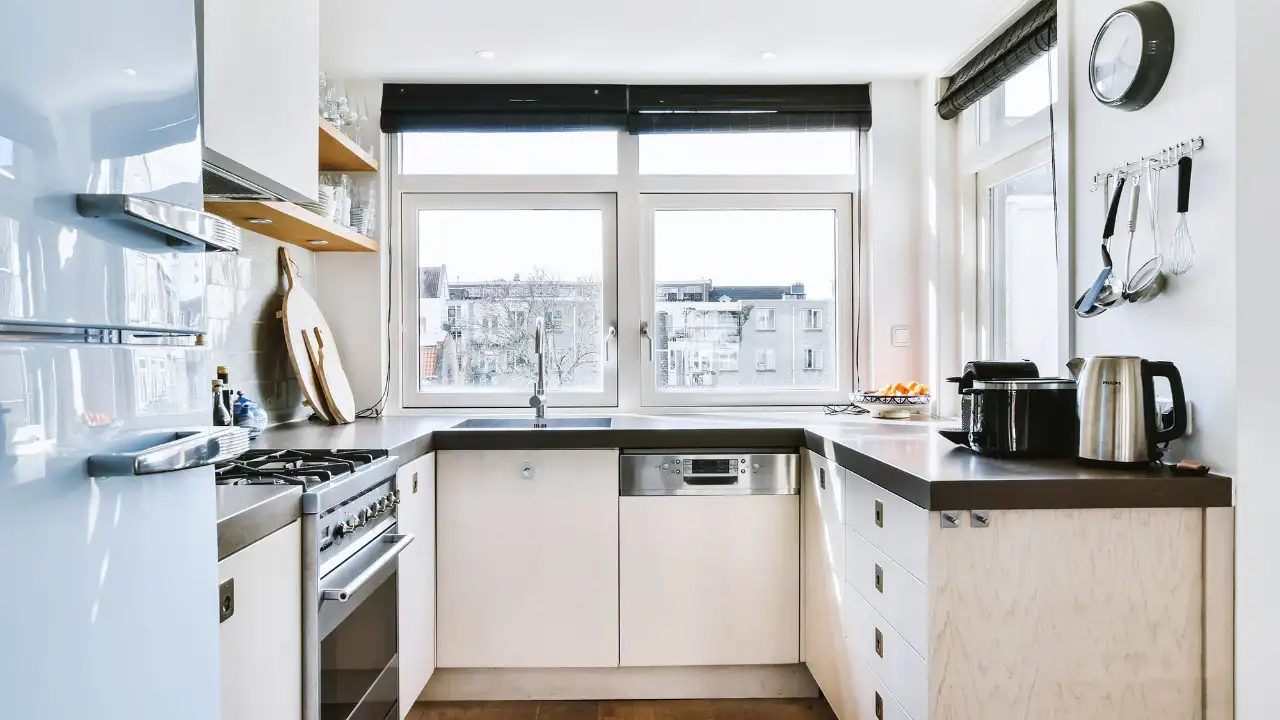
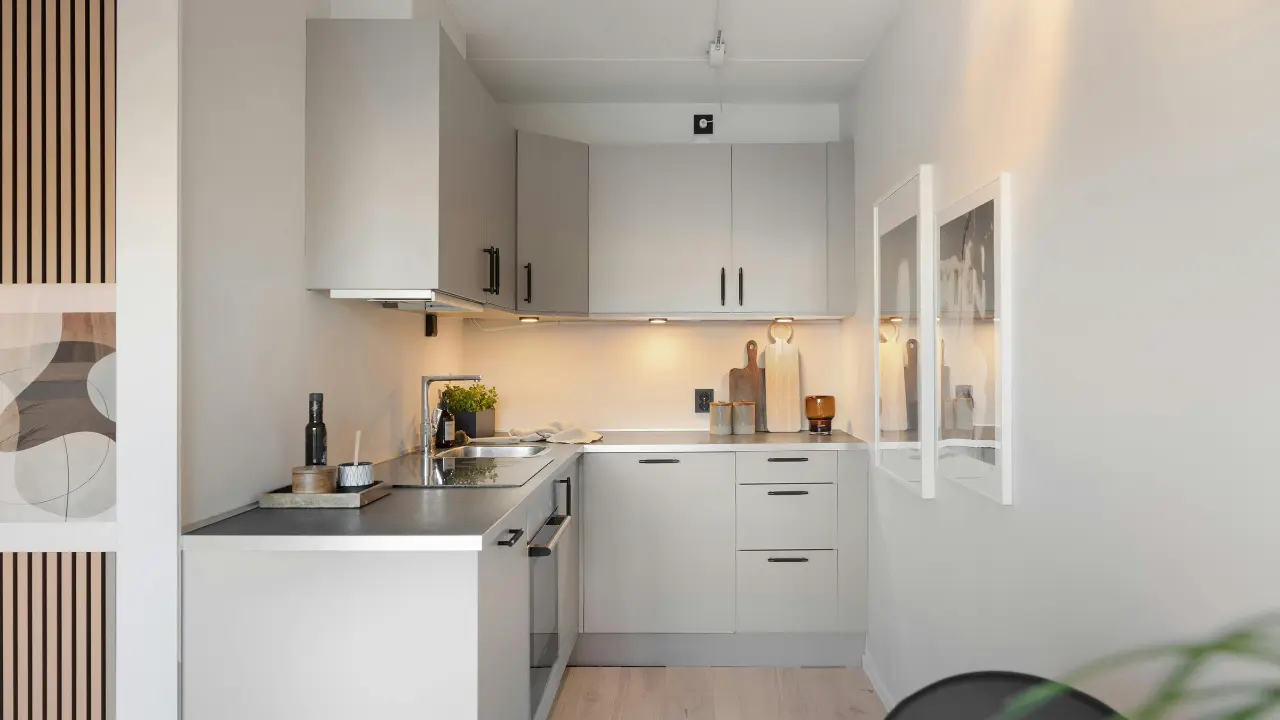
A modern kitchen should do more than look sleek in a photograph. It should make everyday cooking, cleaning, storage, and entertaining easier while creating a space that feels comfortable and cohesive.
Good modern kitchen design brings together clean architectural lines, practical storage, thoughtful lighting, durable materials, and a layout that fits the way you actually use the room. It can be minimalist and monochromatic, warm and natural, dramatic and dark, or luxurious without becoming overly decorative.
The key is balance. A beautiful kitchen with poor storage can quickly become frustrating, while a highly functional kitchen with mismatched finishes may feel unfinished.
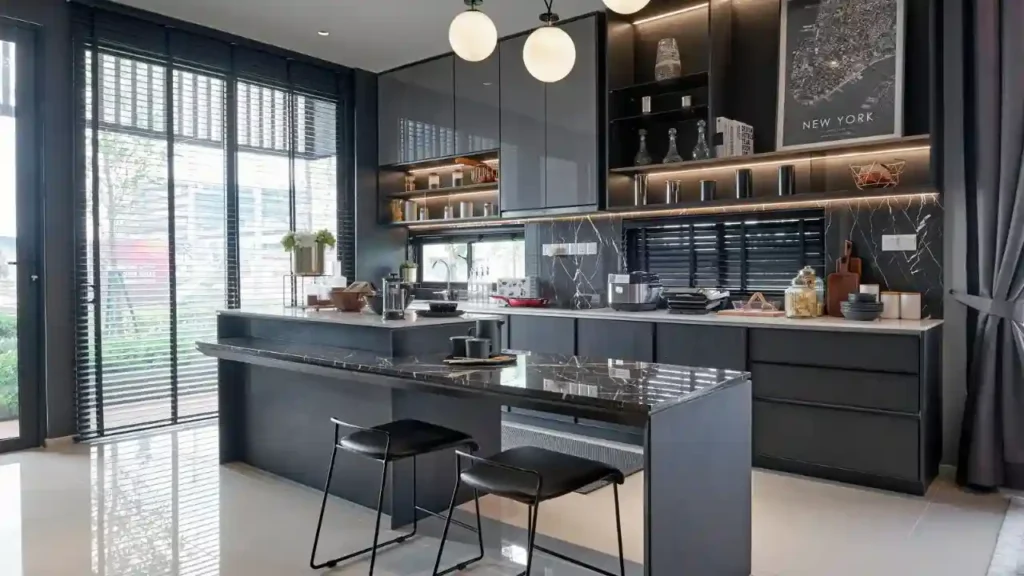
In this guide, you’ll explore modern kitchen layouts, cabinets, colors, countertops, backsplashes, islands, lighting, storage, appliances, small-space solutions, budget updates, luxury ideas, and ways to create a contemporary kitchen that remains practical over time.
1. What Defines Modern Kitchen Design?
Modern kitchen design is often associated with simplicity, clean lines, and minimal decoration, but those characteristics are only part of the picture. A truly successful modern kitchen combines visual simplicity with practical planning.
Clean Architectural Lines
Modern kitchens commonly use straight lines, simple cabinet profiles, restrained hardware, and balanced proportions.
Flat-panel cabinet doors, continuous countertops, simple backsplashes, and streamlined appliances can create a visually organized appearance.
The goal isn’t necessarily to remove every detail. Instead, individual elements should work together rather than compete for attention.
Functional Planning
A modern kitchen should support the activities that happen there every day.
Think about:
- Cooking
- Food preparation
- Cleaning
- Storage
- Entertaining
- Family meals
- Beverage preparation
The layout should make movement between these activities straightforward.
Minimal Visual Clutter
Concealed storage and well-planned cabinetry can help keep countertops clear.
Instead of displaying every appliance and kitchen accessory, consider storing less frequently used items inside cabinets and keeping only frequently used pieces within easy reach.
A Controlled Material Palette
Using too many competing finishes can make a kitchen feel visually busy.
A more cohesive approach might combine three or four primary materials, such as:
- Painted cabinetry
- Natural wood
- Quartz countertops
- Stone or tile backsplash
The materials don’t have to match exactly. They simply need to relate to one another.
Form and Function Together
The most attractive modern kitchen is still a working kitchen.
Cabinet doors should open comfortably, drawers should be accessible, appliances should be positioned logically, and storage should reflect your cooking habits.
A design that looks impressive but makes everyday tasks harder isn’t functioning as well as it should.
2. Choose the Right Modern Kitchen Layout
Layout should generally be established before choosing decorative finishes because it affects nearly every other decision.
One-Wall Modern Kitchen
A one-wall kitchen places cabinets, appliances, and work surfaces along a single wall.
This layout can work particularly well in:
- Apartments
- Studios
- Small homes
- Open-plan spaces
Vertical cabinetry can help compensate for the limited horizontal footprint.
Modern Galley Kitchen
A galley kitchen uses two parallel runs of cabinetry.
It can be highly efficient because storage, appliances, and preparation surfaces remain relatively close together.
However, the width of the walkway matters. Cabinets, appliance doors, and drawers should be planned so they don’t create conflicts.
L-Shaped Modern Kitchen
An L-shaped layout places cabinetry along two connected walls.
It can provide a useful balance between workspace and openness, making it suitable for many medium-sized kitchens.
An L-shaped layout can also leave room for a dining area, peninsula, or compact island when the room allows.
U-Shaped Modern Kitchen
A U-shaped kitchen surrounds the cook with cabinetry and work surfaces on three sides.
It can offer substantial storage and countertop space, but careful planning is important because excessive cabinetry can make a smaller room feel enclosed.
Modern Kitchen With Island
A kitchen island can provide:
- Additional preparation space
- Seating
- Storage
- Appliance space
- A social gathering point
However, an island should never be added simply because it looks modern.
If it leaves insufficient circulation space, it may reduce the kitchen’s functionality.
Open-Plan Modern Kitchen
Open-plan kitchens connect the kitchen with dining or living areas.
This approach works particularly well when cabinetry, flooring, colors, and lighting are visually coordinated with the surrounding room.
Practical principle: Choose the layout according to the room and your lifestyle first. Decorative trends should come afterward.
3. Modern Kitchen Work Zones and Workflow
A modern kitchen becomes easier to use when storage and appliances are arranged around actual activities.
Cooking Zone
Keep frequently used cooking items close to the main cooking surface.
Depending on your kitchen, this may include:
- Pots
- Pans
- Cooking utensils
- Oils
- Spices
- Oven mitts
Food Preparation Zone
The main preparation surface should have convenient access to items such as:
- Cutting boards
- Knives
- Mixing bowls
- Measuring tools
- Food-preparation accessories
Cleaning Zone
The sink area typically becomes the center of the cleaning zone.
Consider the relationship between:
- Sink
- Dishwasher
- Waste bin
- Recycling
- Dish storage
Keeping these elements reasonably close can simplify cleanup.
Beverage Zone
If coffee or tea is part of your daily routine, a dedicated beverage zone can keep related items together.
You might group:
- Coffee maker
- Coffee or tea
- Mugs
- Kettle
- Sugar or sweeteners
Create Short, Logical Paths
Frequently used items should generally be stored near the areas where they’re needed.
If you repeatedly walk across the kitchen to retrieve the same item, the storage location may need to change.
Good kitchen design isn’t only about where objects fit. It’s about how easily you can use them.
4. Modern Kitchen Cabinet Design Ideas
Cabinetry often establishes the visual character of a modern kitchen.
Flat-Panel Kitchen Cabinets
Flat-panel or slab cabinet doors are strongly associated with modern interiors.
Their simple surfaces create fewer visual interruptions and work well with both minimalist and warmer contemporary styles.
They can be paired with:
- Wood finishes
- Painted colors
- Neutral tones
- Dark finishes
- Minimal hardware
Handleless Kitchen Cabinets
Handleless cabinetry can create an especially streamlined appearance.
Options include:
- Integrated pulls
- Recessed channels
- Push-to-open mechanisms
When choosing handleless cabinets, consider everyday usability as well as appearance. Some people may find conventional pulls easier to grip, particularly for heavily used or large drawers.
Two-Tone Modern Cabinets
Two cabinet colors can add depth without requiring numerous decorative elements.
Popular combinations include:
- White and oak
- Black and walnut
- Greige and wood
- Green and natural wood
One color can be used for perimeter cabinetry while the second defines the island or another architectural element.
Floor-to-Ceiling Cabinets
Tall cabinets make use of vertical space and can provide substantial storage.
They can be especially useful for:
- Pantry storage
- Small appliances
- Ovens
- Food storage
- Less frequently used cookware
The uppermost areas are best reserved for items you don’t need every day.
Natural Wood Cabinets
Oak, walnut, ash, and maple can introduce warmth into a contemporary kitchen.
Wood grain can also prevent an otherwise minimalist kitchen from feeling too flat or sterile.
Minimal Upper Cabinets
Reducing upper cabinetry can create a more open appearance, particularly in kitchens with sufficient lower storage.
However, removing upper cabinets also removes storage capacity. Before choosing this approach, make sure you have another practical location for the items that would otherwise be stored there.
5. Modern Kitchen Color Ideas
Color affects both the mood and perceived proportions of a kitchen.
White Modern Kitchens
White cabinetry can create a bright, clean appearance and works with a wide range of countertop and flooring materials.
It can also help reflect available light in a smaller kitchen.
Warm Neutral Modern Kitchens
Cream, beige, taupe, and greige can create a softer contemporary appearance than stark white.
Warm neutrals pair particularly well with:
- Oak
- Walnut
- Natural stone
- Warm metal finishes
Black Modern Kitchens
Black cabinetry can create a dramatic, sophisticated appearance.
Because dark surfaces can visually absorb light, lighting should be considered carefully.
A black kitchen may benefit from:
- Good natural light
- Under-cabinet lighting
- Light countertops
- Reflective or textured surfaces
Green Modern Kitchens
Sage, olive, and deeper green tones can introduce color without making the kitchen feel overly bright.
Green cabinetry often works well with:
- Natural wood
- Brass
- Stone
- Cream
- Warm white
Blue Modern Kitchens
Navy, muted blue, and blue-gray can add depth while maintaining a relatively restrained palette.
Two-Tone Color Schemes
Two colors can visually separate different areas of the kitchen.
For example, lighter perimeter cabinets paired with darker island cabinetry can create a defined focal point.
6. Warm Modern Kitchen Design Ideas
Modern kitchens don’t have to feel cold or clinical.
Warm modern design combines contemporary simplicity with natural materials, softer colors, and comfortable lighting.
Combine Wood With Painted Cabinets
Natural wood can soften painted cabinetry and add visual texture.
Oak and walnut are particularly versatile choices for islands, lower cabinets, shelving, or accent areas.
Choose Warm Whites
Instead of a very cool white, consider warmer whites or soft neutrals when you want a more inviting atmosphere.
Add Natural Stone
Stone can introduce variation and texture.
Depending on the material, natural veining can become a visual feature without requiring additional decoration.
Use Warm Lighting
Lighting with a comfortable color temperature can significantly affect how cabinets, countertops, and wood finishes appear.
Plan lighting as part of the overall design rather than adding fixtures at the end.
Introduce Texture
Modern kitchens can benefit from subtle texture through:
- Wood grain
- Natural stone
- Handmade-look tile
- Ribbed surfaces
- Fluted details
Keep Decor Controlled
Warmth doesn’t require filling every shelf and countertop.
A few carefully selected elements can provide personality while preserving the clean structure of the kitchen.
7. Modern Kitchen Island Design Ideas
A well-planned island can become the functional center of a kitchen.
Waterfall Kitchen Islands
A waterfall edge extends the countertop material down the side of the island.
This creates a continuous visual plane and can emphasize the island’s architectural form.
Large Kitchen Islands
A larger island can provide space for:
- Food preparation
- Seating
- Storage
- Appliances
- Entertaining
But size should be determined by the room, not by appearance alone.
Small Kitchen Islands
Compact kitchens can use smaller islands or mobile islands when circulation allows.
A narrow island may provide useful preparation space without dominating the room.
Island Seating
Consider:
- Legroom
- Counter height
- Stool dimensions
- Traffic flow
- Number of seats
Don’t plan more stools than the available counter length can comfortably accommodate.
Island Storage
Island cabinetry can include:
- Deep drawers
- Cabinets
- Open shelves
- Recycling storage
- Appliance storage
Storage should face the area where the items are actually needed.
Contrasting Kitchen Islands
A contrasting island can create a focal point.
Examples include:
- Wood island with painted perimeter cabinets
- Dark island with light cabinetry
- Stone island with wood cabinetry
8. Modern Kitchen Countertop Design
Countertops have a major visual and practical role.
Quartz Countertops
Quartz surfaces are available in a wide range of colors and patterns and can provide a consistent appearance.
Consider the manufacturer’s care and installation guidance because performance characteristics vary by product.
Natural Stone
Natural stone options include:
- Marble
- Granite
- Quartzite
Each material has different characteristics regarding appearance, maintenance, sealing, staining, and care.
Porcelain Surfaces
Porcelain can provide a contemporary appearance and may be available in designs that resemble natural stone.
Installation requirements can differ from other countertop materials, so professional fabrication and installation considerations matter.
Waterfall Countertop Edges
A waterfall edge can give an island a strong architectural appearance, especially when the same surface continues down both sides.
Minimal Countertop Styling
Modern kitchens generally benefit from leaving useful preparation space open.
Keep frequently used appliances accessible when necessary, but avoid allowing every countertop surface to become permanent storage.
9. Modern Kitchen Backsplash Design
The backsplash can connect cabinets and countertops while providing an opportunity for subtle visual interest.
Full-Height Backsplashes
Extending the backsplash material higher on the wall can create visual continuity.
It can be particularly effective behind a range or across a main preparation area.
Large-Format Tile
Large-format tiles can reduce the number of visible grout lines and create a cleaner appearance.
Slab Backsplashes
A countertop material carried up the wall can create a continuous, high-end appearance.
This approach works especially well when the countertop itself has an attractive pattern or texture.
Modern Subway Tile
Subway tile isn’t limited to traditional kitchens.
Its appearance can change significantly depending on:
- Grout color
- Tile size
- Layout
- Cabinet color
- Finish
Textured Backsplashes
Subtle texture can add dimension to a restrained kitchen.
Use it selectively so the backsplash doesn’t compete with heavily patterned countertops or cabinetry.
Countertop-Matching Backsplash
Using the same or closely related material on the countertop and backsplash can create a unified appearance.
10. Modern Kitchen Lighting Design
Lighting should be considered early because it affects both functionality and atmosphere.
Ambient Lighting
Ambient lighting provides general illumination throughout the kitchen.
It may come from:
- Ceiling fixtures
- Recessed lights
- Flush-mount fixtures
- Other general lighting systems
Task Lighting
Task lighting is especially important over work surfaces.
Pay particular attention to:
- Countertops
- Sinks
- Cooking areas
- Food preparation surfaces
Accent Lighting
Accent lighting can highlight:
- Open shelves
- Cabinetry
- Architectural details
- Display areas
Pendant Lights Over an Island
Pendant fixtures can become a major design feature.
Consider:
- Fixture scale
- Island size
- Ceiling height
- Sightlines
- Number of fixtures
The fixtures should provide useful illumination without obstructing views across the kitchen.
Under-Cabinet Lighting
Under-cabinet lighting can improve visibility on countertops and reduce shadows from upper cabinets.
Recessed Lighting
Recessed fixtures can provide clean general illumination when positioned appropriately.
Statement Fixtures
One well-chosen statement fixture can provide personality without requiring numerous decorative elements.
11. Modern Kitchen Hardware Ideas
Hardware can significantly influence the final character of cabinetry.
Matte Black Hardware
Matte black provides strong contrast and can complement white, wood, green, gray, or neutral cabinetry.
Brushed Brass
Brushed brass can add warmth and a more decorative touch to a contemporary kitchen.
Brushed Nickel
Brushed nickel offers a relatively versatile metallic finish that can work across many modern palettes.
Integrated Pulls
Integrated pulls keep the cabinet face visually simple while providing a dedicated gripping surface.
Handleless Designs
Handleless cabinetry can create a particularly streamlined appearance.
Mixing Metal Finishes
Mixed metals can work when there is a clear visual relationship between them.
For example, a primary cabinet finish might be paired with a secondary metal used sparingly on lighting or plumbing fixtures.
The goal is coordination rather than using a different finish on every element.
12. Modern Kitchen Storage Design
Storage should be treated as part of the architecture.
Full-Height Cabinet Storage
Tall cabinets can increase storage capacity without requiring additional floor space.
Deep Kitchen Drawers
Deep drawers can be particularly useful for pots, pans, plates, and other larger items.
Pull-Out Pantry Storage
Pull-out systems can improve access to narrow or deep pantry areas.
Hidden Appliance Storage
An appliance garage or dedicated cabinet can keep frequently used small appliances accessible while reducing countertop clutter.
Cabinet Interior Organizers
Consider:
- Shelf risers
- Drawer dividers
- Pull-out organizers
- Tray dividers
- Spice storage
The right organizer depends on the cabinet’s actual dimensions.
Built-In Waste and Recycling
Dedicated compartments can make waste and recycling easier to manage while keeping containers concealed.
Corner Storage
Corner cabinets can be difficult to access.
Possible solutions include:
- Pull-out systems
- Rotating shelves
- Purpose-built corner organizers
Open Shelving Used Selectively
Open shelving can display everyday dishes or decorative pieces, but it requires more visual maintenance than closed cabinetry.
Hidden Kitchen Storage
Concealed storage supports a clean visual appearance.
The most useful hidden storage is not simply hidden—it should remain reasonably easy to access.
13. Modern Kitchen Appliance Design
Appliances should support the kitchen’s function as well as its appearance.
Integrated Appliances
Panel-ready appliances can be designed to visually blend with surrounding cabinetry.
This can create a more continuous appearance.
Stainless Steel Appliances
Stainless steel remains a flexible choice for contemporary kitchens and can work with wood, painted cabinets, stone, and many hardware finishes.
Built-In Ovens
Built-in ovens can create a more integrated appearance and may allow the oven and microwave to be positioned according to the kitchen’s layout.
Appliance Garages
An appliance garage can hide smaller countertop appliances while keeping them nearby.
This can be particularly useful for appliances used every day.
Smart Kitchen Appliances
Smart features can be useful when they solve a genuine household need.
However, technology should not be added solely because a feature is marketed as modern.
Prioritize reliability, usability, maintenance, and compatibility with your household.
14. Small Modern Kitchen Design Ideas
A small kitchen can still have a sophisticated contemporary appearance.
Use Vertical Space
Tall cabinets, wall-mounted shelves, and appropriately placed vertical storage can increase usable capacity.
Choose Appropriately Sized Cabinets
Oversized cabinets and fixtures can overwhelm a compact room.
Proportion is often more important than adding more design elements.
Keep Countertops Clear
A clear countertop creates usable workspace and can make a compact kitchen feel less crowded.
Use a Peninsula Instead of a Full Island
A peninsula can provide some of the benefits of an island while using less floor space.
Choose Compact Appliances
When appropriate, smaller appliances can free up valuable cabinet and floor space.
Use Light and Reflective Finishes Carefully
Light colors can help a small kitchen feel brighter, while selected reflective surfaces can distribute available light.
The effect depends on the room’s natural lighting and overall material palette.
Add Multi-Functional Storage
Choose storage that performs more than one role when possible.
For example, a compact cart might provide both storage and additional preparation space.
Avoid Oversized Fixtures
Large pendant lights, oversized islands, and bulky furniture can make a small kitchen feel compressed.
15. Modern Kitchen Design for Apartments and Condos
Apartment kitchens often require careful planning because floor area and storage can be limited.
One-Wall Kitchen Layouts
A one-wall kitchen can work well when the kitchen shares space with a living or dining area.
Compact Islands and Peninsulas
When floor space permits, a compact island or peninsula can add preparation space and seating.
Freestanding Storage
Freestanding shelves and carts can provide additional storage without requiring major construction.
Vertical Cabinetry
Tall storage makes better use of available wall height.
Space-Saving Appliances
Compact appliances may be appropriate when household needs and available space permit.
Rental-Friendly Modern Updates
Renters can focus on reversible changes such as:
- Freestanding storage
- Removable organizers
- Portable lighting
- Temporary decor
- Hardware changes where permitted
Always check the lease and product instructions before making modifications.
16. Open-Plan Modern Kitchen Design Ideas
An open-plan kitchen is visible from surrounding living spaces, so visual coordination becomes particularly important.
Coordinate Kitchen and Living Room Colors
The kitchen doesn’t need to match the living room exactly, but related colors can make the overall space feel intentional.
Use the Island as a Visual Bridge
An island can help transition between kitchen and living areas.
Its materials can repeat colors or finishes found elsewhere in the room.
Choose Compatible Flooring
Consistent flooring can make an open-plan area feel more connected.
Hide Small Appliances
Because an open kitchen remains visible, countertop clutter can become more noticeable.
Use dedicated storage for appliances that aren’t needed continuously.
Use Furniture-Like Cabinetry
Modern cabinetry with refined proportions can help the kitchen integrate with nearby furniture.
Maintain Consistent Materials
Repeating wood tones, metals, stone colors, or accent colors can create continuity.
17. Modern Kitchen Design Styles
Modern design is broad enough to accommodate different personalities.
Minimalist Modern
This style typically emphasizes:
- Simple forms
- Limited materials
- Concealed storage
- Restrained decoration
Warm Modern
Warm modern kitchens combine contemporary forms with:
- Natural wood
- Warm neutrals
- Soft lighting
- Textured materials
Organic Modern
Organic modern design often uses:
- Natural materials
- Earthy colors
- Organic textures
- Simple architectural forms
Scandinavian Modern
Scandinavian-inspired kitchens commonly emphasize:
- Light colors
- Natural wood
- Functional simplicity
- Clean forms
Japandi-Inspired Modern
Japandi-inspired spaces combine restrained minimalism with natural materials and calm, muted colors.
Modern Industrial
Modern industrial kitchens may incorporate:
- Metal
- Dark finishes
- Concrete-inspired surfaces
- Exposed-looking materials
The key is to balance industrial details with practical warmth.
Modern Farmhouse
Modern farmhouse can combine contemporary cabinetry and clean lines with familiar materials such as wood, simple tile, and traditional-inspired fixtures.
Luxury Modern
Luxury modern kitchens may feature:
- Custom cabinetry
- Premium surfaces
- Integrated appliances
- Large-format materials
- Refined hardware
- Carefully designed lighting
Luxury is influenced by craftsmanship and detailing as much as by the price of individual products.
18. Modern Kitchen Design With Natural Materials
Natural materials can prevent contemporary spaces from feeling overly uniform.
Natural Wood
Wood adds warmth, grain, and visual variation.
It can be used for:
- Cabinets
- Islands
- Shelves
- Ceiling details
- Furniture
Natural Stone
Natural stone can provide unique patterns and textures.
The specific maintenance requirements depend on the stone selected.
Wood and Stone Combinations
Wood and stone are particularly effective together because their textures can contrast while remaining visually compatible.
Textured Tile
Subtle tile texture can introduce depth without requiring a complicated color palette.
Organic Accessories
Baskets, wood accessories, ceramic pieces, and natural textiles can soften a modern kitchen.
Indoor Plants
Plants can introduce natural color and texture.
Use them selectively so they don’t interfere with preparation areas or create additional maintenance problems.
19. Modern Kitchen Design Ideas on a Budget
A contemporary kitchen doesn’t always require a complete renovation.
Update Cabinet Hardware
Replacing outdated pulls or knobs can change the appearance of existing cabinetry relatively quickly.
Replace Outdated Lighting
New pendant lights or improved task lighting can change both appearance and functionality.
Paint Cabinets Where Appropriate
If the existing cabinetry is suitable for refinishing, a new color can provide a significant visual change.
Proper surface preparation and an appropriate coating system are important.
Improve Cabinet Organization
Better drawer dividers, shelf risers, pull-outs, and storage systems can make an existing kitchen more functional.
Update the Backsplash
A new backsplash can introduce a modern material or color without replacing every kitchen component.
Replace the Faucet
A contemporary faucet can become a useful visual update while improving everyday functionality.
Declutter Countertops
Sometimes the most affordable modern update is simply removing unnecessary visual clutter.
Add Selective Open Shelving
One carefully chosen shelf can add display space without turning the entire kitchen into an open-storage system.
The goal is to focus your budget on improvements that solve actual problems.
20. Luxury Modern Kitchen Design Ideas
Luxury modern kitchens are often defined by coordination, craftsmanship, scale, and detailing rather than simply expensive products.
Custom Cabinetry
Custom cabinetry can provide highly specific storage configurations and allow the design to fit unusual room dimensions.
Premium Natural Stone
Premium stone can become a major architectural feature through countertops, islands, or backsplashes.
Integrated Appliances
Integrated appliances can create a continuous cabinetry appearance.
Large Kitchen Islands
Where the room allows, a large island can combine preparation space, seating, storage, and entertaining functions.
Statement Lighting
Large or custom lighting fixtures can become focal points.
Floor-to-Ceiling Storage
Tall cabinetry can combine substantial storage capacity with a strong architectural presence.
Refined Hardware
High-quality hardware can provide a subtle finishing detail.
Remember that luxury isn’t simply a matter of price. Good proportions, craftsmanship, material coordination, lighting, and detailing can have a major effect on the finished space.
21. Modern Kitchen Design Ideas by Color Combination
The right color combination depends on the room, natural light, existing materials, and personal taste.
| Color Combination | Design Character | Materials That Pair Well |
|---|---|---|
| White + Natural Oak | Bright and warm | Wood, quartz, soft stone |
| Black + Walnut | Dramatic and rich | Stone, brass, dark hardware |
| Greige + Brass | Soft and refined | Quartz, wood, warm lighting |
| White + Black | Crisp and high contrast | Stone, metal, glass |
| Green + Natural Wood | Organic and calming | Stone, brass, textured tile |
| Navy + White | Polished and classic | Wood, brass, marble-look surfaces |
| Beige + Walnut | Warm and sophisticated | Natural stone, brushed metal |
Rather than choosing a combination because it is currently popular, consider how the colors will interact with the room’s lighting and the materials you already plan to use.
22. Modern Kitchen Design by Material
Material selection should consider appearance, maintenance, durability expectations, installation requirements, and budget.
Modern Wood Kitchen
Wood cabinetry can create a warm modern appearance.
Different species and finishes produce substantially different colors and grain patterns, so samples are worth reviewing in the actual room.
Modern Quartz Kitchen
Quartz can provide a consistent, contemporary surface with many color and pattern options.
Care requirements vary by manufacturer and product, so always follow the specific care guidance.
Modern Marble Kitchen
Marble can provide distinctive natural veining and a refined appearance.
It also requires consideration of staining, etching, sealing, and ongoing care.
Modern Porcelain Kitchen
Porcelain can offer modern stone-inspired appearances and a range of surface options.
Fabrication and installation should be planned carefully because large-format materials require appropriate handling.
Modern Stainless Steel Kitchen
Stainless steel can create a clean, professional-inspired appearance and coordinate well with contemporary appliances.
Modern Glass Kitchen
Glass can be used for selected cabinet fronts, partitions, lighting elements, or backsplashes.
It can introduce lightness but may require more frequent cleaning depending on the application.
Mixed-Material Modern Kitchen
Combining materials can make a modern kitchen more interesting.
For example:
Wood + stone + painted cabinetry + metal
can create contrast without requiring excessive decoration.
The key is establishing a clear hierarchy so that every material has a purpose.
23. Modern Kitchen Design Mistakes to Avoid
Even attractive kitchens can have functional problems.
Choosing Finishes Before Planning the Layout
A beautiful countertop cannot fix an inefficient layout.
Plan the room first, then select finishes.
Ignoring Storage
Insufficient storage often leads to permanent countertop clutter.
Plan storage based on what you actually own and use.
Making the Island Too Large
An oversized island can restrict circulation and make appliance doors difficult to use.
Using Too Many Materials
Too many colors, patterns, metals, and textures can make a modern kitchen feel visually chaotic.
Overloading the Kitchen With Trends
Permanent elements such as cabinetry and countertops should not necessarily be chosen according to every short-term trend.
Poor Lighting Planning
A decorative pendant cannot replace adequate task lighting.
Plan general, task, and accent lighting together.
Making Everything the Same Color
A completely monochromatic kitchen can sometimes lack depth.
Material variation can add interest while maintaining a restrained palette.
Overusing Open Shelving
Open shelving requires organization and regular visual maintenance.
Use it where it genuinely improves access or display.
Ignoring Appliance Placement
Appliances should be positioned according to workflow, clearances, plumbing, ventilation, and available space.
Sacrificing Function for Appearance
A kitchen should be beautiful because it works well—not beautiful despite how it works.
Choosing Materials Without Considering Maintenance
Always understand how a surface should be cleaned, whether it requires sealing, and how it responds to the conditions of your kitchen.
24. How to Plan a Modern Kitchen Design Step by Step
A systematic process can prevent expensive changes later.
Step 1: Define Your Priorities
Decide what matters most.
Your priorities might include:
- Storage
- Counter space
- Seating
- Better workflow
- Lighting
- Appearance
Step 2: Measure the Space
Record:
- Overall room dimensions
- Doorways
- Windows
- Ceiling height
- Plumbing locations
- Electrical locations
- Existing appliances
Also note door swings and other fixed features.
Step 3: Choose the Layout
Compare:
- One-wall
- Galley
- L-shaped
- U-shaped
- Island
- Peninsula
- Open-plan
Choose based on the room’s dimensions and how you use it.
Step 4: Plan Work Zones
Determine where cooking, preparation, cleaning, beverage preparation, and storage will occur.
Step 5: Choose Cabinet Style
Decide on:
- Door profile
- Color
- Material
- Hardware
- Storage configuration
Step 6: Create a Material Palette
Coordinate:
- Cabinets
- Countertops
- Backsplash
- Flooring
- Hardware
Order samples where possible and compare them under both daylight and artificial lighting.
Step 7: Plan Lighting
Combine:
- Ambient lighting
- Task lighting
- Accent lighting
Step 8: Plan Appliances
Choose appliances according to available space, household needs, installation requirements, and workflow.
Step 9: Add Storage Solutions
Decide where everyday and occasional-use items will live before finalizing every cabinet.
Step 10: Add Decorative Details
Add stools, lighting, plants, artwork, and accessories selectively.
Step 11: Review the Entire Design
Before committing, check:
- Circulation
- Door clearances
- Appliance access
- Storage accessibility
- Lighting
- Maintenance
- Visual balance
This final review can reveal problems that aren’t obvious when evaluating individual products separately.
25. How to Make Modern Kitchen Design Feel Timeless
A modern kitchen can reflect current design preferences without becoming dependent on short-lived trends.
Start With a Simple Foundation
Keep permanent architectural elements relatively restrained.
Choose Durable Materials
Prioritize materials that suit your household’s actual level of use and maintenance preferences.
Use Trends as Accents
Trendy colors or decorative details can be easier to change than cabinetry or countertops.
Choose a Flexible Color Palette
Neutral foundations can make future updates easier.
Avoid Excessive Decorative Details
Simple architecture generally provides more flexibility over time.
Prioritize Quality Lighting
Good lighting can remain useful regardless of changing design trends.
Design Around Your Lifestyle
A kitchen designed around real cooking and storage habits is more likely to remain useful.
Keep the Architecture Simple
Simple cabinet profiles and balanced proportions can adapt to changing decorative preferences.
Use trends to personalize a modern kitchen, not to define every permanent element.
Best Modern Kitchen Design Approach for Different Goals
There isn’t one modern kitchen formula that works for every home. Your priorities should influence the design.
| Main Goal | Design Approach |
|---|---|
| Small kitchen | Vertical storage, light finishes, compact fixtures |
| More storage | Full-height cabinets, deep drawers, pull-outs |
| Warm appearance | Wood, warm neutrals, natural stone |
| Minimalist look | Flat fronts, concealed storage, limited materials |
| Luxury appearance | Custom cabinetry, premium surfaces, integrated appliances |
| Budget update | Hardware, lighting, paint, backsplash, organization |
| Family kitchen | Durable surfaces, accessible storage, practical zones |
| Entertaining | Island seating, open layout, beverage storage |
| Timeless design | Simple architecture, restrained colors, quality materials |
Use this as a starting framework rather than a rigid formula. The best combination depends on your space and how the kitchen will actually be used.
Frequently Asked Questions About Modern Kitchen Design
What is modern kitchen design?
Modern kitchen design generally emphasizes clean lines, functional layouts, simple cabinetry, contemporary materials, controlled colors, efficient storage, and minimal visual clutter. It can range from minimalist and monochromatic to warm and natural.
What makes a kitchen look modern?
A combination of simple cabinet profiles, coordinated materials, contemporary lighting, practical storage, clean lines, and controlled visual clutter can create a modern appearance.
What cabinets are best for modern kitchens?
Flat-panel or slab cabinets are commonly associated with modern kitchens. Handleless designs, integrated pulls, and simple hardware can also support a contemporary aesthetic. The right choice depends on your preferred appearance, budget, storage needs, and everyday usability.
What colors work best for modern kitchens?
White, black, warm neutrals, green, blue, gray, and natural wood tones can all work in modern kitchens. The appropriate choice depends on natural light, room size, surrounding materials, and personal preference.
How can I make a small kitchen look modern?
Focus on proportion, storage, lighting, and visual simplicity. Use vertical storage, appropriately sized cabinetry, uncluttered countertops, and finishes that work with the available natural light.
How can I modernize my kitchen without remodeling?
Consider updating cabinet hardware, lighting, faucets, paint, backsplash details, storage organization, and countertop styling before committing to a full renovation. These changes can update the appearance without changing the entire layout.
What countertop works well with modern kitchen design?
Quartz, natural stone, porcelain, and other countertop materials can work well. Consider appearance, maintenance, installation requirements, budget, and how the kitchen will be used before choosing one.
How do I make a modern kitchen feel warm?
Natural wood, warm neutral colors, textured materials, natural stone, and warm lighting can soften a contemporary kitchen without losing its modern character.
Are modern kitchens expensive?
Modern kitchens can range from relatively affordable updates to high-end custom renovations. Cost depends on cabinetry, appliances, materials, labor, layout changes, installation requirements, and overall project scope.
Final Thoughts — Design a Modern Kitchen That Works for You
A successful modern kitchen is not simply a collection of fashionable finishes. It is a carefully planned space where layout, storage, materials, lighting, and aesthetics work together.
Start with the way you use the kitchen rather than starting with a trend. Plan the layout, identify your storage needs, consider appliance placement, and then build a coordinated palette of cabinets, countertops, backsplash materials, hardware, and lighting.
For smaller kitchens, prioritize proportion and efficient storage. For larger kitchens, use islands and work zones thoughtfully. If you’re working with a limited budget, focus on high-impact updates such as lighting, hardware, organization, paint, and selected finishes.
Most importantly, choose a design that fits your household. A modern kitchen should look contemporary while remaining comfortable, practical, and easy to live with for years to come.