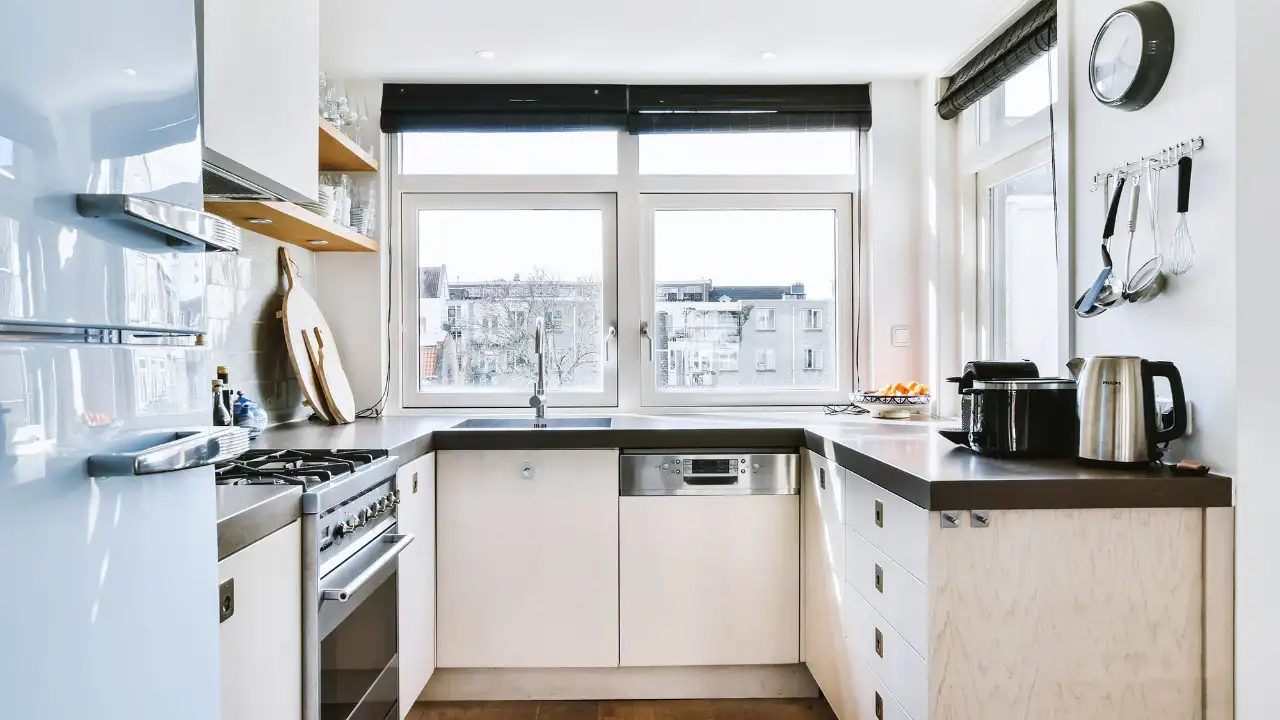
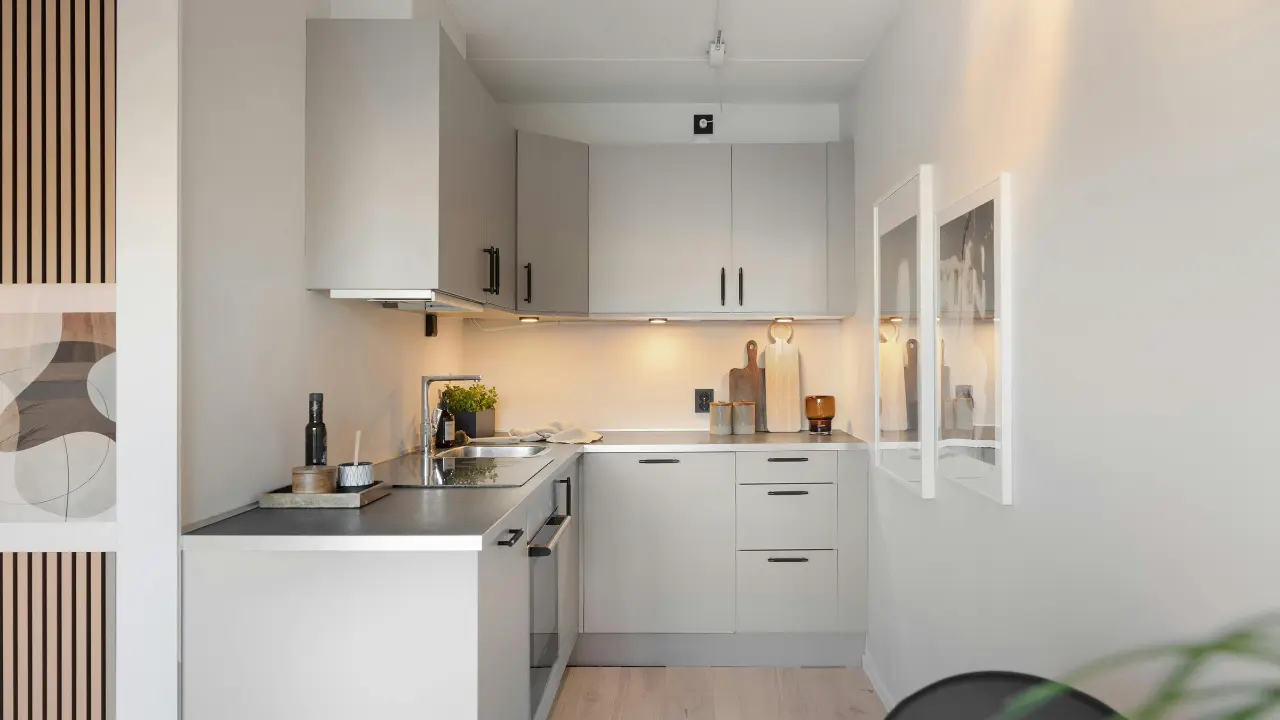
Kitchen color can completely change the character of a room. The right palette can make a kitchen feel warmer, brighter, calmer, more sophisticated, or more connected to the rest of the home.
But the latest kitchen color trends 2026 are not about finding one universal “it” color. Instead, current kitchen design is moving toward warmer neutrals, natural wood, earthy greens, refined blues, layered tones, and carefully selected contrasts.
Cabinets are only part of the picture. Color also comes from walls, kitchen islands, backsplashes, countertops, flooring, hardware, appliances, lighting, and accessories.
According to the 2026 U.S. Houzz Kitchen Trends Study, wood was selected for kitchen cabinetry by 29% of renovating homeowners, compared with 28% for white. Off-white accounted for 15%, while green reached 6% and gray 5%.
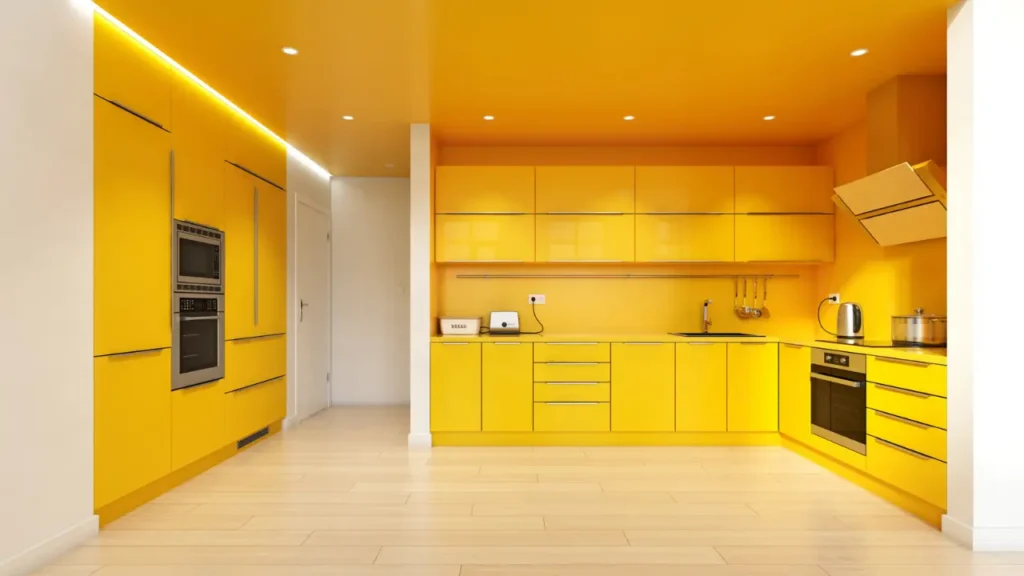
The National Kitchen & Bath Association (NKBA) also identified neutrals, greens, and blues as prominent color directions in its 2026 industry research. However, the NKBA findings reflect surveyed North American kitchen-industry professionals, while Houzz measures choices among U.S. renovating homeowners, so the datasets should not be treated as interchangeable.
The takeaway is simple: 2026 offers more ways to add color without sacrificing practicality or timeless design.
What Are the Kitchen Color Trends for 2026?
Kitchen color trends 2026 are leaning toward warm neutrals, natural wood, earthy greens, sophisticated blues, cream, beige, taupe, brown, and layered two-tone combinations. White remains a major choice, while natural wood has gained particular attention in current U.S. renovation data. The best color for a kitchen still depends on natural light, existing materials, room size, maintenance requirements, and personal style.
Quick Kitchen Color Trends 2026
| Color Direction | Overall Feel | Works Well With |
|---|---|---|
| Natural wood | Warm and organic | Cream, stone, green |
| White | Bright and clean | Wood, black, color accents |
| Warm white | Soft and refined | Oak, brass, beige |
| Cream | Cozy and sophisticated | Wood, stone, bronze |
| Beige | Calm and understated | Brown, oak, black |
| Taupe | Warm and versatile | Wood, stone, brass |
| Sage green | Soft and natural | Oak, cream, brass |
| Olive green | Earthy and rich | Wood, beige, stone |
| Forest green | Dramatic | Cream, brass, stone |
| Navy blue | Classic and deep | White, oak, brass |
| Blue-gray | Calm and modern | Warm white, wood |
| Brown | Rich and grounded | Cream, beige, stone |
| Terracotta | Earthy and expressive | Cream, oak, olive |
| Charcoal | Dramatic and modern | Wood, white, metal |
| Two-tone palettes | Layered | Neutrals + accent colors |
What Is Changing in Kitchen Color Design in 2026?
Several broader themes are shaping kitchen color choices this year.
1. Warmer Neutrals Are Becoming More Important
Cream, warm white, beige, taupe, mushroom, and warm greige give homeowners alternatives to cooler gray-based palettes.
These shades can also work as flexible backgrounds for wood, stone, brass, black, green, and blue.
2. Natural Wood Is More Than a Cabinet Material
Wood contributes both color and texture. Oak, walnut, maple, and other wood finishes can introduce warmth without relying on painted cabinetry.
NKBA’s 2026 research found that 59% of surveyed professionals identified wood grain as a growing kitchen trend.
3. Green Brings Nature-Inspired Color
Sage, olive, moss, and deep green can introduce noticeable color while maintaining an organic connection with natural materials.
4. Blue Remains a Useful Accent
Navy, slate, blue-gray, and blue-green can create contrast while working with warm whites, wood, brass, and stone.
5. Color Is Being Used More Strategically
Instead of covering every cabinet in a saturated shade, homeowners can introduce color through an island, lower cabinets, backsplash, pantry, walls, or accessories.
25 Kitchen Color Trends and Ideas for 2026
1. Natural Wood Kitchen Colors
Natural wood is one of the most significant directions to consider in 2026.
Popular-looking options include:
- White oak
- Natural oak
- Light oak
- Medium wood
- Walnut
- Maple
- Dark stained wood
- Natural wood grain
Houzz’s 2026 study found medium wood was selected by 15% of renovating homeowners choosing wood cabinetry, followed by light wood at 11% and dark wood at 3%.
Why Natural Wood Works
Wood can:
- Add warmth
- Introduce natural texture
- Soften modern surfaces
- Coordinate with furniture in adjoining rooms
- Work with neutral walls
- Complement green and blue accents
White oak can create a lighter, contemporary appearance, while walnut provides deeper contrast.
The key is to consider the undertone and finish rather than assuming all wood looks the same.
A yellow-toned wood, for example, can interact very differently with a cool gray wall than a neutral-toned oak.
2. White Kitchen Colors
White kitchens are still relevant in 2026.
Rather than treating white as outdated, consider the many variations available:
- Soft white
- Warm white
- Creamy white
- Off-white
- Bright white
- Cool white
Houzz reported white at 28% among renovating homeowners selecting a cabinet color in its 2026 study.
The more useful question is often not whether white is trending, but which white works with your kitchen?
Warm white can complement oak, walnut, beige stone, brass, and earthy colors. A cooler white may work better with crisp contemporary finishes.
3. Warm White Kitchen Ideas
Warm white is particularly useful for homeowners who want a bright kitchen without an overly stark appearance.
Try combinations such as:
- Warm white + white oak
- Warm white + walnut
- Warm white + brass
- Warm white + beige stone
- Warm white + sage green
- Warm white + black accents
Warm white cabinets can create a soft foundation while allowing the countertop, island, lighting, or hardware to provide contrast.
Before choosing a specific paint or cabinet finish, test a physical sample in the actual kitchen.
4. Cream Kitchen Colors
Cream provides a warmer alternative to bright white.
It works particularly well with:
- Natural wood
- Walnut
- Brass
- Bronze
- Beige stone
- Olive green
- Warm gray
- Black accents
Cream can suit warm minimalist, organic modern, transitional, traditional, and modern farmhouse kitchens.
For a refined look, consider cream cabinets + natural oak + warm stone + brushed brass.
5. Beige Kitchen Color Trends
Beige is becoming increasingly useful as kitchens move toward warmer palettes.
Some combinations to consider include:
Beige + oak
Beige + walnut
Beige + cream
Beige + olive
Beige + black
Beige + natural stone
A beige kitchen does not have to look flat. Differences in texture can create depth.
For example, matte beige cabinets combined with natural wood, textured stone, and brushed metal can produce a layered appearance without adding many colors.
6. Taupe Kitchen Colors
Taupe sits somewhere between beige, gray, and brown, although its exact appearance depends heavily on its undertone.
You can use taupe for:
- Cabinets
- Walls
- Islands
- Pantry cabinetry
- Built-ins
Taupe works particularly well with:
- White oak
- Cream
- Natural stone
- Brass
- Black
- Soft green
Because taupe can shift noticeably under different lighting, sample it beside your countertops and flooring before making a final decision.
7. Green Kitchen Color Trends 2026
Green remains an important kitchen color direction.
Houzz reported green at 6% among renovating homeowners selecting cabinet color in its 2026 study, while NKBA’s professional survey identified green as a prominent color direction.
Popular green families include:
- Sage
- Olive
- Moss
- Forest
- Deep green
- Gray-green
- Blue-green
Different shades produce very different results.
Sage feels softer.
Olive feels earthy.
Moss feels organic.
Forest green creates stronger drama.
Blue-green can feel sophisticated and distinctive.
8. Sage Green Kitchen
Sage green is one of the easiest green shades to incorporate into a modern kitchen because its muted quality works naturally with wood and neutral finishes.
Try:
- Sage + white oak
- Sage + cream
- Sage + warm white
- Sage + brass
- Sage + natural stone
- Sage + walnut
Sage can cover the entire cabinetry or be limited to the island or lower cabinets.
For a softer appearance, combine sage cabinets with cream walls and light oak.
9. Olive Green Kitchen
Olive green offers more depth than sage while retaining an earthy character.
It works especially well with:
- Natural oak
- Walnut
- Cream
- Beige
- Brass
- Natural stone
Olive can be used on the main cabinetry, island, pantry, or lower cabinets.
If you want a noticeable color without an extremely dark kitchen, olive can be a useful middle ground.
10. Dark Green Kitchen
Deep green can create a dramatic kitchen while still feeling connected to natural colors.
Consider:
- Forest green
- Deep olive
- Dark moss
- Blue-green
- Rich green
Pair deep green with:
- Cream
- Warm white
- Brass
- Natural oak
- Light stone
- Pale flooring
Dark cabinetry can visually absorb light, so lighting becomes especially important.
Natural daylight, ceiling fixtures, pendant lighting, and under-cabinet lighting can all affect how the color appears.
11. Blue Kitchen Color Trends 2026
Blue remains a versatile kitchen color.
NKBA’s 2026 industry research identified blue as a prominent color direction, with 78% of surveyed professionals identifying it as popular.
Useful blue shades include:
- Navy
- Slate blue
- Blue-gray
- Dusty blue
- Deep blue
- Blue-green
Blue works particularly well with warm materials because the contrast between cool color and warm wood can prevent the overall palette from feeling flat.
12. Navy Blue Kitchen
Navy is a strong choice for homeowners who want deeper color without using black.
Use navy on:
- Kitchen islands
- Lower cabinets
- Full cabinetry
- Pantry walls
- Beverage stations
Classic combinations include:
Navy + warm white
Navy + oak
Navy + brass
Navy + cream stone
Navy can look substantially different under bright daylight and warm evening lighting, so always evaluate a sample at multiple times of day.
13. Blue-Gray Kitchen Colors
Blue-gray offers a quieter alternative to navy.
It can work well when you want:
- Moderate contrast
- A cooler color
- A sophisticated appearance
- A transitional kitchen
- A subtle contemporary palette
Pair blue-gray with warm white, cream, oak, or walnut to balance its cooler undertones.
14. Brown Kitchen Colors
Brown is becoming more relevant as natural wood and earthy palettes gain attention.
Consider:
- Walnut brown
- Medium brown
- Chocolate brown
- Mocha
- Warm coffee tones
Brown can be paired with:
- Cream
- Warm white
- Beige
- Natural stone
- Brass
- Olive
- Light wood
Avoid using exactly the same brown tone across cabinets, flooring, furniture, and accessories. Variation in shade and texture creates more visual interest.
15. Earthy Kitchen Color Trends
Earth-inspired palettes are useful for creating a warm, natural kitchen.
A typical earthy palette might include:
- Olive
- Sage
- Moss
- Brown
- Terracotta
- Sand
- Clay
- Beige
- Taupe
- Cream
These colors work naturally with wood, stone, woven materials, and other organic textures.
For example:
Olive cabinets + cream walls + oak shelving + natural stone
can create a cohesive organic-modern appearance without relying on excessive decoration.
16. Terracotta Kitchen Color Ideas
Terracotta is expressive, so it often works better as an accent than as a dominant cabinetry color.
Use it through:
- Backsplash tile
- Pendant shades
- Artwork
- Decorative accessories
- Textiles
- Accent walls
- Small architectural details
One balanced combination is:
Cream + oak + olive + terracotta
This allows terracotta to provide warmth without overpowering the kitchen.
17. Gray Kitchen Colors in 2026
Gray is not automatically outdated.
The difference is often in the temperature and surrounding materials.
Consider:
- Warm gray
- Greige
- Mushroom
- Taupe-gray
- Blue-gray
Gray can work with:
- White oak
- Walnut
- Cream
- White
- Black
- Brass
A cool gray paired with cool flooring and cool white cabinetry can create a very different atmosphere from warm gray paired with oak and cream.
18. Black Kitchen Color Trends
Black can be used as a strong accent rather than a dominant color.
Consider black for:
- Islands
- Lower cabinets
- Hardware
- Lighting
- Window frames
- Pantry cabinetry
- Small accent areas
Black becomes softer when combined with warm materials such as oak, walnut, cream, natural stone, and warm lighting.
For example:
Black island + white oak cabinets + cream countertop
creates contrast while keeping the overall palette balanced.
19. Two-Tone Kitchen Color Trends 2026
Two-tone kitchens remain a practical way to introduce contrast.
Houzz reports that 24% of renovating homeowners choose contrasting upper and lower cabinet colors. Among those contrasting combinations, white leads upper cabinets at 40%, while wood leads lower cabinets at 37%; blue accounts for 19% of lower cabinets and green 14%.
Popular combinations include:
- White upper + wood lower
- Cream upper + walnut lower
- Wood perimeter + green island
- Warm white + navy island
- Oak + cream
- Light cabinets + dark island
A useful approach is to select one dominant color and one supporting color rather than trying to give every surface a different shade.
20. Kitchen Island Color Trends
The island is one of the most practical places to introduce stronger color.
Consider:
- Green island
- Navy island
- Walnut island
- Black island
- Cream island
- Natural oak island
- Contrasting painted island
NKBA’s 2026 research identifies islands as one of the locations where statement colors can be incorporated.
A contrasting island can create a focal point while allowing the perimeter cabinets to remain neutral.
For example:
Warm white perimeter cabinets + natural wood island
or
Cream perimeter cabinets + deep green island
can create definition without making the entire kitchen heavily saturated.
21. Kitchen Backsplash Color Trends
The backsplash offers another opportunity to introduce color.
Popular directions include:
- Warm white tile
- Cream stone
- Green tile
- Blue tile
- Natural stone
- Terracotta
- Slab surfaces
- Textured neutral tile
NKBA’s 2026 research identifies backsplashes as one of the areas where statement colors can be used, while slab and solid-surface backsplashes are also identified as growing directions.
If your cabinets already have a strong color, a neutral backsplash can provide visual breathing room.
22. Kitchen Wall Color Trends 2026
Walls provide a relatively flexible way to update a kitchen palette.
Current options include:
- Warm white
- Off-white
- Cream
- Beige
- Taupe
- Soft gray
- Blue-gray
- Muted green
Houzz’s 2026 study reported off-white as the leading wall color at 29%, followed by white at 21%, gray at 10%, blue at 7%, and beige at 7%.
Choose the wall color after considering the cabinetry, countertop, backsplash, flooring, and lighting rather than treating the wall as an isolated surface.
23. Kitchen Countertop and Cabinet Color Combinations
Your countertop should help connect the major colors in the room.
| Cabinet Color | Countertop Direction | Overall Effect |
|---|---|---|
| White | Warm stone | Soft and bright |
| Cream | Beige stone | Warm and cohesive |
| White oak | Light stone | Natural and airy |
| Walnut | Cream stone | Rich contrast |
| Sage | Warm white | Soft and organic |
| Olive | Natural stone | Earthy |
| Navy | White or cream stone | Classic contrast |
| Taupe | Light stone | Subtle and refined |
| Black | White stone | Strong contrast |
| Green | Warm quartz | Contemporary and natural |
The important consideration is usually the undertone, not simply whether two materials are technically the same color.
24. Flooring and Kitchen Color Coordination
Flooring can have a major influence on how cabinet colors appear.
Consider how your palette interacts with:
- Light oak flooring
- Medium wood flooring
- Dark wood
- Stone
- Porcelain tile
- Patterned tile
For example, warm oak cabinetry beside strongly cool gray flooring can create a noticeable temperature contrast.
Meanwhile, warm wood cabinetry paired with warm beige flooring can create a more continuous visual flow.
Neither approach is automatically right or wrong. The important thing is to understand the contrast before committing.
25. Kitchen Hardware Color Trends
Hardware is a small part of the kitchen but can have a significant visual impact.
Common finishes include:
- Brass
- Brushed gold
- Black
- Bronze
- Nickel
- Stainless
- Chrome
Some useful combinations include:
Green + brass
Oak + black
Cream + bronze
Navy + brass
White + nickel
Walnut + black
Try to coordinate the hardware with other visible metals, including faucets, lighting, appliances, and decorative details.
Warm vs. Cool Kitchen Colors
Understanding color temperature can make choosing a kitchen palette much easier.
| Warm Colors | Cool Colors |
|---|---|
| Cream | Blue |
| Beige | Blue-gray |
| Taupe | Cool gray |
| Brown | Navy |
| Terracotta | Blue-green |
| Warm white | Cool white |
Warm colors often create a cozy and grounded visual impression, while cool colors can create a crisp or calm appearance.
However, the final result depends on lighting and surrounding materials.
A blue cabinet can look warmer beside cool gray surfaces and cooler beside natural oak. Color relationships matter as much as the color itself.
Small Kitchen Color Trends 2026
Small kitchens benefit from intentional color planning.
Useful choices include:
- Warm white
- Cream
- Pale wood
- Light oak
- Soft beige
- Light blue-gray
- Muted sage
A visually consistent palette can help reduce the feeling of visual fragmentation.
But a small kitchen does not have to be entirely white.
You can introduce darker colors through:
- An island
- Lower cabinets
- Hardware
- Lighting
- A backsplash
- Open shelving
- Decorative accessories
The goal is balance rather than following a rule that every small kitchen must be light.
Open-Plan Kitchen Color Trends
Open-plan kitchens need to work visually with surrounding rooms.
Consider:
- Living-room furniture
- Dining furniture
- Flooring
- Wall colors
- Curtains
- Wood finishes
- Lighting
Rather than matching every room exactly, repeat one or two materials.
For example:
Oak kitchen cabinets + oak dining furniture + warm neutral walls
can create continuity without making the entire home look identical.
NKBA’s 2026 research also points toward stronger connections between kitchens and other living spaces.
Warm Minimalist Kitchen Color Palettes
Warm minimalism is less about choosing one specific color and more about combining a limited palette with natural materials and clean visual lines.
Palette 1: Soft and Natural
White oak + cream + warm white
Palette 2: Refined Neutral
Taupe + oak + beige stone
Palette 3: Soft Green
Sage + cream + natural wood
Palette 4: Warm Contrast
Warm white + walnut + brass
Palette 5: Simple Modern
Soft beige + oak + black accents
Keep decorative clutter controlled so that the material and color relationships remain visible.
Organic Modern Kitchen Color Palettes
Organic modern kitchens naturally suit earthy colors.
Try:
Palette 1
Oak + olive + cream
Palette 2
Walnut + beige + warm white
Palette 3
Sage + natural stone + oak
Palette 4
Brown + cream + muted green
Palette 5
Taupe + wood + soft black
The goal is to create a natural relationship between color, grain, texture, and stone rather than simply adding green or brown to a modern kitchen.
Modern Luxury Kitchen Color Palettes
Luxury kitchens do not need to be extremely dark or overly ornate.
Instead, use contrast thoughtfully.
Walnut + Cream Stone + Brass
Walnut provides depth, cream keeps the palette light, and brass introduces a controlled metallic accent.
Deep Green + Light Stone + Brass
The cabinetry creates drama while light stone prevents the palette from becoming too heavy.
Black + Oak + Warm White
Black adds contrast while oak and warm white soften the composition.
Navy + Cream + Bronze
This combination provides classic depth without relying entirely on black.
Taupe + Natural Stone + Dark Wood
A restrained palette can feel sophisticated when material quality and proportions are strong.
Luxury is not simply about using expensive finishes. The overall result depends on proportion, craftsmanship, materials, lighting, and coordination.
Kitchen Colors by Design Style
| Design Style | Main Colors | Accent Colors | Common Materials |
|---|---|---|---|
| Warm Modern | Cream, oak, taupe | Black, brass | Wood, stone |
| Organic Modern | Beige, olive, brown | Cream | Wood, natural stone |
| Minimalist | White, beige, pale wood | Black | Slab surfaces |
| Transitional | Cream, white, sage | Brass, bronze | Shaker cabinetry |
| Contemporary | Neutral, charcoal, wood | Black, metal | Flat-panel cabinetry |
| Modern Luxury | Walnut, taupe, deep green | Brass | Stone, wood |
| Scandinavian | White, pale oak | Soft gray | Light wood |
| Japandi | Beige, oak, muted brown | Black | Wood, stone |
Kitchen Color by Cabinet, Wall, Island, and Accent
Think of a kitchen palette as a complete system.
| Kitchen Element | Color Strategy |
|---|---|
| Main cabinets | Dominant color |
| Island | Accent or controlled contrast |
| Walls | Supporting neutral |
| Backsplash | Connect cabinets and countertop |
| Countertop | Bridge major colors |
| Flooring | Ground the palette |
| Hardware | Small contrast/detail |
| Lighting | Reinforce color temperature |
| Accessories | Flexible accents |
This approach prevents the common mistake of choosing cabinet color first and trying to force every other material to match it afterward.
Kitchen Color Updates by Budget
| Budget Level | Potential Color Update |
|---|---|
| Lower | Paint, hardware, accessories |
| Moderate | Cabinet refinishing, backsplash, lighting |
| Larger | New cabinetry and countertops |
| Premium | Custom cabinetry, natural stone, integrated design |
Lower-Budget Updates
You may be able to refresh a kitchen by:
- Painting walls
- Replacing cabinet hardware
- Improving lighting
- Adding decorative accents
- Refinishing suitable cabinets
Larger Renovations
A major redesign could involve:
- New cabinetry
- New countertops
- New backsplash
- New island
- New flooring
- New lighting
The most sustainable choice is not always the cheapest choice. If existing cabinets are structurally sound, updating their finish may avoid replacing usable materials unnecessarily.
How to Choose a Kitchen Color Scheme in 2026
Choosing a color becomes much easier when you work systematically.
Step 1: Study the Natural Light
Observe how much daylight enters the kitchen and how it changes during the day.
Step 2: Identify Fixed Materials
Make a list of materials that are staying, including:
- Flooring
- Countertops
- Appliances
- Windows
- Backsplash
- Existing cabinetry
- Trim
These fixed elements should influence your color decisions.
Step 3: Choose the Dominant Color
Usually this will be the cabinetry or major wall color.
Step 4: Choose a Supporting Color
The supporting color should coordinate with the dominant shade rather than compete with it.
Step 5: Add an Accent
Accent color can appear on:
- The island
- Hardware
- Lighting
- Backsplash
- Accessories
Step 6: Check Undertones
Look for subtle yellow, pink, blue, green, gray, or brown undertones.
Step 7: Test Physical Samples
Place samples next to your:
- Countertop
- Flooring
- Cabinets
- Backsplash
- Hardware
Step 8: Check Different Lighting Conditions
Look at the sample in daylight and under your actual kitchen lighting.
Step 9: Review the Palette From Adjacent Rooms
This is especially important in open-plan homes.
Step 10: Decide Where to Use Trend Colors
For a long-term renovation, consider placing trend-sensitive colors in easier-to-change areas such as paint, accessories, hardware, or an island.
How Lighting Changes Kitchen Color
Lighting can completely change how a kitchen color appears.
NKBA’s 2026 research highlights the importance of lighting, with natural light, lighting quality, and task lighting identified as major priorities among surveyed professionals. Under-cabinet lighting was also identified as a growing feature.
Consider:
Natural Daylight
A kitchen with strong daylight may make colors appear brighter.
Warm Artificial Lighting
Warm bulbs can emphasize yellow, beige, cream, and brown undertones.
Cooler Lighting
Cooler light can emphasize blue and gray characteristics.
Under-Cabinet Lighting
This can alter the appearance of backsplashes and countertops significantly.
Always test paint and cabinet samples under the lighting you actually plan to use.
Kitchen Color Mistakes to Avoid
1. Choosing Color From a Screen Alone
Digital color displays cannot perfectly reproduce the appearance of a physical finish.
2. Ignoring Undertones
A beige with a pink undertone may look very different beside yellow-toned wood.
3. Testing Only One Lighting Condition
Check samples during the day and evening.
4. Using Too Many Accent Colors
A limited palette is often easier to coordinate.
5. Matching Every Surface Exactly
Too much matching can make a kitchen feel flat.
6. Trend-Chasing Permanent Materials
Cabinetry and flooring are more difficult to change than paint or accessories.
7. Making the Island Too Contrasting
A contrasting island should still relate to the main cabinetry and countertop.
8. Ignoring Adjacent Rooms
Open kitchens need visual connections with nearby spaces.
9. Using Dark Colors Without Adequate Lighting
Deep colors can add drama, but the lighting plan needs to support them.
10. Assuming Small Kitchens Must Be Completely White
Light colors can help a small space feel open, but carefully controlled darker accents can also work.
How to Make a Kitchen Feel Warmer Without Changing the Cabinets
You do not always need a cabinet renovation to make a kitchen feel warmer.
Try these changes first:
- Add warmer lighting.
- Introduce natural wood accessories.
- Replace hardware with a warmer finish.
- Add a warmer backsplash.
- Use cream or beige textiles.
- Introduce natural stone or organic textures.
- Add plants.
- Use warm-toned artwork.
- Reconsider an overly cool wall color.
- Reduce visual clutter.
These smaller changes can help you determine whether you actually need a major color renovation.
How to Update an Outdated Kitchen Color Scheme
A gradual update can be more practical than changing everything at once.
Step 1: Identify the Problem
Determine which color or finish feels outdated.
Step 2: Check the Lighting
Sometimes the problem is lighting rather than the color itself.
Step 3: Update Flexible Elements
Try hardware, accessories, lighting, and textiles first.
Step 4: Reconsider the Wall Color
A new wall color can change how existing cabinets appear.
Step 5: Consider Cabinet Refinishing
If the cabinetry is structurally sound, refinishing may provide a significant visual change.
Step 6: Replace Major Materials Only When Necessary
If the kitchen still feels disconnected after smaller updates, then consider larger changes.
Kitchen Color Planning Checklist
Use this checklist before committing to a new kitchen palette:
- ☐ Identify the dominant color
- ☐ Choose a supporting color
- ☐ Select an accent
- ☐ Check natural light
- ☐ Check artificial lighting
- ☐ Identify cabinet undertones
- ☐ Check countertop undertones
- ☐ Evaluate flooring
- ☐ Evaluate backsplash
- ☐ Consider adjacent rooms
- ☐ Test physical samples
- ☐ View colors at different times of day
- ☐ Compare warm and cool versions
- ☐ Coordinate hardware finishes
- ☐ Evaluate the island color
- ☐ Consider maintenance
- ☐ Consider long-term preferences
- ☐ Separate permanent finishes from flexible accents
Frequently Asked Questions About Kitchen Color Trends 2026
What are the biggest kitchen color trends for 2026?
Natural wood, warm neutrals, green, blue, cream, beige, taupe, brown, and layered two-tone palettes are important current directions. Houzz’s 2026 U.S. renovation data places wood slightly ahead of white for cabinet color, while NKBA’s professional research identifies neutrals, greens, and blues as prominent directions.
What is the most popular kitchen color in 2026?
It depends on the population and measurement. In Houzz’s 2026 U.S. Kitchen Trends Study, wood was selected by 29% of renovating homeowners for cabinet color, followed by white at 28%. NKBA’s research measures professional expectations rather than homeowner selections.
Are white kitchens still popular in 2026?
Yes. White remains a major kitchen cabinet color. Houzz reported white at 28% among renovating homeowners selecting cabinet color, while off-white represented another 15%.
Are wood kitchen colors trending in 2026?
Yes. Natural wood is a major current direction. Houzz placed wood at the top of its cabinet-color data, while NKBA’s professional research identified wood grain as a growing trend.
Are green kitchens still trending in 2026?
Green remains a relevant direction. Houzz reported green at 6% among renovating homeowners choosing cabinet color, while NKBA identified green as one of its prominent color directions.
What shade of green is best for a kitchen?
There is no universally best shade. Sage generally creates a softer appearance, olive provides more earthy depth, and deeper greens create stronger contrast. The right choice depends on lighting, materials, room size, and personal style.
Are blue kitchen cabinets still popular?
Blue remains a relevant kitchen color direction, particularly navy, slate, blue-gray, and blue-green. NKBA’s 2026 professional research identifies blue as a prominent color direction.
What warm kitchen colors are trending in 2026?
Warm white, cream, beige, taupe, brown, natural wood, olive, sage, and muted earthy colors are useful choices for creating warmer kitchen palettes.
What colors make a small kitchen look bigger?
Light and visually consistent colors can help a small kitchen feel more open. Warm white, cream, pale wood, and soft beige are common choices, but a small kitchen does not have to avoid every dark accent.
Are two-tone kitchens still popular?
Yes. Houzz reports that 24% of renovating homeowners use contrasting upper and lower cabinet colors. White, wood, blue, and green are among the documented choices in its 2026 study.
What color should a kitchen island be?
The island can match the main cabinetry or provide controlled contrast. Natural wood, green, navy, black, cream, and walnut are all potential choices depending on the surrounding palette.
What color backsplash works with green cabinets?
Cream, warm white, natural stone, beige, and subtle textured surfaces can work well with green cabinetry. Always consider the green’s undertone and the countertop before choosing a backsplash.
What colors go well with white oak cabinets?
White oak can work with cream, warm white, beige, taupe, muted green, blue-gray, black, brass, and natural stone.
What colors go well with walnut cabinets?
Walnut works well with cream, warm white, beige, natural stone, olive, soft green, black, and warm metallic finishes.
Is gray still a good kitchen color in 2026?
Yes. Gray remains a usable option, although warmer alternatives such as taupe, greige, mushroom, and warm gray may provide a softer appearance.
How do I choose between warm and cool kitchen colors?
Start with your existing materials and lighting. If your kitchen contains warm wood and warm stone, a warm palette may coordinate naturally. Cool colors can provide contrast, but test them beside your actual finishes.
How can I make my kitchen warmer without repainting cabinets?
Use warmer lighting, wood accessories, a warmer backsplash, new hardware, natural textures, rugs, artwork, plants, or a warmer wall color.
Should kitchen cabinets and walls be the same color?
They can be, but they do not need to be. Closely related colors can create a seamless appearance, while contrasting shades can define different areas.
How many colors should a kitchen have?
There is no universal rule. A dominant color, supporting color, and one or two accent finishes can provide a useful starting framework while keeping the palette manageable.
Final Thoughts on Kitchen Color Trends 2026
The biggest lesson from the kitchen color trends 2026 is that there is no single color that every kitchen needs.
Natural wood adds warmth and texture.
Warm white and cream create softer alternatives to stark white.
Beige and taupe provide flexible neutral foundations.
Green brings an organic character.
Blue introduces depth and contrast.
Brown and walnut create richness.
Two-tone combinations add visual hierarchy.
And smaller accent colors can personalize a kitchen without requiring a complete renovation.
Current research provides useful clues about where kitchen design is heading, but trend data should inform your choices rather than dictate them. Houzz’s homeowner data and NKBA’s professional survey measure different groups, and neither means that one color is universally appropriate.
The most practical approach is to start with your kitchen’s fixed materials, study the lighting, identify undertones, test physical samples, and then decide where you want to introduce color.
Choose a kitchen color because it works with your space, materials, lighting, maintenance needs, and long-term preferences—not simply because it is trending in 2026.