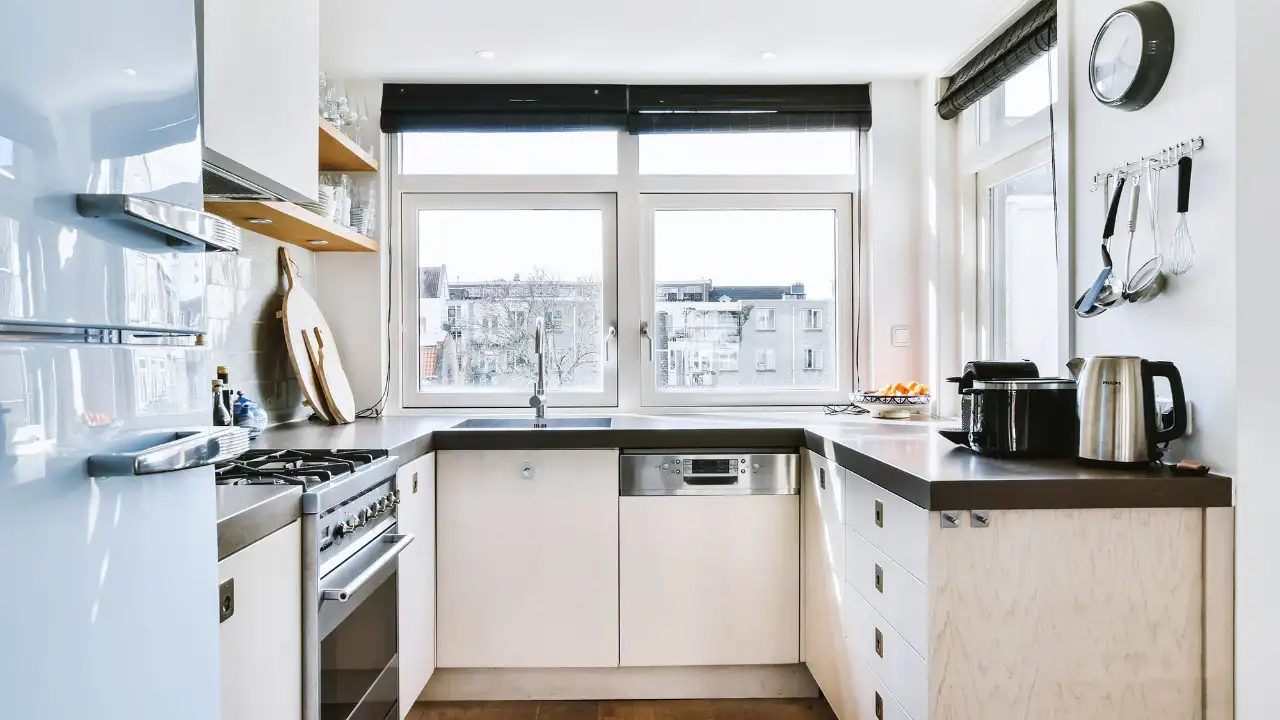
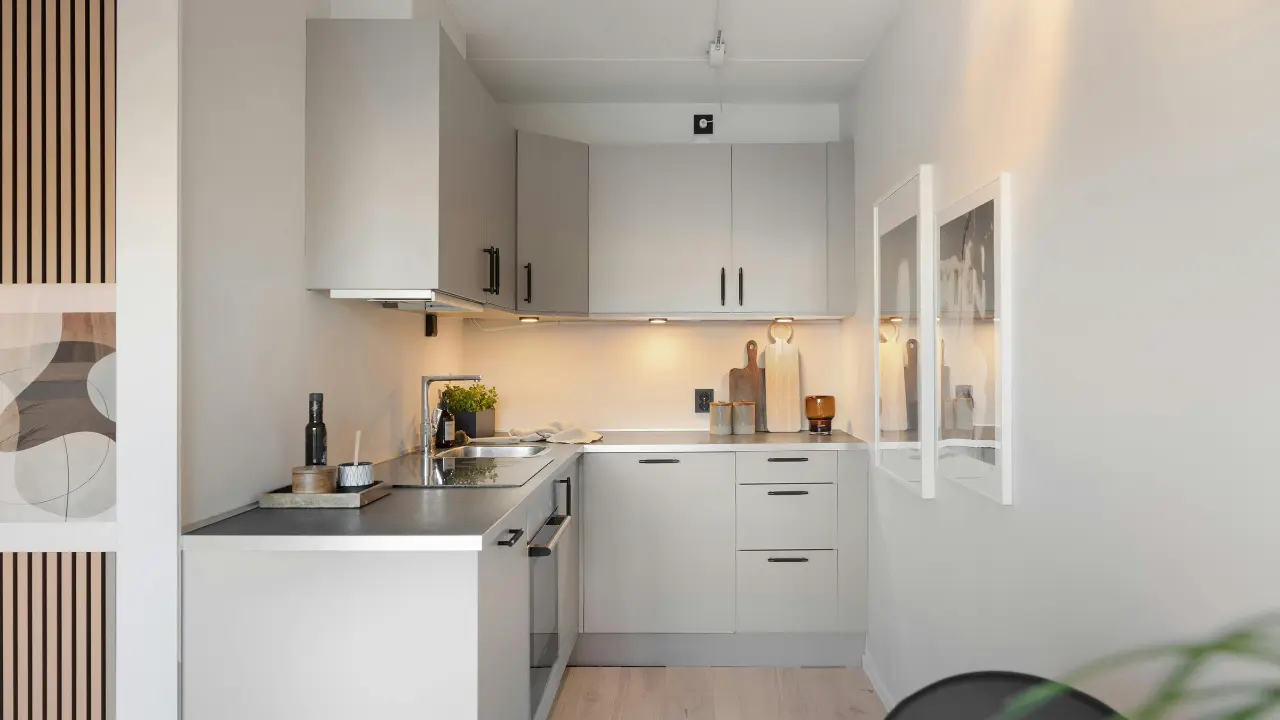
A moody blue kitchen can bring depth, character, and sophistication to a home without relying on black or an entirely neutral palette. From classic navy cabinets and blue-gray Shaker doors to deep ink-colored islands and natural wood accents, blue offers plenty of ways to create a kitchen that feels dramatic without becoming overwhelming.
The key is balance.
Dark cabinetry can absorb more visual light, so the surrounding materials matter. A deep blue kitchen can feel warm and inviting when it is paired with cream, warm white, natural wood, lighter stone, thoughtful hardware, and layered lighting. The same blue can feel much heavier when combined with dark countertops, dark flooring, limited lighting, and too many competing finishes.
That is why the best moody blue kitchen ideas are not simply about choosing a beautiful paint color. They consider how color, light, materials, storage, proportions, and daily kitchen use work together.
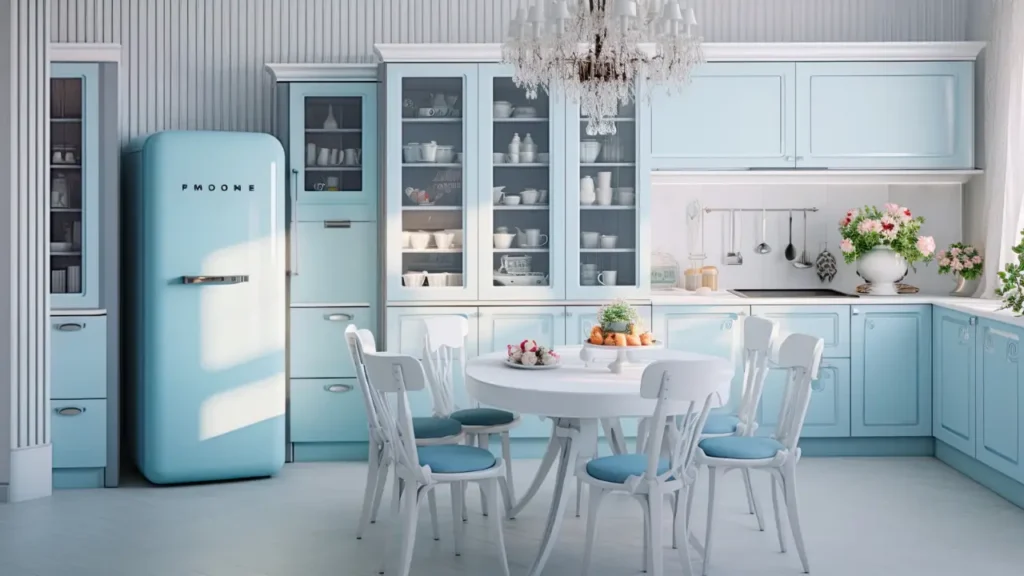
Whether you’re planning a complete renovation or looking for a smaller update, the ideas below can help you create a moody blue kitchen that looks intentional and remains practical.
What Is a Moody Blue Kitchen?
“Moody blue” is a descriptive design term rather than one standardized paint color.
It generally refers to deeper, muted, desaturated, or atmospheric shades of blue. Depending on the room and surrounding materials, the color might appear sophisticated, cozy, traditional, contemporary, or dramatic.
Common examples include:
- Navy blue
- Blue-gray
- Slate blue
- Ink blue
- Midnight blue
- Dusty blue
- Deep denim
- Muted teal-blue
The important distinction is that a moody blue kitchen doesn’t necessarily need to be extremely dark. A muted blue-gray can create a softer mood than a nearly black navy, while a dusty blue can provide atmosphere without absorbing as much visual light.
The right choice depends on your room’s natural light, flooring, countertop, cabinet style, and the overall atmosphere you want.
Why Moody Blue Works in Kitchens
It Creates Visual Depth
Deep colors can give cabinetry a strong architectural presence. Instead of allowing cabinets to visually disappear into a pale room, a rich blue can make the cabinetry feel like an intentional design feature.
This can be especially effective on an island, pantry wall, or full cabinet run.
It Can Feel Sophisticated Without Being Stark
Black kitchens can create a strong graphic effect, but blue introduces color while still providing depth.
Navy, ink, and blue-gray can feel dramatic without having the same purely neutral appearance as charcoal or black.
It Works Across Multiple Styles
One of the advantages of blue is its flexibility.
The same general color family can work with:
- Modern kitchens
- Traditional kitchens
- Transitional kitchens
- Modern farmhouse kitchens
- Organic modern kitchens
- Vintage-inspired kitchens
- Scandinavian-inspired kitchens
- Coastal-inspired kitchens
The cabinet profile, countertop, lighting, hardware, and supporting materials determine much of the final character.
It Pairs Well With Warm Materials
Blue becomes particularly interesting when combined with warm materials such as:
- Oak
- Walnut
- Brass
- Cream
- Beige
- Warm stone
- Natural marble
These materials can prevent a deep blue palette from feeling excessively cold.
25 Moody Blue Kitchen Ideas
1. Full Moody Blue Kitchen Cabinets
One of the most dramatic approaches is to use a deep blue across the primary cabinet run.
Navy, blue-gray, and ink blue can all work, particularly when paired with lighter countertops and walls.
For example, deep blue Shaker cabinets with a warm white countertop and simple brass pulls can create a classic look. In a modern kitchen, the same color can be used on flat-panel or slab cabinets with minimal hardware.
If you choose full blue cabinetry, pay close attention to the surrounding surfaces. A light countertop, warm backsplash, or natural wood element can provide important visual contrast.
A matte or low-sheen finish can also help create a more understated appearance than a highly reflective cabinet surface.
2. Moody Blue Lower Cabinets With Light Upper Cabinets
If full blue cabinetry feels too heavy, use the darker color on the lower cabinets and keep the upper section lighter.
Try combinations such as:
- Moody blue lowers + cream uppers
- Navy lowers + warm white uppers
- Blue-gray lowers + natural wood uppers
- Deep blue base cabinets + open wood shelving
This approach gives you the personality of dark cabinetry while leaving more visual space around eye level.
It can also be useful in smaller kitchens where covering every cabinet in a dark color may make the room feel visually dense.
3. Moody Blue Kitchen Island
A blue island can act as the main color statement while the perimeter cabinets remain neutral.
Consider pairing a deep blue island with:
- Cream perimeter cabinets
- White cabinets
- Natural oak cabinetry
- Light stone countertops
- Brass pendant lights
- Simple hardware
An island also provides an opportunity to experiment with a bolder shade without committing every cabinet to it.
If the island includes seating, make sure the design leaves enough clearance for people to sit comfortably while others move through the kitchen.
4. Cream Cabinets With a Moody Blue Island
Reverse the previous approach by keeping the perimeter cabinetry cream and making the island deep blue.
This creates a defined focal point without making the entire kitchen dark.
The combination works especially well when the countertop connects the two cabinet colors. A light countertop can visually tie the cream cabinets and blue island together.
For a warmer look, add oak flooring, walnut stools, aged brass hardware, or natural wood accessories.
5. Moody Blue and Natural Wood
Natural wood is one of the easiest ways to introduce warmth into a moody blue kitchen.
Consider:
- Oak shelves
- Walnut islands
- Natural wood stools
- Oak flooring
- Wood cabinet sections
- Wooden cutting boards and bowls
Oak generally creates lighter contrast, while walnut produces a richer and deeper combination.
If both the cabinetry and wood are dark, introduce lighter countertops, walls, or backsplashes so the room doesn’t become visually heavy.
6. Moody Blue With Brass Hardware
Brass hardware can add warmth and contrast to dark blue cabinetry.
Possible finishes include:
- Aged brass
- Antique brass
- Brushed brass
- Brass knobs
- Brass pulls
- Brass faucets
- Brass pendant fixtures
The exact finish changes the character of the kitchen. Aged brass can feel traditional, while a cleaner brushed brass finish can work in a contemporary space.
Rather than adding brass to every available surface, create a consistent hardware strategy and repeat the finish where it makes visual sense.
7. Moody Blue and Cream Kitchen
Cream is an excellent partner for deep blue when you want a softer result than blue and bright white.
Use cream on:
- Walls
- Backsplashes
- Countertops
- Upper cabinets
- Trim
- Window treatments
Cream has a warmer appearance than many crisp whites, which can help balance blue cabinets with cool undertones.
If you like warm, nature-inspired palettes, you can also explore related combinations such as a sage green and cream kitchen.
8. Moody Blue and White Kitchen
Blue and white remain a flexible kitchen combination, but the exact white matters.
Crisp white can create strong contrast, while warm white produces a softer transition.
Possible applications include:
- White quartz countertops
- White marble
- White subway tile
- Warm white walls
- White upper cabinets
If the blue contains gray or green undertones, test the white beside it before committing. Two colors that appear compatible online may look noticeably different under your kitchen’s lighting.
9. Moody Blue Cabinets With Marble
Marble can provide a lighter visual counterpoint to deep cabinetry.
Options include:
- White marble
- Gray-veined marble
- Warm-veined marble
- Marble-look quartz
- Marble-look porcelain
The goal isn’t simply to find a stone with the most dramatic veining. Consider how the movement in the countertop interacts with the cabinet color.
If the blue cabinetry is already visually strong, a more restrained countertop can keep the overall composition balanced.
10. Moody Blue Kitchen With Cream Subway Tile
Cream subway tile provides a classic backdrop for blue cabinets.
You can choose from:
- Traditional subway tile
- Handmade-look tile
- Matte tile
- Glossy tile
- Slightly textured ceramic tile
Grout color also matters. A contrasting grout can emphasize the tile pattern, while a closer grout color creates a quieter surface.
When the cabinets are already dramatic, a relatively restrained backsplash can keep the kitchen from becoming visually crowded.
11. Moody Blue Full-Height Backsplash
For a more dramatic design, extend the backsplash upward instead of stopping at the standard counter-to-cabinet area.
Possible materials include:
- Blue-gray stone
- Blue tile
- Dark porcelain
- Stone-look porcelain
- Blue-gray slabs
A full-height backsplash works best when it is selected together with the cabinetry and countertop.
Don’t treat the backsplash as an isolated design decision. Its color, pattern, texture, and reflectivity all affect how the blue cabinets appear.
12. Modern Moody Blue Kitchen
For a modern interpretation, combine deep blue with simple architectural lines.
Consider:
- Slab cabinets
- Flat-panel doors
- Minimal hardware
- Integrated appliances
- Large-format surfaces
- Simple lighting
- Limited decorative accessories
A deep blue color can introduce personality into a minimalist kitchen without requiring lots of decoration.
The simpler the cabinet profile, the more attention the color itself receives.
13. Traditional Moody Blue Kitchen
Traditional kitchens can use deep blue in a more detailed setting.
Consider:
- Shaker cabinets
- Raised-panel doors
- Crown molding
- Glass-front cabinets
- Natural stone
- Classic hardware
- Traditional pendant fixtures
Aged brass or antique brass can reinforce the traditional character, while marble or stone countertops provide a timeless material contrast.
14. Moody Blue Modern Farmhouse Kitchen
For a modern farmhouse interpretation, combine blue Shaker cabinets with warm, simple materials.
Try:
- Blue Shaker cabinetry
- Cream walls
- Natural wood
- Warm hardware
- Simple pendant lights
- Classic sink styles
- Light stone countertops
The goal is to capture the relaxed character of farmhouse design without covering the room in decorative signs, overly themed accessories, or competing patterns.
15. Moody Blue Organic Modern Kitchen
Organic modern design works particularly well with muted blue because the style already emphasizes natural materials and restrained color.
Combine:
- Deep blue cabinetry
- Natural wood
- Stone
- Linen
- Soft lighting
- Minimal accessories
- Simple architectural forms
Instead of introducing many accent colors, focus on texture.
Wood grain, stone variation, woven textiles, ceramic surfaces, and subtle lighting can give the kitchen depth without adding visual clutter.
16. Moody Blue Small Kitchen
A small kitchen can use dark blue successfully when the color is strategically distributed.
Consider:
- Blue lower cabinets
- Light upper cabinets
- Cream walls
- Light countertops
- Reflective backsplash
- Under-cabinet lighting
- Vertical storage
You don’t have to eliminate dark colors simply because the kitchen is compact.
In many cases, the more useful question is where the dark color is placed and how much visual contrast surrounds it.
For more compact-kitchen planning ideas, see our guide to small kitchen ideas.
17. Moody Blue Galley Kitchen
Galley kitchens benefit from visual consistency because their narrow proportions can make a mixture of unrelated finishes feel busy.
A practical approach is to keep one side visually lighter while using deep blue strategically on the other.
Consider:
- Consistent cabinetry
- Light backsplash
- Light countertop
- Under-cabinet lighting
- Vertical storage
- Minimal countertop clutter
Keeping the palette controlled can make a narrow kitchen feel more intentional.
18. Moody Blue Pantry or Tall Cabinet Wall
You don’t need to use blue on every cabinet.
A tall cabinet wall can become a dramatic feature when finished in deep blue.
Use the color on:
- Pantry cabinets
- Refrigerator surrounds
- Appliance walls
- Floor-to-ceiling storage
- Utility cabinetry
This strategy can create an architectural focal point while leaving the main work area lighter.
19. Moody Blue Cabinets With Wood Shelves
Natural wood shelves can break up a large area of blue cabinetry.
Oak is particularly useful when you want a lighter, organic contrast.
Style the shelves with:
- Cream ceramics
- Wooden bowls
- Neutral accessories
- Green plants
- A few blue objects
Avoid filling every inch of shelf space. Negative space helps the blue cabinetry remain the dominant visual feature.
20. Moody Blue With Matte Black Accents
Matte black can create a more contemporary, graphic appearance.
Possible applications include:
- Black faucets
- Black lighting
- Black hardware
- Black stools
- Black window frames
However, deep blue and black can have relatively little contrast when placed beside one another.
Introduce lighter countertops, wood, cream walls, or reflective surfaces to keep the two dark colors visually distinct.
21. Moody Blue With Warm Beige
Warm beige can soften a dark blue kitchen without creating the high contrast of white.
Use beige for:
- Walls
- Flooring
- Stone
- Textiles
- Backsplash tile
- Window treatments
This combination can feel especially comfortable in kitchens with warm wood and soft lighting.
22. Moody Blue With Walnut
Walnut creates a particularly rich pairing with dark blue.
Use walnut for:
- Islands
- Shelves
- Bar stools
- Furniture
- Accent cabinetry
Because both walnut and deep blue can have substantial visual weight, balance them with lighter surfaces elsewhere.
A cream wall and light countertop can keep the combination sophisticated rather than overly dark.
23. Vintage Moody Blue Kitchen
Deep blue can work beautifully in a vintage-inspired kitchen.
Consider combining it with:
- Retro-style appliances
- Traditional tile
- Aged hardware
- Vintage-inspired lighting
- Classic cabinetry
- Patterned flooring
Keep the color palette controlled. Too many competing vintage details can make the room feel themed rather than intentionally designed.
24. Budget-Friendly Moody Blue Kitchen
You don’t necessarily need new cabinets to introduce moody blue.
Lower-cost updates can include:
- Painting suitable existing cabinets
- Replacing cabinet hardware
- Painting an accent wall
- Adding blue furniture
- Updating lighting
- Introducing open shelving
- Adding blue textiles
- Using decorative accessories
Before painting existing cabinets, confirm that the cabinet material and existing finish are suitable for refinishing and follow the appropriate preparation and coating instructions.
Cosmetic updates can change the appearance significantly, but they won’t solve underlying problems such as poor storage, damaged cabinetry, inadequate electrical capacity, or inefficient layout.
25. Warm and Sophisticated Moody Blue Kitchen
For a complete, balanced look, combine several complementary elements:
- Deep muted blue cabinetry
- Warm cream
- Natural wood
- Light stone
- Brass hardware
- Layered lighting
- Minimal styling
The goal is not to make every component dramatic.
Instead, let the blue provide depth while cream and light stone provide brightness, wood introduces warmth, brass adds detail, and lighting supports the room’s functionality.
Best Moody Blue Kitchen Color Combinations
| Color / Material | Where to Use It | Effect |
|---|---|---|
| Warm white | Walls, trim | Brightens and softens |
| Cream | Walls, backsplash | Adds warmth |
| Natural oak | Shelves, flooring | Adds organic texture |
| Walnut | Island, furniture | Adds rich contrast |
| Brass | Hardware, lighting | Adds warmth |
| Matte black | Fixtures | Adds definition |
| Beige | Flooring, textiles | Softens the palette |
| Gray | Countertops, backsplash | Creates a cooler modern look |
| Marble | Countertops, backsplash | Adds light and pattern |
| Terracotta | Accessories | Adds earthy warmth |
A useful rule is to think in terms of temperature and visual weight.
If your blue is cool and gray, warmer materials such as oak, cream, and brass can soften it. If your blue already has warm or green undertones, you may have more flexibility with cooler whites and gray stone.
How to Choose the Right Moody Blue
There isn’t one universally correct shade of moody blue.
Navy Blue
Navy is one of the most familiar deep blue choices. It can work with traditional, transitional, modern farmhouse, and contemporary kitchens.
Blue-Gray
Blue-gray tends to feel softer and more subdued than a saturated navy.
It can be useful when you want depth without an extremely dramatic appearance.
Slate Blue
Slate blue has a muted, earthy character and can work particularly well with natural stone, wood, and warm neutrals.
Ink Blue
Ink blue creates a deeper, more dramatic appearance and can function almost like a soft alternative to black.
Midnight Blue
Midnight blue is extremely deep and atmospheric. Because it can absorb substantial visual light, test it carefully in the actual room.
Dusty Blue
Dusty blue is lighter and more relaxed. It can create a moody atmosphere without requiring the intensity of very dark cabinetry.
Test the Color Before Ordering
Evaluate samples against:
- Natural daylight
- Artificial lighting
- Countertops
- Flooring
- Walls
- Appliances
- Hardware
A large sample board is generally more informative than a tiny paint card because you can observe the color at a more realistic scale.
Look at the sample in the morning, afternoon, and evening.
Warm vs. Cool Moody Blue
Undertones can significantly affect the finished kitchen.
Warm-Leaning Blue
A warmer blue can pair effectively with:
- Cream
- Walnut
- Brass
- Beige
- Warm stone
Cool-Leaning Blue
A cooler blue can work with:
- Crisp white
- Gray
- Chrome
- Cooler stone
- Concrete-inspired finishes
This doesn’t mean you must match warm with warm and cool with cool.
Sometimes contrast is exactly what makes the palette work. The important thing is to understand the relationship before purchasing expensive materials.
Best Cabinet Styles for Moody Blue
| Cabinet Style | Overall Feel | Suitable Design Direction |
|---|---|---|
| Shaker | Timeless | Farmhouse, transitional |
| Slab | Clean | Modern |
| Flat-panel | Minimal | Contemporary |
| Raised-panel | Traditional | Classic |
| Glass-front | Decorative | Traditional/transitional |
| Handleless | Sleek | Modern |
The same blue can look completely different depending on the cabinet profile.
A navy Shaker kitchen can feel classic and approachable, while an ink-blue slab kitchen can feel sleek and architectural.
Best Countertops for Moody Blue Cabinets
Quartz
Quartz offers a broad range of colors and patterns, including:
- Cream
- White
- Warm neutral
- Veined designs
A light quartz surface can provide strong contrast against deep blue cabinets.
Marble
Marble can introduce natural variation and lighter visual movement.
White marble with gray veining creates a classic combination, while warmer veining can connect more naturally with cream, brass, and wood.
Quartzite
Quartzite can provide natural stone variation and distinctive veining.
Because natural stone varies from slab to slab, review the actual slab whenever possible rather than choosing solely from a small sample.
Granite
Granite remains useful for homeowners who want natural stone with a wide variety of colors and patterns.
The specific slab matters more than the material category alone.
Porcelain
Porcelain can provide large-format applications and a wide selection of stone-inspired appearances.
It can be worth considering when you want a continuous visual surface with a particular aesthetic.
Butcher Block
Butcher block introduces natural warmth and can soften the visual weight of dark cabinetry.
It works especially well when paired with blue and white, blue and cream, or blue and natural wood.
Countertop Selection Rule
Choose your countertop alongside the backsplash and cabinet color rather than making each selection independently.
Put the actual samples together before finalizing the combination.
Best Moody Blue Kitchen Backsplash Ideas
Cream Subway Tile
Cream subway tile creates a warm, classic backdrop.
White Subway Tile
White provides stronger contrast and can help brighten a dark cabinet palette.
Handmade-Look Tile
Subtle irregularity can introduce texture without requiring a highly patterned backsplash.
Marble-Look Tile
A restrained stone pattern can add movement while maintaining a relatively light background.
Full-Height Stone
A full-height surface can create a more continuous and upscale visual effect.
Beige Tile
Beige is useful when you want to warm the kitchen without introducing another strong color.
Blue Tile
Blue tile creates a more monochromatic composition, but coordinate the exact blue carefully so the cabinet and backsplash don’t clash.
Large-Format Tile
Large-format tile can reduce the number of grout lines and create a quieter surface.
Best Hardware for Moody Blue Cabinets
| Finish | General Character |
|---|---|
| Aged brass | Warm and traditional |
| Antique brass | Vintage |
| Brushed brass | Contemporary warmth |
| Matte black | Strong contrast |
| Brushed nickel | Neutral |
| Chrome | Crisp and reflective |
Hardware should be selected based on more than color.
Consider:
- Knob versus pull
- Pull length
- Handle scale
- Cabinet proportions
- Placement
- Faucet coordination
- Lighting finish
- Other visible metals
Mixing metals can work, but it should look intentional rather than accidental.
Lighting Ideas for Moody Blue Kitchens
Lighting becomes particularly important when you use dark cabinetry.
Ambient Lighting
Ambient lighting provides general illumination for the room.
Examples include ceiling fixtures and broader overhead lighting.
Task Lighting
Task lighting should prioritize work areas such as:
- Countertops
- Sink
- Cooktop
- Food-preparation zones
Under-cabinet lighting can be particularly useful because it places illumination directly on the work surface.
Accent Lighting
Accent lighting can highlight:
- Open shelving
- Glass-front cabinets
- Artwork
- Architectural details
Pendant Lighting
Pendant lights can define an island or breakfast area while adding another visual layer.
For a warm and comfortable atmosphere, many homeowners prefer warm or neutral-warm lighting. Extremely cool lighting can change the perceived relationship between blue cabinetry and warm materials.
The exact lighting specification should also suit the fixture, task, room, and local electrical requirements.
Natural Light and Moody Blue Kitchens
Natural light changes how blue appears throughout the day.
North-Facing Rooms
North-facing spaces often receive cooler daylight.
South-Facing Rooms
South-facing rooms often receive warmer and stronger daylight.
East-Facing Rooms
East-facing rooms can look significantly different in morning light compared with later in the day.
West-Facing Rooms
West-facing spaces often become warmer later in the day.
These are general observations, not guarantees. Window size, surrounding buildings, trees, weather, flooring, wall color, and interior finishes all affect the actual light.
For this reason, never select a cabinet color solely from an online photograph.
Moody Blue Kitchen Island Ideas
A kitchen island can be one of the most useful places to introduce deep blue.
Consider:
- Blue island + light perimeter cabinets
- Light island + blue perimeter cabinets
- Natural wood island
- Waterfall countertop
- Island seating
- Deep storage drawers
- Dedicated prep space
- Pendant lighting
Plan the Island Around Movement
Before choosing the island size, check:
- Walkway clearance
- Seating clearance
- Drawer operation
- Appliance door swing
- Sink location
- Electrical needs
- Traffic flow
A larger island is not automatically more functional. If it makes it difficult to open a dishwasher, refrigerator, oven, or drawer, the additional countertop area may not justify the reduced circulation.
Moody Blue Kitchens by Design Style
Modern
Use slab or flat-panel cabinets, minimal hardware, integrated appliances, and restrained decoration.
Traditional
Pair deep blue with detailed cabinetry, natural stone, classic hardware, and traditional lighting.
Transitional
Combine traditional cabinet details with cleaner contemporary surfaces and simplified styling.
Modern Farmhouse
Use blue Shaker cabinets with cream, wood, warm hardware, and simple lighting.
Organic Modern
Combine muted blue with natural wood, stone, linen, and restrained decoration.
Vintage
Introduce retro appliances, classic tile, aged details, and traditional cabinet profiles.
Scandinavian-Inspired
Balance the blue with light wood, soft neutrals, and simple forms.
Coastal-Inspired
Use muted blue with natural textures and restrained colors rather than relying heavily on nautical decoration.
How to Make a Moody Blue Kitchen Feel Brighter
If your kitchen feels too dark after introducing deep blue, consider these strategies:
- Use a lighter countertop.
- Add cream or warm-white walls.
- Install effective under-cabinet lighting.
- Keep windows visually open.
- Introduce natural wood.
- Use reflective surfaces strategically.
- Keep countertops relatively uncluttered.
- Layer ambient and task lighting.
- Avoid making every surface dark.
- Evaluate the palette at night as well as during daylight.
The goal isn’t necessarily to eliminate dark color.
Instead, create enough contrast and illumination for the room to remain comfortable and functional.
Storage and Organization in a Moody Blue Kitchen
A beautiful kitchen still needs to work well.
It is useful to distinguish storage from organization.
Storage creates places to keep items.
Organization arranges those items so they are accessible.
For example, adding a deep drawer creates storage capacity. Dividing that drawer into zones for cookware creates organization.
Consider:
- Deep drawers
- Pantry zones
- Pull-outs
- Vertical tray storage
- Drawer dividers
- Under-sink storage
- Appliance garages
- Corner storage
- Dedicated coffee stations
- Cooking-zone storage
If you’re working with limited cabinet capacity, our guides to small kitchen storage ideas and small kitchen organization ideas can help you plan the functional side of the design.
Small Moody Blue Kitchen Ideas
A compact kitchen doesn’t automatically rule out deep cabinetry.
Instead, think carefully about color placement and visual weight.
Useful strategies include:
- Blue lower cabinets
- Light upper cabinets
- Cream walls
- Light countertops
- Compact islands
- Wall shelves
- Vertical storage
- Integrated appliances
- Reflective backsplash materials
- Layered lighting
- Clear worktops
In a small room, excessive visual clutter can make the space feel busier regardless of cabinet color.
That means a well-organized blue kitchen may feel more comfortable than a lighter kitchen with crowded countertops and poorly planned storage.
For additional layout and space-planning ideas, see our guide to small kitchen ideas.
How to Create a Luxury Moody Blue Kitchen
An expensive-looking kitchen isn’t necessarily created by using the most expensive material in every category.
A more coordinated approach can produce a refined result.
Consider:
- Well-proportioned cabinetry
- Consistent hardware
- Natural stone
- Carefully selected stone-look surfaces
- Full-height backsplash
- Statement lighting
- Natural wood
- Integrated appliances
- Minimal countertop clutter
- Thoughtful cabinet proportions
The relationship between the materials often matters as much as the individual material.
For example, deep blue cabinets, warm wood, light stone, and restrained brass can feel more cohesive than a room containing several expensive finishes that don’t relate to one another.
For island-focused ideas, explore our guide to luxury quartz kitchen island styling.
Budget-Friendly Moody Blue Kitchen Updates
Not every moody blue transformation requires a complete remodel.
Low-Cost Updates
Consider:
- Cabinet or wall paint
- New hardware
- A kitchen runner
- Accessories
- Artwork
- Small furniture
- Lighting updates
Mid-Range Updates
These might include:
- Cabinet refinishing
- Backsplash replacement
- New furniture
- Open shelving
- Lighting upgrades
Major Renovation
A larger renovation may involve:
- New cabinets
- Countertops
- Flooring
- Plumbing
- Electrical
- Ventilation
- Appliances
Major electrical, plumbing, structural, or ventilation work may require qualified professionals and local approvals.
Before choosing a cosmetic update, identify whether the existing kitchen has functional problems that should be addressed first.
Common Moody Blue Kitchen Mistakes
Choosing the Blue From a Screen
Online images and digital color displays cannot reproduce every color consistently.
Always test physical samples where possible.
Ignoring Undertones
Blue can lean toward gray, green, or violet.
Those undertones can become more noticeable beside different whites, woods, stones, and lighting.
Using Too Much Dark Material
Deep blue cabinetry combined with dark countertops, dark floors, dark walls, and limited lighting can create a heavy result.
Forgetting Natural Light
A color that looks comfortable in bright daylight may appear substantially deeper in the evening.
Evaluate the room throughout the day.
Choosing the Countertop Too Late
Cabinets, countertops, and backsplash materials should be coordinated together.
Using Too Many Accent Colors
Deep blue already provides strong color. Adding numerous unrelated accent colors can reduce visual cohesion.
Mixing Too Many Metals
Choose a primary hardware direction and repeat it intentionally.
Sacrificing Function for Appearance
Storage, preparation areas, circulation, appliance access, and cleaning zones remain important regardless of the color palette.
Over-Styling the Kitchen
A moody blue kitchen can already have significant visual character.
Too many signs, accessories, decorative objects, and competing colors can hide the architecture rather than improve it.
Step-by-Step Moody Blue Kitchen Planning Guide
Step 1: Measure the Room
Record:
- Wall dimensions
- Ceiling height
- Doors
- Windows
- Appliances
- Plumbing
- Existing cabinetry
Step 2: Study Natural Light
Observe the room at different times of day.
Step 3: Select the Blue
Test large samples in the actual space.
Step 4: Choose the Supporting Neutral
Decide whether the supporting palette should be:
- Cream
- Warm white
- Crisp white
- Beige
- Greige
Step 5: Choose the Cabinet Style
Match the cabinet profile to the desired design direction.
Step 6: Select the Countertop
Consider:
- Color
- Pattern
- Maintenance
- Budget
- Scale
Step 7: Select the Backsplash
Coordinate the backsplash with both cabinet and countertop samples.
Step 8: Choose the Wood
Oak generally provides lighter warmth, while walnut creates deeper contrast.
Step 9: Select Hardware
Consider:
- Finish
- Scale
- Placement
- Faucet coordination
Step 10: Plan Lighting
Include appropriate ambient, task, and accent lighting.
Step 11: Plan Storage
Base storage decisions on how you actually cook, clean, shop, and use appliances.
Step 12: Test the Complete Palette
Place your blue, countertop, backsplash, wood, hardware, and neutral samples together in the actual room before ordering major materials.
Materials That Pair Well With Moody Blue
| Material | Best Use | Visual Effect |
|---|---|---|
| Oak | Shelves, flooring, island | Light natural warmth |
| Walnut | Island, furniture | Rich contrast |
| Marble | Countertops, backsplash | Classic and luminous |
| Quartz | Countertops | Consistent and versatile |
| Porcelain | Countertops, backsplash | Broad design flexibility |
| Brass | Hardware, lighting | Warm contrast |
| Matte black | Fixtures | Strong definition |
| Ceramic tile | Backsplash | Versatile texture |
| Natural stone | Countertops, backsplash | Organic character |
| Linen | Window treatments, textiles | Softens the room |
Moody Blue vs. Other Dark Kitchen Colors
Different dark colors create different visual personalities.
| Color | General Character | Common Supporting Colors |
|---|---|---|
| Moody blue | Deep, colorful, sophisticated | Cream, oak, brass |
| Charcoal | Neutral, contemporary | White, oak, black |
| Forest green | Rich, organic | Cream, walnut, brass |
| Burgundy | Warm, dramatic | Cream, walnut, brass |
| Black | Strong, graphic | White, wood, brass |
There is no universally correct choice.
The appropriate palette depends on natural light, room size, architecture, existing finishes, and the atmosphere you want to create.
Styling Ideas for a Moody Blue Kitchen
Accessories can add warmth and personality without changing the major finishes.
Consider:
- Cream ceramics
- Wooden cutting boards
- Natural bowls
- Linen textiles
- Brass accents
- Plants
- Neutral artwork
- Wooden stools
- Soft runners
- Blue glassware
Try to avoid:
- Excessive decorative signs
- Too many tiny accessories
- Multiple competing accent colors
- Uncoordinated metals
- Cluttered countertops
The darker the cabinetry, the more valuable visual restraint can become.
Open Shelving Styling
Open shelves can break up large areas of blue cabinetry and introduce a natural material.
A simple palette might include:
- Natural oak shelves
- Cream ceramics
- Wooden bowls
- Blue cookware
- Green plants
- Neutral accessories
Keep frequently used items within easy reach.
Also leave some empty space between objects. Shelves generally look more intentional when every available inch isn’t filled.
Moody Blue Kitchen Checklist
Before committing to the design, ask:
- Does the blue work in the actual room?
- Have I tested it in daylight and artificial lighting?
- Does its undertone work with the countertop?
- Does the backsplash complement the cabinet color?
- Is there enough light contrast?
- Do the wood tones work with the blue?
- Does the hardware fit the cabinet style?
- Is the kitchen adequately illuminated?
- Is storage sufficient?
- Can drawers and appliances operate comfortably?
- Is countertop clutter controlled?
- Does the complete palette still look balanced at night?
If several answers are uncertain, test the palette before ordering expensive materials.
Frequently Asked Questions
Is moody blue a good color for a kitchen?
Deep or muted blue can create depth and personality while working with both traditional and contemporary materials. The final result depends on the specific shade, natural and artificial lighting, room proportions, and supporting finishes.
What colors go with moody blue kitchen cabinets?
Common combinations include cream, warm white, natural oak, walnut, brass, beige, marble, soft gray, and matte black.
The best combination depends on the blue’s undertone. A cool blue may work well with crisp white and gray, while a warmer blue can pair naturally with cream, walnut, and brass.
Are dark blue kitchens still stylish in 2026?
Deep and muted color palettes remain a useful option for homeowners who want more character than an all-white kitchen.
Rather than treating a trend as a guarantee of long-term appeal, consider whether the color works with the home’s architecture, lighting, materials, and your personal preferences.
What countertop looks best with dark blue cabinets?
Several countertop materials can work well, including:
- Cream quartz
- White quartz
- Marble
- Quartzite
- Granite
- Porcelain
- Butcher block
The specific color and pattern matter more than simply choosing one material category.
What hardware goes with moody blue cabinets?
Popular options include aged brass, antique brass, brushed brass, matte black, brushed nickel, and chrome.
Warm brass can soften deep blue, while black creates a stronger contemporary contrast. Brushed nickel and chrome offer more neutral or reflective alternatives.
Can a small kitchen have dark blue cabinets?
Yes. A small kitchen can use dark blue successfully when color placement, lighting, surrounding surfaces, and visual clutter are carefully considered.
Blue lower cabinets with lighter walls and countertops can be one practical approach.
Does moody blue make a kitchen look smaller?
Dark colors can absorb more visual light, but the overall effect depends on the amount of blue, natural light, surrounding surfaces, ceiling height, and layout.
A kitchen with dark cabinets and excellent lighting can behave very differently from a poorly lit kitchen where nearly every surface is dark.
What wood looks best with dark blue cabinets?
Oak is useful when you want lighter natural contrast, while walnut creates a deeper and richer combination.
Ash can also work when you want a relatively light wood appearance.
What is the difference between navy and moody blue?
Navy refers to a particular family of deep blues. “Moody blue” is a broader descriptive term that can include navy, blue-gray, slate, ink, midnight, dusty, and other muted blue shades.
How can I add moody blue without replacing my cabinets?
You can introduce the color through:
- Paint
- An island
- Furniture
- Accent walls
- Shelves
- Artwork
- Textiles
- Accessories
- Small appliances
This allows you to experiment with the color before committing to a complete cabinet replacement.
Final Thoughts
A successful moody blue kitchen is not simply a kitchen filled with dark blue surfaces.
The strongest designs consider the relationship between:
- Blue tone
- Lighting
- Cabinet style
- Countertop
- Backsplash
- Wood
- Hardware
- Neutral colors
- Storage
- Workflow
If you want a softer result, balance deep blue with cream, warm white, natural oak, and lighter stone.
If you want a stronger, more dramatic appearance, use deeper blue across larger cabinet areas while carefully controlling the surrounding materials and lighting.
Most importantly, test the complete palette in the actual room before making expensive decisions. A color that looks perfect in an inspiration photograph may behave differently under your kitchen’s daylight, artificial lighting, flooring, and existing finishes.
The goal isn’t simply to create a dramatic kitchen. It is to create one that feels intentional, comfortable, practical, and suited to the way you actually use the space.