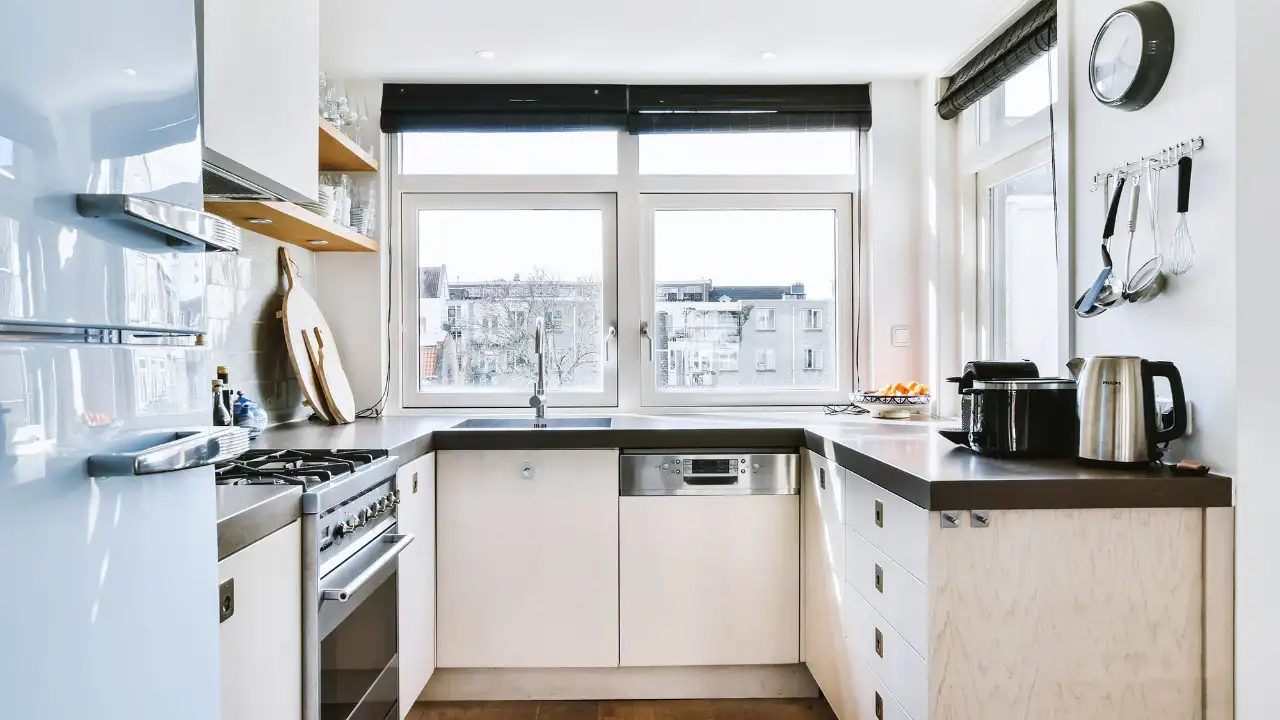
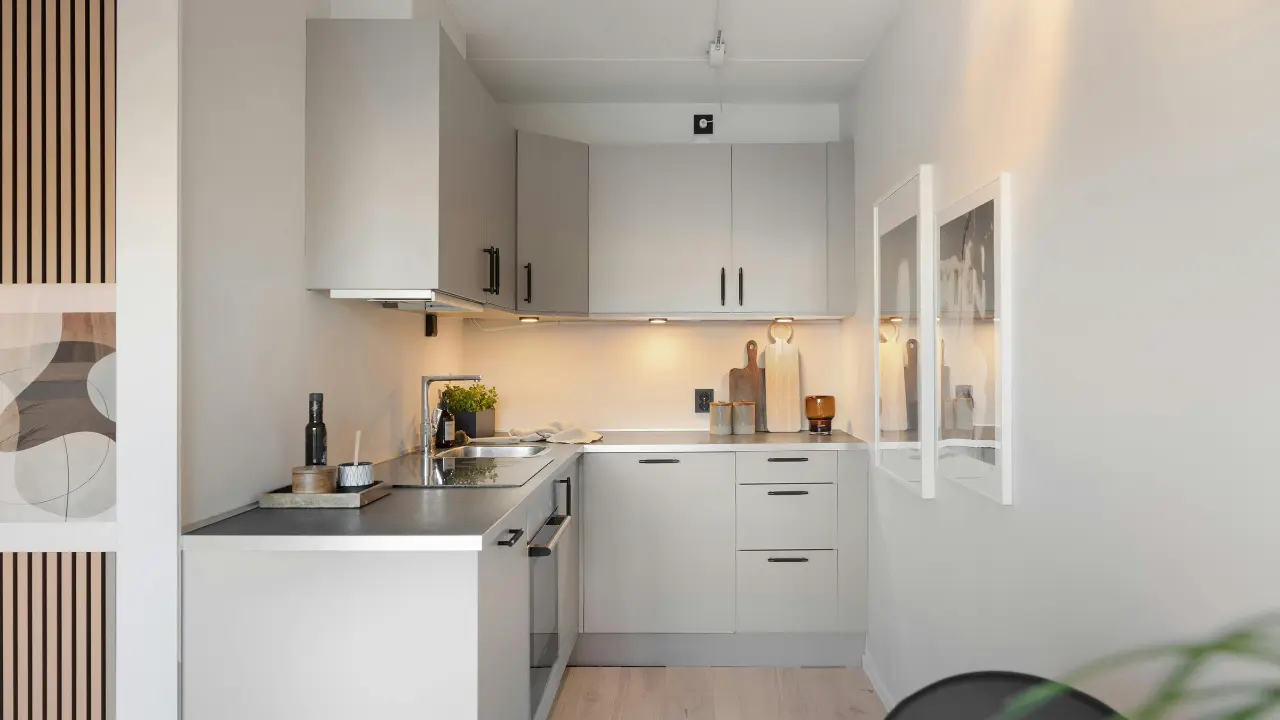
A small kitchen can be surprisingly functional when every inch is planned carefully. The kitchen sink is one of the biggest decisions because it takes up counter space, affects cabinet storage, and needs to handle everything from rinsing vegetables to washing cookware.
The best kitchen sink for small kitchen spaces is not necessarily the smallest sink you can find. A better choice is one that provides enough washing space while preserving valuable countertop and cabinet space.
For many compact kitchens, a well-designed single-bowl sink is an excellent starting point. However, the right choice depends on your cabinet width, counter depth, cooking habits, sink configuration, installation type, and preferred material.
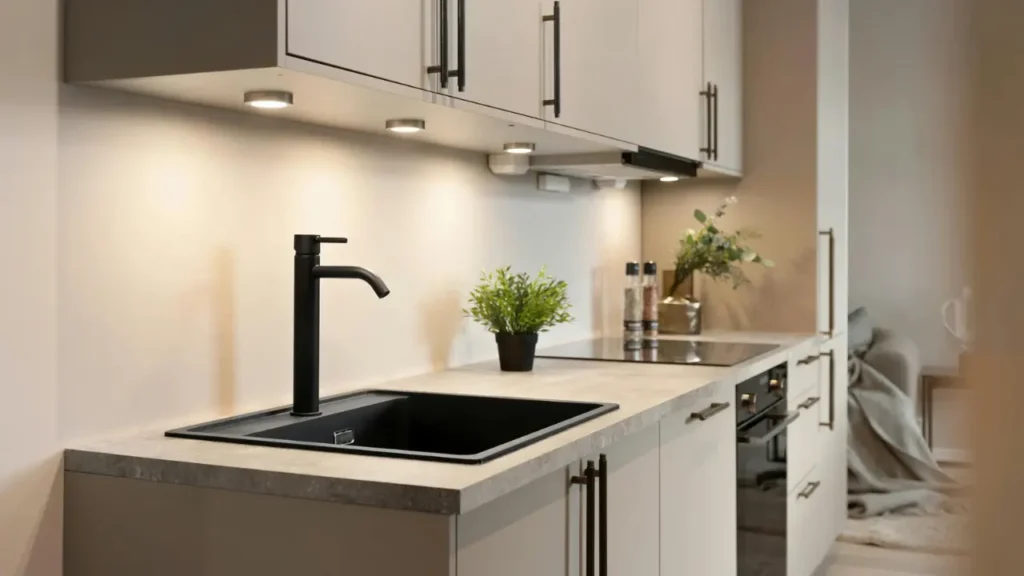
This guide explains how to choose a compact kitchen sink that fits your space without sacrificing everyday usability.
What Is the Best Kitchen Sink for a Small Kitchen?
For most small kitchens, a compact single-bowl sink offers an excellent balance between washing capacity and countertop efficiency. Unlike a small double-bowl sink, a single bowl gives you one uninterrupted area for washing larger pots, pans, baking sheets, and dishes.
However, there is no universal sink that is best for every compact kitchen.
Before choosing one, consider:
- Available cabinet width
- Countertop dimensions
- Sink opening
- Number of bowls you actually need
- Cooking and cleaning habits
- Sink depth
- Faucet placement
- Plumbing clearance
- Installation method
- Available under-sink storage
A sink that looks compact on a product page may still be unsuitable if its minimum cabinet requirement is larger than your base cabinet.
Best Overall Sink Type for Most Small Kitchens
A compact single-bowl kitchen sink is often the most practical option for a small kitchen.
The main advantage is usable bowl space. Instead of dividing a limited area into two small compartments, a single bowl provides one larger workspace.
This can make washing large cookware easier and can also simplify cleaning.
Look for a sink that is compact enough to preserve counter space but deep and wide enough for the cookware you regularly use.
Best Sink for Maximum Counter Space
If countertop space is your biggest problem, consider a narrower sink with an efficient bowl design.
Reducing the sink footprint can give you more room for:
- Food preparation
- Small appliances
- Dish drying
- Cutting boards
- Serving dishes
- Everyday kitchen tasks
But don’t automatically choose the smallest model available. A sink that is too small can make washing dishes uncomfortable and may force you to use more countertop space for drying and handling cookware.
Best Sink for Frequent Cooking
Frequent cooks may benefit from a deeper single-bowl sink.
A larger uninterrupted basin can accommodate cookware that would be awkward to wash in a narrow double-bowl configuration.
The key is finding a practical depth. A very deep sink may provide more vertical capacity but can also require more reaching and may reduce useful space underneath the sink.
Quick Comparison of the Best Sink Types for Small Kitchens
| Sink Type | Space Efficiency | Best For | Main Advantage | Potential Drawback |
|---|---|---|---|---|
| Compact Single Bowl | Excellent | Most small kitchens | Maximum usable bowl space | No separate bowl |
| Small Undermount | Excellent | Modern kitchens | Clean countertop appearance | Installation requirements |
| Top-Mount | Very Good | Budget renovations | Straightforward replacement | Visible rim |
| Small Double Bowl | Good | Multitasking | Separate washing and rinsing | Smaller individual bowls |
| Workstation Sink | Good | Meal preparation | Integrated accessories | May cost more |
| Small Farmhouse Sink | Moderate | Farmhouse-style kitchens | Strong visual appeal | May require cabinet changes |
The right choice depends less on the sink category itself and more on how well its dimensions and configuration fit your kitchen.
What Size Kitchen Sink Is Best for a Small Kitchen?
Sink size is one of the most important considerations when working with limited counter space.
There is no single sink measurement that works for every small kitchen because cabinet construction, countertop layout, plumbing, and user preferences vary.
Instead of starting with the sink you like visually, start by measuring the space available for it.
Common Small Kitchen Sink Widths
Compact sinks are available in a wide range of widths and configurations.
When comparing models, don’t look only at the outside dimensions. Check:
- Overall sink length
- Overall sink width
- Bowl dimensions
- Bowl depth
- Minimum cabinet size
- Cutout dimensions
- Faucet-hole configuration
- Drain position
A sink with a relatively small exterior footprint may still have a surprisingly usable bowl if the interior is designed efficiently.
How to Measure Your Cabinet Before Buying
Before purchasing a replacement sink, measure the installation area carefully.
Check these eight measurements:
- Cabinet width — Measure the inside width of the sink base cabinet where possible.
- Existing sink opening — If replacing a sink, measure the current cutout.
- Countertop depth — Confirm there is enough front-to-back space.
- Sink length — Check the required opening and overall sink dimensions.
- Sink width — Compare it with your available counter space.
- Sink depth — Consider both bowl depth and cabinet clearance.
- Faucet configuration — Check whether the sink supports your existing faucet arrangement.
- Plumbing clearance — Make sure the basin and drain location work with the existing plumbing.
Always compare your measurements with the manufacturer’s installation specifications before ordering.
Sink Depth for Small Kitchens
Sink depth deserves more attention than many buyers give it.
A deeper bowl can make it easier to wash large pots, but depth also affects comfort and the space available underneath.
Think about:
- Your height
- How often you wash large cookware
- Plumbing location
- Garbage disposal requirements, if applicable
- Under-sink storage
- Cabinet construction
For a small kitchen, the best sink depth is usually the one that provides useful capacity without making everyday reaching or cabinet storage unnecessarily difficult.
Best Kitchen Sink Configurations for Small Kitchens
The number and arrangement of bowls can significantly change how a small sink feels during everyday use.
Single-Bowl Kitchen Sink
A single-bowl sink is often one of the most space-efficient choices.
Because there is no center divider, the entire basin can be used for:
- Large pots
- Baking sheets
- Frying pans
- Cutting boards
- Stacking dishes before washing
It can also be easier to wipe clean because there is no divider interrupting the bowl.
For many small kitchens, this configuration provides more practical washing space than a similarly sized double bowl.
Double-Bowl Kitchen Sink
A double-bowl sink can still work in a small kitchen, especially if you regularly separate washing and rinsing tasks.
The problem is that dividing a limited sink footprint can leave you with two relatively small compartments.
Before choosing one, consider whether you actually use two bowls. If you frequently wash large cookware, the reduced uninterrupted space may become frustrating.
A compact double bowl makes more sense when separate washing and rinsing are more important to you than maximum bowl capacity.
Low-Divide Kitchen Sink
A low-divide sink offers a compromise.
The divider is lower than a traditional double-bowl sink, allowing you to maintain some separation while making it easier to handle larger cookware.
This can be useful for people who want the organization of two sections without giving up as much flexibility.
Workstation Sink
A workstation sink can turn the sink area into a multipurpose preparation zone.
Depending on the design, accessories may include:
- Cutting boards
- Colanders
- Drying racks
- Prep trays
- Sink grids
This can be particularly helpful when countertop space is extremely limited because some food-preparation tasks can take place directly over the sink.
However, workstation accessories only help if you will actually use them. A complicated sink can be unnecessary if your kitchen already has enough prep space.
Best Sink Installation Types for a Small Kitchen
The installation method affects appearance, countertop cleaning, replacement options, and sometimes the type of countertop you can use.
Undermount Sink
An undermount sink is installed beneath the countertop.
Its clean transition between countertop and basin can make a small kitchen feel visually streamlined.
Benefits include:
- Minimal visible rim
- Easy countertop sweeping
- Clean modern appearance
- Good integration with stone and solid-surface countertops
The main consideration is installation compatibility. Not every countertop or existing installation is suitable for an undermount sink.
Top-Mount / Drop-In Sink
A top-mount sink sits over the countertop with a visible rim.
This can be a practical choice for renovations and replacements because the installation approach is often more forgiving than an undermount installation.
Potential benefits include:
- Straightforward replacement
- Broad countertop compatibility
- Practical installation
- Wide variety of sizes and styles
The visible rim can collect debris around the edge, although regular cleaning can keep the area neat.
Farmhouse / Apron-Front Sink
A farmhouse sink has a visible front apron and can create a strong focal point.
A small farmhouse sink can work in a compact kitchen, but cabinet compatibility is especially important.
You may need modifications to:
- The cabinet front
- Countertop
- Sink support structure
- Plumbing arrangement
Choose this style because it suits both your kitchen design and your installation conditions, not simply because it looks attractive.
Best Kitchen Sink Materials for Small Kitchens
The material affects durability, appearance, maintenance, weight, and installation requirements.
Stainless Steel
Stainless steel remains a versatile choice for compact kitchens.
Advantages include:
- Modern appearance
- Broad style compatibility
- Relatively light construction
- Easy everyday cleaning
- Wide availability
Different stainless-steel constructions can have different thicknesses, finishes, and sound-control features, so compare the actual specifications rather than choosing based on appearance alone.
Brushed and satin finishes can also help create a practical look in busy kitchens.
Granite Composite
Granite composite sinks can provide a more substantial, stone-like appearance.
Potential advantages include:
- Contemporary styling
- Variety of colors
- Solid appearance
- Good fit for modern and transitional kitchens
Because these sinks can be relatively heavy, cabinet support and installation requirements deserve attention.
Cleaning instructions can also vary by manufacturer and finish.
Fireclay
Fireclay is particularly popular in farmhouse and traditional kitchen designs.
Its advantages can include:
- Classic appearance
- Substantial visual presence
- Compatibility with farmhouse-style kitchens
The downside for a small kitchen is that fireclay sinks can be heavy and may require appropriate cabinet support.
Porcelain / Ceramic
Porcelain and ceramic sinks can provide a traditional or vintage appearance.
They can work beautifully in cottage, farmhouse, classic, and transitional kitchens.
However, buyers should follow the manufacturer’s care instructions because surface finishes and cleaning requirements vary.
Kitchen Sink Material Comparison
| Material | Durability | Maintenance | Style | Small-Kitchen Suitability |
|---|---|---|---|---|
| Stainless Steel | Very Good | Easy | Modern/Versatile | Excellent |
| Granite Composite | Very Good | Moderate | Modern/Transitional | Very Good |
| Fireclay | Very Good | Moderate | Farmhouse/Classic | Good |
| Porcelain/Ceramic | Good | Moderate | Traditional | Good |
Best Kitchen Sink Shapes for Small Kitchens
Shape can affect both usable bowl space and how easily you can clean the sink.
Rectangular Sink
Rectangular sinks are extremely common and make efficient use of straight countertop runs.
They work particularly well in:
- Galley kitchens
- One-wall kitchens
- Apartment kitchens
- Compact L-shaped kitchens
Square Sink
Square sinks can work well where counter dimensions are limited.
They can be especially useful when the available installation area is relatively short but still has enough front-to-back depth.
Rounded-Corner Sink
Rounded corners can make cleaning easier by reducing sharp interior corners where food debris can collect.
The actual corner radius varies significantly between sink designs, so check the interior shape rather than assuming all rounded sinks are equally easy to clean.
Narrow Sink
A narrow kitchen sink can preserve more counter space along a compact cabinet run.
It can be a smart choice when you frequently prepare food beside the sink and need more usable countertop.
The trade-off is reduced washing capacity, so make sure the interior bowl is large enough for the cookware you use most.
Best Kitchen Sink Features for Small Spaces
Small kitchens benefit most from features that improve functionality without unnecessarily increasing the sink’s footprint.
Deep Single Bowl
A deeper bowl can provide useful vertical capacity when horizontal space is limited.
However, don’t choose depth without considering comfort and under-sink plumbing.
Integrated Drainboard
An integrated drainboard can reduce the need for a separate drying rack.
This can save counter space, although the drainboard itself occupies part of the sink’s overall footprint.
Low-Divide Design
A low divider can provide some separation while maintaining better access for larger cookware.
Sound-Dampening Pads
Sound-control materials can make a metal sink quieter during everyday use.
This is particularly useful in open-plan homes and small apartments where kitchen sounds can travel easily.
Easy-Clean Corners
A sink with practical interior corners can make routine cleaning easier.
Look for a design that allows you to wipe around the bowl without struggling to reach tight spaces.
Protective Sink Grid
A properly fitted sink grid can protect the basin surface from direct contact with cookware and provide a raised surface for dishes.
Make sure it is designed for the specific sink model.
Integrated Workstation Accessories
Cutting boards, colanders, and drying racks can extend the functionality of the sink.
In a small kitchen, accessories that serve multiple purposes can be more useful than buying several separate countertop items.
Rear-Set Drain
A rear-positioned drain can change how the sink uses its cabinet space.
Depending on the design, it may leave more usable storage area toward the front of the cabinet or alter the plumbing arrangement.
Always check the actual sink specifications before assuming a particular drain position will improve storage.
Best Kitchen Sink for Different Small-Kitchen Layouts
The best sink can change depending on the layout of your kitchen.
Best Sink for a Galley Kitchen
A compact rectangular or single-bowl sink usually works well in a galley kitchen.
The goal is to preserve a useful stretch of countertop on either side of the sink when possible.
Avoid choosing a sink that consumes the majority of an already narrow work surface.
Best Sink for a Small Apartment Kitchen
Apartment kitchens often benefit from compact single-bowl sinks that balance washing capacity with counter space.
If you’re renting, also consider whether you need a replacement sink that fits the existing countertop opening rather than requiring major modifications.
Best Sink for a One-Wall Kitchen
A one-wall kitchen has limited linear countertop space, making footprint especially important.
A compact sink placed strategically between preparation and cooking areas can help maintain an efficient workflow.
Best Sink for a Small L-Shaped Kitchen
An L-shaped kitchen can offer slightly more flexibility.
A compact sink along one leg of the L can preserve the other section for food preparation or small appliances.
Best Sink for a Small Kitchen Island
A sink installed in an island should be chosen carefully because the island often serves as both workspace and social space.
A compact undermount sink can provide a clean appearance, while a workstation model can make the island more multifunctional.
Best Sink for a Tiny Kitchenette
For a kitchenette, every inch matters.
A narrow single-bowl sink may be preferable to a larger configuration because it leaves more room for food preparation and other essential fixtures.
Best Kitchen Sink for Small Kitchens by Lifestyle
Best for Home Cooks
Choose a single bowl with enough interior capacity for your largest regularly used cookware.
Don’t sacrifice washing space simply to gain a small amount of additional counter area.
Best for Minimalist Kitchens
An undermount stainless-steel sink with a simple profile can complement a clean, uncluttered kitchen.
Focus on straightforward functionality rather than unnecessary accessories.
Best for Couples
A compact single bowl can work especially well for two-person households that don’t need separate washing and rinsing compartments.
Best for Families with Limited Counter Space
Families may benefit from a sink that provides enough capacity for frequent dishwashing while still preserving practical preparation space.
A deep single bowl or thoughtfully designed low-divide sink can be worth considering.
Best for Apartment Renters
For renters, installation compatibility is often more important than style.
A replacement sink that matches the existing cutout and plumbing arrangement can reduce the need for extensive modifications.
Best for Small Kitchen Renovations
During a renovation, you have more flexibility to choose the sink, cabinet, countertop, and faucet together.
This is the best opportunity to optimize the entire sink area rather than choosing a sink after the other components have already been installed.
How to Choose the Best Kitchen Sink for a Small Kitchen
Use this process before making your purchase.
Step 1: Measure the Cabinet
Start with the sink base cabinet.
Check its internal width and compare it with the manufacturer’s minimum cabinet requirement.
Step 2: Measure the Countertop
Measure the available length and front-to-back depth.
Remember to account for nearby appliances, walls, backsplashes, and faucet clearance.
Step 3: Determine Your Ideal Sink Width
Decide how much countertop space you are willing to give up.
If you frequently prepare food beside the sink, keeping a useful work surface may be more important than maximizing basin size.
Step 4: Choose Single or Double Bowl
Ask yourself how often you actually need two separate compartments.
If large cookware is common, a single bowl may offer better flexibility.
Step 5: Check Sink Depth
Consider both washing capacity and your comfort when reaching into the basin.
Step 6: Choose the Installation Type
Decide whether undermount, top-mount, or farmhouse installation is compatible with your countertop and cabinets.
Step 7: Select the Material
Compare appearance, maintenance, weight, durability, and installation requirements.
Step 8: Check Faucet Compatibility
Confirm the number and position of faucet holes, faucet reach, and clearance behind the sink.
Step 9: Check Plumbing Clearance
Make sure the drain position and basin depth work with your existing plumbing.
Step 10: Consider Accessories
Choose only accessories that solve a real problem.
A cutting board or drying rack can be valuable in a small kitchen, but unnecessary accessories can create clutter.
Step 11: Compare Maintenance Requirements
Different materials and finishes require different care.
Read the manufacturer’s cleaning instructions before buying.
Step 12: Check Warranty and Replacement Parts
A sink is a long-term kitchen fixture.
Check the warranty and whether replacement accessories or compatible parts are available.
Small Kitchen Sink vs Standard Kitchen Sink
A smaller sink can make sense in a compact kitchen, but there are trade-offs.
| Feature | Small Kitchen Sink | Standard Sink |
|---|---|---|
| Counter Space | More | Less |
| Bowl Capacity | Usually smaller | Usually larger |
| Large Cookware | More limited | Easier |
| Small Kitchen Fit | Excellent | Depends on layout |
| Installation Flexibility | Varies | Varies |
| Best Use | Compact spaces | Larger kitchens |
The goal isn’t to choose the smallest sink. It’s to choose the smallest practical sink that still handles your daily needs comfortably.
A sink that saves a few inches of counter space but makes every large pan difficult to wash may not be a good trade.
Undermount vs Drop-In Sink for a Small Kitchen
Both installation styles can work well, but they serve different priorities.
When an Undermount Sink Is Better
Choose an undermount sink when you want:
- A streamlined countertop
- Easy countertop sweeping
- A contemporary appearance
- A clean transition between counter and sink
It can be particularly attractive in modern small kitchens where visual simplicity helps the space feel less busy.
When a Drop-In Sink Is Better
A drop-in sink may be more practical when:
- You’re replacing an existing top-mount sink
- You want a renovation-friendly installation
- The countertop isn’t suitable for undermount installation
- You want a broad range of replacement options
Which Is Easier to Replace?
Replacement difficulty depends on the countertop, cutout, plumbing, and installation method.
A drop-in sink can be easier for some replacement projects because the visible rim covers the countertop opening.
However, the existing cutout still needs to match the replacement sink’s requirements.
Which Gives More Countertop Usability?
An undermount sink can provide a cleaner countertop transition because there is no raised rim around the opening.
That can make wiping crumbs and water into the sink easier.
Single Bowl vs Double Bowl Sink for a Small Kitchen
This is one of the most important choices for a compact kitchen.
Advantages of a Single Bowl
- Larger uninterrupted washing area
- Easier handling of large cookware
- Simple cleaning
- Efficient use of limited sink space
- Good fit for many small kitchens
Advantages of a Double Bowl
- Separate washing and rinsing
- Useful for multitasking
- Helpful for households that prefer two distinct sink areas
- Can support different tasks simultaneously
Which Is Better for Small Kitchens?
For many small kitchens, a single bowl is the more space-efficient choice because it avoids dividing a limited footprint.
But personal workflow matters.
If separate bowls are essential to how you clean dishes, a compact double-bowl sink may still be the better choice.
When a Double Bowl Still Makes Sense
Consider a double bowl when:
- You frequently wash and rinse simultaneously
- You prefer separate food and dishwashing areas
- Your household workflow benefits from two compartments
- You can accept smaller individual bowls
Common Mistakes When Buying a Small Kitchen Sink
Mistake 1: Choosing the Sink Before Measuring the Cabinet
A sink must fit the cabinet, not the other way around.
Always check the minimum cabinet size and installation requirements.
Mistake 2: Buying the Smallest Sink Possible
The smallest sink isn’t automatically the most efficient.
If you can’t comfortably wash your cookware, you may lose more functionality than you gain in countertop space.
Mistake 3: Ignoring Sink Depth
A deep sink can be useful, but excessive depth can make reaching uncomfortable and affect cabinet storage.
Mistake 4: Forgetting Faucet Clearance
Make sure the faucet has enough room to operate without hitting a backsplash, wall, window, or cabinet.
Mistake 5: Ignoring Drain Placement
Drain position affects plumbing and can influence how the basin and cabinet are used.
Mistake 6: Choosing Style Over Function
A beautiful sink that doesn’t fit your cooking habits is still the wrong sink.
Mistake 7: Forgetting Under-Sink Storage
The sink occupies cabinet space underneath.
Consider how the basin, drain, garbage disposal if applicable, and plumbing will affect storage.
Mistake 8: Buying a Sink That Is Too Deep for the User
Comfort matters.
Consider the height of everyone who regularly uses the kitchen.
Mistake 9: Ignoring Installation Requirements
Check countertop material, cabinet support, cutout size, mounting method, and plumbing before ordering.
Mistake 10: Choosing Features You Will Never Use
More accessories don’t necessarily make a sink better.
Choose features that solve real problems in your kitchen.
How to Make a Small Kitchen Sink Feel More Functional
A well-chosen sink is only part of the solution.
You can make the area more useful with a few smart additions.
Use a Single-Bowl Sink
A single bowl can maximize uninterrupted washing space.
Add a Fitted Sink Grid
A properly sized grid can protect the basin and keep dishes elevated.
Use a Roll-Up Drying Rack
A roll-up rack can provide temporary drying space without permanently occupying your counter.
Install an Over-Sink Cutting Board
An appropriately sized cutting board can turn part of the sink into temporary preparation space.
Keep the Faucet Compact
A faucet that is proportionate to the sink can reduce visual clutter and improve clearance.
Use Vertical Storage Around the Sink
Wall-mounted rails, hooks, or shelves can keep frequently used items off the counter when appropriate.
Choose an Integrated Soap Dispenser When Appropriate
If you use liquid soap regularly, an integrated dispenser can eliminate a bottle from the countertop.
Keep the Counter Beside the Sink Clear
Even a small amount of uninterrupted counter space can make food preparation easier.
Use a Slim Dish Rack
If you need a drying rack, choose one that fits the actual counter dimensions rather than allowing it to consume the entire workspace.
Choose Multi-Function Accessories
The best accessories should perform more than one task whenever possible.
How to Keep a Small Kitchen Sink Organized and Clean
Small sinks can become cluttered quickly, especially when dishes accumulate.
A simple routine helps.
Rinse the Sink Regularly
Remove food particles after washing dishes or preparing food.
Dry the Sink
Wiping away standing water can help keep the area looking clean and reduce water spots on some finishes.
Clean the Drain
Food debris can accumulate around the drain opening.
Follow the sink and plumbing manufacturer’s care recommendations.
Remove Food Debris
Don’t allow scraps to sit in the basin.
Use a suitable drain strainer or sink accessory when appropriate.
Clean Spray Areas
If your faucet or sprayer leaves mineral deposits, clean it according to the manufacturer’s instructions.
Prevent Stains
Cleaning requirements vary by material, so use products recommended for your specific sink.
Clean Sink Accessories
Sink grids, strainers, cutting boards, and drying racks also need regular cleaning.
Avoid Inappropriate Abrasive Cleaners
Some abrasive products can damage finishes or surfaces.
Always follow the care instructions provided for your particular sink material.
How Much Should You Spend on a Small Kitchen Sink?
There is no single price that guarantees a better sink.
Instead of focusing only on cost, compare what you receive at different levels.
Budget-Friendly Options
Prioritize:
- Suitable dimensions
- Practical construction
- Compatible installation
- Easy maintenance
- Basic durability
You don’t need an expensive sink if a simpler model meets your needs.
Mid-Range Options
Mid-range sinks may provide a broader combination of:
- Better construction
- More finish choices
- Sound-control features
- More refined bowl designs
- Additional accessories
Compare the actual specifications rather than assuming a higher price means better performance.
Premium Options
Premium sinks may offer:
- Specialized materials
- More sophisticated workstation designs
- High-end finishes
- Integrated accessories
- More detailed construction
Premium features make the most sense when they solve a real problem in your kitchen.
Best Kitchen Sink for Small Kitchen — Buying Checklist
Before purchasing, run through this checklist:
- ☐ Cabinet width measured
- ☐ Countertop depth measured
- ☐ Sink dimensions checked
- ☐ Bowl configuration selected
- ☐ Sink depth checked
- ☐ Installation type confirmed
- ☐ Faucet compatibility checked
- ☐ Drain position checked
- ☐ Material selected
- ☐ Cabinet clearance confirmed
- ☐ Accessories considered
- ☐ Warranty reviewed
If all of these points check out, you are much less likely to discover an installation or usability problem after purchase.
Frequently Asked Questions
What is the best kitchen sink size for a small kitchen?
The best size depends on your cabinet and countertop dimensions rather than one universal measurement. Start by measuring the cabinet, existing cutout, countertop depth, and plumbing clearance. Then choose the largest practical basin that still leaves enough counter space for your workflow.
Is a single-bowl sink better for a small kitchen?
For many small kitchens, yes. A single-bowl design provides an uninterrupted washing area and can handle larger cookware more easily than a similarly sized double-bowl sink. However, a double bowl can be better if separate washing and rinsing areas are essential to your routine.
Are undermount sinks good for small kitchens?
Yes. An undermount sink can create a clean countertop appearance and makes it easy to sweep crumbs and water toward the basin. The countertop must, however, be compatible with undermount installation.
What is the smallest practical kitchen sink?
The smallest practical sink depends on what you regularly wash. A very narrow sink may save counter space but can become frustrating if you frequently wash large pots or pans. Measure your cookware and choose based on actual use rather than minimum size alone.
Is a deep sink good for a small kitchen?
A deeper sink can provide useful capacity when horizontal space is limited. However, excessive depth can affect comfort and under-sink storage. Consider both your height and cabinet configuration before choosing a deep basin.
What sink material is easiest to maintain?
Stainless steel is often a practical choice because it is widely available and relatively straightforward to clean. However, maintenance varies by finish and material, so always follow the manufacturer’s care instructions.
Is a workstation sink worth it in a small kitchen?
It can be, particularly when countertop space is limited and you will actually use the integrated accessories. A workstation sink can combine washing and food preparation in one area. If you rarely use the accessories, a simpler sink may provide better value.
Should I choose a single or double kitchen sink?
Choose a single bowl if maximum washing space and flexibility are your priorities. Choose a double bowl if you regularly separate washing and rinsing tasks. In a very small kitchen, the single-bowl option often makes better use of the available footprint.
Can a farmhouse sink work in a small kitchen?
Yes, but the cabinet and countertop need to accommodate it. A compact farmhouse sink can become an attractive focal point, but apron-front installation may require cabinet modifications and additional support.
How do I measure for a replacement kitchen sink?
Measure the existing sink opening, cabinet width, countertop depth, sink dimensions, faucet configuration, and plumbing clearance. Then compare those measurements with the manufacturer’s installation specifications before purchasing.
Final Thoughts
Choosing the best kitchen sink for small kitchen spaces is really about finding the right balance.
The goal isn’t to install the smallest possible basin. Instead, choose a sink that gives you enough room to wash your everyday cookware while preserving valuable countertop and cabinet space.
For many compact kitchens, a well-designed single-bowl sink is a strong starting point. From there, consider whether an undermount or top-mount installation suits your countertop, whether stainless steel or another material fits your lifestyle, and whether features such as a workstation design or rear-set drain genuinely improve your kitchen.
Most importantly, measure before you buy. Cabinet width, cutout dimensions, sink depth, faucet clearance, and plumbing can matter more than appearance alone.
A thoughtfully sized sink can make a small kitchen feel considerably more functional without taking over the room. The best choice is the one that fits your space, matches your daily routine, and gives you useful washing capacity without wasting the counter space you need elsewhere.