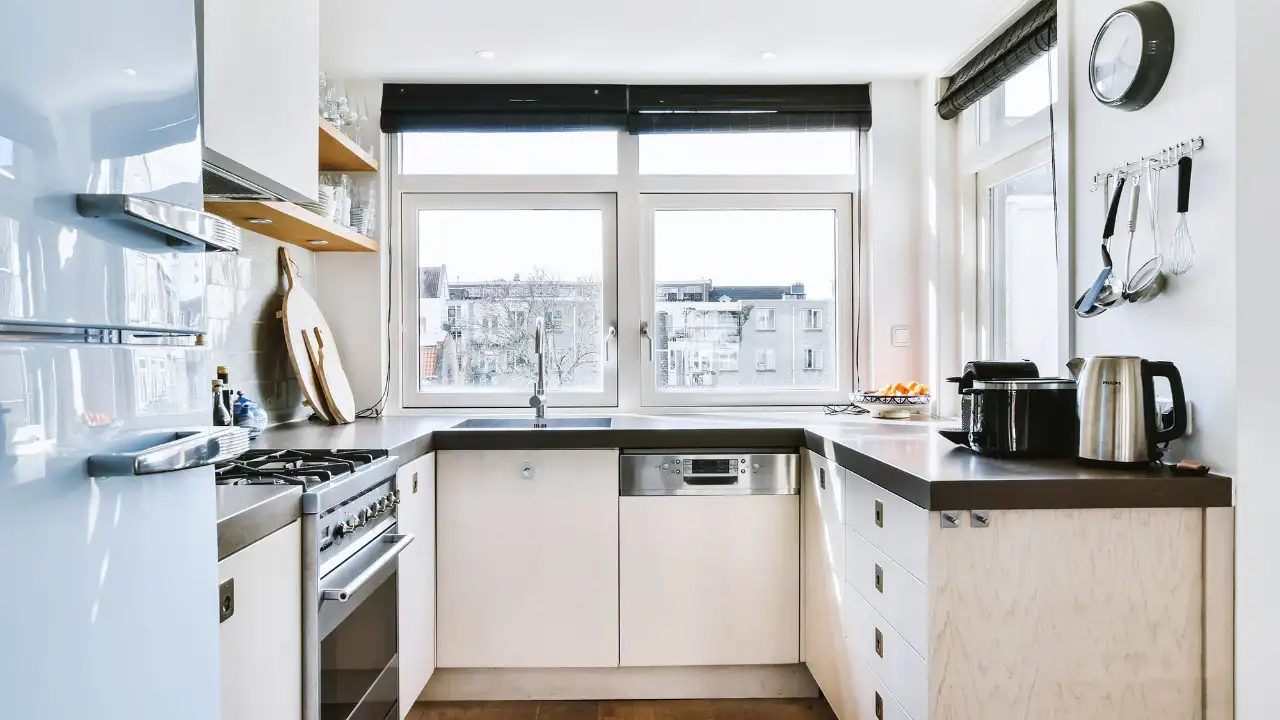
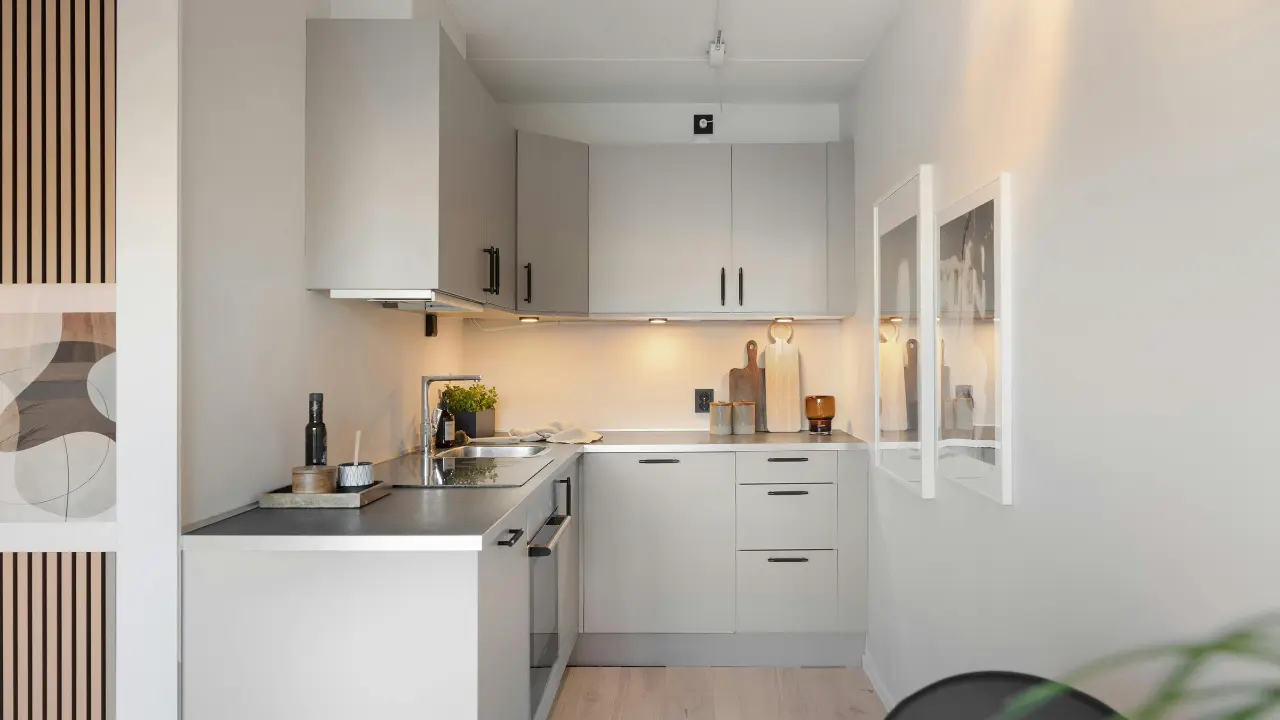
The kitchen is becoming more than a place to prepare meals. In 2026, homeowners are increasingly looking for spaces that combine everyday function with warmth, personality, comfort, and visual character.
The most interesting kitchen trends 2026 are not centered on one specific color or cabinet style. Instead, current design reporting and industry research point toward a broader shift: warmer materials, natural textures, richer colors, more thoughtful storage, layered lighting, furniture-inspired cabinetry, dedicated activity zones, and kitchens designed around the way people actually live.
Natural wood is receiving renewed attention, while greens, blues, warm neutrals, expressive stone, and decorative lighting are giving kitchens more personality. At the same time, practical features such as specialty storage, integrated appliances, induction cooking, ventilation, and functional islands remain important.
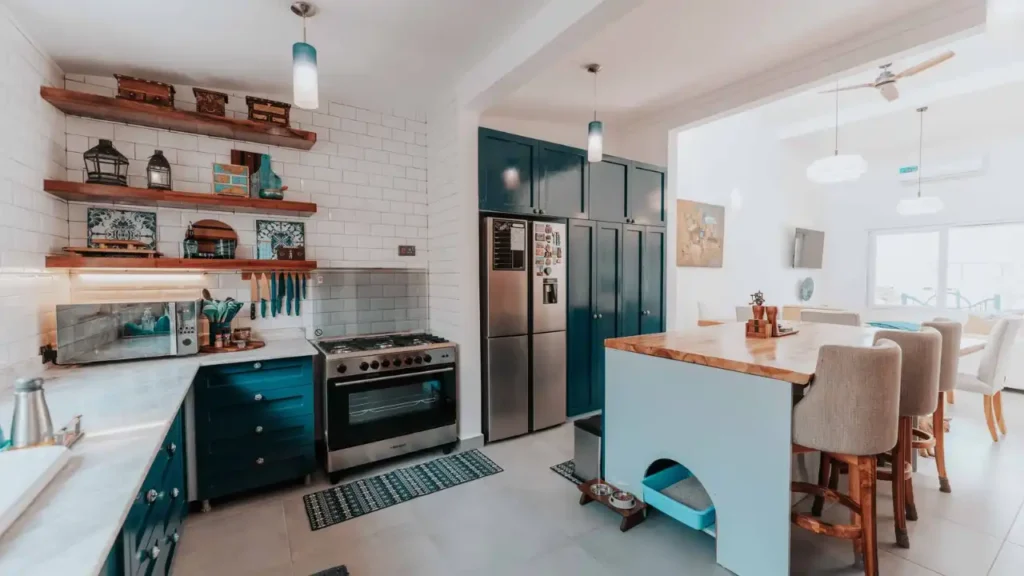
The key is not to copy every trend. A kitchen renovation is a significant investment, so permanent choices should be based on your home’s architecture, lifestyle, budget, maintenance preferences, and long-term needs. Flexible elements such as paint, hardware, lighting, and accessories can then introduce current 2026 style without forcing the entire room into a particular trend.
Kitchen Trends 2026 at a Glance
| Trend | What It Looks Like | Why It Matters |
|---|---|---|
| Warm Wood | Oak, walnut, visible grain | Adds warmth and texture |
| Rich Colors | Green, blue, earthy shades | Creates personality |
| Warm Neutrals | Cream, beige, mushroom, taupe | Softens the overall palette |
| Furniture-Style Elements | Decorative islands and freestanding pieces | Makes kitchens feel more residential |
| Expressive Stone | Veined marble, quartzite, dark stone | Creates a visual focal point |
| Layered Lighting | Task, ambient, accent, decorative | Improves function and atmosphere |
| Smarter Storage | Drawers, pantries, organizers | Makes daily use easier |
| Dedicated Stations | Coffee, beverage, baking, prep areas | Supports specific routines |
| Integrated Appliances | Panel-ready and coordinated appliances | Creates a quieter visual appearance |
| Personalized Design | Art, furniture, collected pieces | Makes the kitchen feel individual |
| Outdoor Connection | Windows and pass-throughs | Connects indoor and outdoor spaces |
| Timeless Planning | Durable materials and efficient layouts | Helps reduce renovation regret |
These directions reflect a mixture of 2026 industry research, designer surveys, homeowner remodeling data, and current design reporting. They should be viewed as documented design directions rather than universal requirements.
What Are the Biggest Kitchen Trends in 2026?
The biggest kitchen design trends for 2026 can generally be grouped into five areas: color, materials, function, atmosphere, and technology.
Color Trends
Warm neutrals, greens, blues, earth tones, and natural wood are receiving significant attention. This does not mean white kitchens have disappeared. Rather, homeowners have more options for adding warmth and personality.
Material Trends
Natural-looking wood, expressive stone, marble, quartzite, ceramic tile, and tactile materials are being used to create more visual depth.
Functional Trends
Storage, dedicated work zones, useful islands, integrated appliances, pantries, and better workflow remain central to modern kitchen planning.
Atmosphere Trends
Lighting, furniture-style pieces, artwork, decorative objects, and comfortable seating are helping kitchens feel more like residential living spaces.
Technology Trends
Smart appliances, induction cooking, integrated lighting, charging solutions, and connected systems are becoming part of kitchen planning—but useful technology is more important than technology for its own sake.
1. Warm Wood Kitchen Cabinets
One of the clearest directions in kitchen cabinet trends 2026 is renewed interest in natural wood.
White oak, natural oak, walnut, and other medium wood tones can introduce warmth without requiring an overly rustic appearance. Modern wood kitchens can feature flat-panel doors, simple Shaker profiles, minimal hardware, or highly refined custom cabinetry.
The 2026 U.S. Houzz Kitchen Trends Study found wood finishes particularly prominent among homeowners using contrasting cabinet colors, while NKBA’s 2026 industry research also highlights natural wood and visible grain as important design directions.
Popular Wood Cabinet Ideas
- Natural white oak
- Medium oak
- Walnut
- Rift-sawn oak
- Quarter-sawn wood
- Wood slab doors
- Wood Shaker cabinets
- Wood lower cabinets with painted uppers
- Wood islands with painted perimeter cabinets
The finish matters as much as the species. A very orange finish can produce a different effect from a soft natural oak finish, even when the underlying wood is similar.
Before selecting cabinetry, request physical samples and view them beside your flooring, countertops, backsplash, appliances, and wall color.
Why Wood Works So Well
Wood provides:
- Natural texture
- Visual warmth
- Grain variation
- A connection to organic materials
- Compatibility with stone
- Compatibility with warm metals
- A residential rather than overly clinical feeling
For a contemporary kitchen, pair simple wood cabinetry with clean countertops and restrained hardware. For an organic modern kitchen, combine wood with stone, ceramic, woven textures, and warm neutral colors.
2. Warm Neutral Kitchen Colors
Stark white is no longer the only way to create a bright kitchen.
Warm whites, cream, beige, taupe, mushroom, sand, and soft greige are increasingly useful for creating kitchens that feel comfortable and welcoming.
Warm neutrals work particularly well with natural wood and stone because they share similar undertones.
Popular Warm Neutral Combinations
Cream + Oak
A soft combination for traditional, transitional, and organic modern kitchens.
Mushroom + Walnut
Creates a deeper, more sophisticated palette.
Warm White + Natural Stone
Useful when you want brightness without a cold appearance.
Taupe + Brass
A refined combination that works well in both classic and contemporary interiors.
The important consideration is undertone. Two colors that appear beige on a screen can look very different under warm and cool lighting.
3. Green Kitchen Cabinet Trends
Green continues to be an important direction in kitchen color trends 2026.
Current design reporting and NKBA research point to green as one of the prominent colors being considered for kitchen spaces.
Popular shades include:
- Sage
- Olive
- Moss
- Forest green
- Deep green
- Muted green
- Blue-green
Green can be used across an entire kitchen or introduced more selectively.
Green Kitchen Ideas
Use deep green for a kitchen island while keeping perimeter cabinets warm white.
Pair sage cabinets with natural oak and cream stone.
Use olive cabinetry with aged brass hardware.
Combine forest green with dark countertops for a dramatic kitchen.
The amount of natural light matters. Deep green can appear significantly darker in a kitchen with limited daylight, so test the color at different times of day.
4. Blue Kitchen Cabinets
Blue remains another versatile option for homeowners looking beyond neutral cabinetry.
Popular directions include:
- Navy
- Slate blue
- Deep blue
- Dusty blue
- Blue-green
- Marine-inspired shades
Blue works especially well for islands and lower cabinets because it can provide color without visually dominating the upper portion of the room.
For a sophisticated palette, consider navy cabinetry with warm white walls and natural stone.
For a softer appearance, combine dusty blue with light oak and creamy countertops.
For a more dramatic kitchen, deep blue cabinetry can be paired with expressive stone and darker hardware.
5. Two-Tone Kitchen Cabinets
Two-tone cabinetry remains a practical way to introduce contrast.
Instead of choosing one color for every cabinet, homeowners can combine materials or finishes.
Popular combinations include:
- Natural wood + cream
- Oak + green
- White upper cabinets + wood lower cabinets
- Cream + navy
- Wood + blue
- Light perimeter cabinets + darker island
The 2026 U.S. Houzz Kitchen Trends Study reported that 24% of renovating homeowners used contrasting upper and lower cabinet colors. Among those using contrasting colors, white was the leading upper-cabinet choice while wood was prominent for lower cabinets.
Two-tone cabinetry can also help visually organize the kitchen. A darker island can become an anchor, while lighter perimeter cabinets keep the surrounding walls visually open.
6. Furniture-Style Kitchen Cabinets and Islands
A major direction in current kitchen design is making built-in cabinetry look more like furniture.
Instead of every component appearing like one continuous wall of cabinets, designers are introducing:
- Furniture-style islands
- Decorative cabinet bases
- Freestanding-looking storage
- Paneled islands
- Wood furniture pieces
- Decorative legs
- Antique or vintage-inspired pieces
Current 2026 design reporting has highlighted furniture-style cabinetry and islands as part of a broader movement toward kitchens that feel more residential.
This approach is particularly effective when the kitchen is connected directly to a dining or living area.
The goal is not necessarily to sacrifice storage. A furniture-inspired island can still contain deep drawers, trash storage, appliances, or seating.
7. Natural Stone and Expressive Countertops
Countertops are becoming more visually expressive.
Instead of treating the countertop as a quiet background, homeowners can use stone as one of the kitchen’s primary design features.
Potential choices include:
- Quartzite
- Marble
- Granite
- Soapstone
- Limestone
- Quartz
Strong veining can create a dramatic focal point, particularly when the same material extends into the backsplash.
However, the most attractive material is not automatically the most appropriate material for every household.
Consider:
- Staining
- Etching
- Scratching
- Sealing
- Cleaning
- Heat exposure
- Cost
- Availability
- Repairability
Natural and engineered surfaces have different characteristics, so research the specific product rather than making a decision based only on photographs.
8. Statement Stone Beyond the Countertop
Stone is increasingly being used beyond the horizontal countertop.
Current kitchen design coverage highlights applications such as:
- Full-height backsplashes
- Range walls
- Island sides
- Shelving
- Ledges
- Waterfall edges
- Decorative architectural surfaces
A full-height stone backsplash can make a kitchen feel visually cohesive because the countertop and wall surface become one continuous material story.
Strongly veined stone can also act almost like artwork.
The tradeoff is visual intensity. If the stone already has dramatic movement, consider using quieter cabinetry, flooring, and hardware.
9. Kitchen Backsplash Trends 2026
The backsplash remains an important opportunity to introduce personality.
Full-Height Stone
A strong option for modern and luxury kitchens.
Slab Backsplashes
Useful when you want minimal grout lines and visual continuity.
Handmade-Look Tile
Adds subtle variation and craftsmanship.
Traditional Subway Tile
Still useful for classic and transitional kitchens.
Warm Ceramic Tile
Cream, beige, clay, and earthy tones can support the warmer direction of 2026 interiors.
Decorative Tile
Patterned or highly decorative tile can create a focal point, but it works best when balanced against quieter surrounding elements.
The backsplash and countertop should generally be selected together. Even if they are different materials, their colors and visual intensity should work as one composition.
10. Kitchen Lighting Trends 2026
Lighting is one of the most important elements of a functional kitchen.
NKBA’s 2026 Kitchen Trends Report places strong emphasis on quality lighting, natural light, task lighting, statement fixtures, and integrated lighting.
A well-designed kitchen should not depend on one ceiling fixture.
Layered Kitchen Lighting
Ambient Lighting
Provides general illumination throughout the room.
Task Lighting
Helps illuminate work surfaces such as:
- Countertops
- Sinks
- Islands
- Prep areas
- Cooking areas
Accent Lighting
Highlights:
- Open shelves
- Artwork
- Glass cabinets
- Architectural features
- Decorative objects
Decorative Lighting
Adds visual character through:
- Pendant lights
- Chandeliers
- Sculptural fixtures
- Lanterns
- Statement pieces
Under-cabinet lighting is especially useful because it provides illumination exactly where food preparation occurs.
Interior cabinet lighting can also make glass-front cabinetry more functional and decorative.
11. Dedicated Kitchen Stations
Another useful direction in modern kitchen planning is creating zones around specific activities.
Instead of expecting every part of the kitchen to perform every task, homeowners can create dedicated areas.
Coffee Station
A coffee station can include:
- Coffee machine
- Mug storage
- Coffee supplies
- Small appliance storage
- Counter space
Beverage Station
Useful for:
- Glassware
- Drinks
- Beverage refrigerators
- Entertaining supplies
Baking Station
Consider:
- Mixer storage
- Baking trays
- Ingredient drawers
- Prep space
Prep Station
A prep zone can combine:
- Cutting boards
- Knives
- Prep tools
- Counter space
- Nearby sink
The important principle is personalization. A household that rarely drinks coffee does not need a dedicated coffee station simply because it appears in design photos.
12. Smarter Kitchen Storage
Storage remains one of the most practical kitchen storage trends 2026.
Beautiful cabinetry cannot compensate for a kitchen where everyday items are difficult to access.
Useful storage features include:
- Deep drawers
- Tall pantry cabinets
- Pull-out pantry systems
- Tray dividers
- Vertical storage
- Corner solutions
- Appliance garages
- Drawer organizers
- Under-island storage
- Interior cabinet lighting
- Hidden storage
The 2026 Houzz study continues to show strong homeowner interest in specialty storage and functional cabinetry.
Design Storage Around Your Routine
Store pots close to the cooking zone.
Keep everyday dishes near the dishwasher.
Place coffee supplies near the coffee machine.
Store baking ingredients near the mixer and preparation area.
Keep trash and recycling convenient to the primary prep zone.
Good storage is less about having the maximum number of cabinets and more about reducing unnecessary movement.
13. Hidden Appliances and Integrated Kitchen Design
Integrated appliances can create a calmer visual appearance.
Popular approaches include:
- Panel-ready refrigerators
- Integrated dishwashers
- Built-in ovens
- Concealed range hoods
- Appliance garages
- Hidden microwaves
- Small-appliance storage
However, an integrated appearance does not mean every appliance needs to disappear.
Some homeowners may prefer a statement range or visible refrigerator because the appliance itself contributes to the design.
The practical questions are more important:
- Is the appliance accessible?
- Can it be repaired easily?
- Does the cabinet system accommodate it?
- Are replacement parts available?
- Does the design allow adequate ventilation?
14. Induction Cooking and Modern Appliances
Induction cooking continues to receive attention as part of evolving kitchen appliance design.
Other technology-oriented features include:
- Smart ovens
- Steam ovens
- Connected refrigerators
- Energy-conscious appliances
- Programmable appliances
- Integrated appliance systems
Before selecting an induction cooktop, verify electrical requirements, cookware compatibility, installation conditions, and ventilation needs.
Smart appliances should also be evaluated based on actual usefulness.
A connected appliance can be helpful if it solves a real problem. It may not be worthwhile if the smart feature adds complexity without improving your daily routine.
15. Kitchen Islands Are Becoming More Functional
The kitchen island remains central to many modern kitchens, but bigger does not automatically mean better.
Useful island designs can include:
- Prep islands
- Storage islands
- Seating islands
- Waterfall islands
- Furniture-style islands
- Wood islands
- Compact islands
- Peninsulas
- Multi-purpose islands
A successful island needs enough clearance around it.
Before selecting the largest possible island, consider:
- Cabinet door clearance
- Appliance door clearance
- Walking paths
- Seating space
- Prep space
- Sink location
- Dishwasher location
- Lighting
- Traffic flow
An island should make the kitchen easier to use rather than simply occupy more floor area.
16. Kitchen Layout Trends 2026
There is no single kitchen layout that works for every home.
Open Kitchens
Open kitchens can support:
- Entertaining
- Family interaction
- Visual connection
- Larger-feeling spaces
But they can also make cooking noise and odors more noticeable.
Semi-Open Kitchens
A semi-open arrangement can provide connection while maintaining some separation.
Closed Kitchens
A separate kitchen can offer:
- Better odor control
- Noise separation
- A dedicated workspace
- More visual separation from living areas
Galley Kitchens
With efficient storage and careful appliance placement, galley kitchens can be highly functional.
L-Shaped Kitchens
These can provide flexibility for cooking, storage, and seating.
U-Shaped Kitchens
Useful when maximizing cabinetry and defining work zones is a priority.
Kitchen + Prep Kitchen
Some larger homes may benefit from a secondary preparation area where messy cooking, bulk storage, or small appliances can be handled away from the main entertaining space.
The right layout depends on architecture and lifestyle—not simply what is currently fashionable.
17. Kitchens Designed as Living Spaces
Kitchens are increasingly being styled as part of the home’s living environment.
Current 2026 design coverage has highlighted residential details such as freestanding furniture, artwork, decorative lighting, and more personalized styling.
Consider adding:
- Comfortable chairs
- A dining table
- Artwork
- Decorative lamps
- Plants
- Cookbooks
- Freestanding furniture
- Carefully selected accessories
This approach works especially well in open-plan homes where the kitchen is visible from the living or dining room.
The challenge is maintaining practicality. Rugs, fabrics, artwork, and decorative objects should be selected with kitchen moisture, grease, cleaning, and traffic in mind.
18. Mixed Metals in Kitchen Design
Using more than one metal finish can add depth without requiring everything to match perfectly.
Possible combinations include:
- Brass + nickel
- Brass + black
- Bronze + brass
- Nickel + black
A simple approach is to select one dominant finish and one supporting finish.
For example, brass might be the primary cabinet hardware finish while black appears in lighting or selected accessories.
The goal is repetition and visual balance—not introducing a different metal every time you add a new fixture.
19. Warm and Organic Kitchen Materials
Natural and organic materials continue to influence modern kitchens.
Consider:
- Wood
- Stone
- Ceramic
- Terracotta
- Linen
- Woven materials
- Natural fibers
- Aged metals
These materials can add tactile variation to kitchens that might otherwise feel too uniform.
An organic modern kitchen does not have to look rustic. Simple oak cabinetry, a refined stone countertop, handmade-look tile, and understated metal hardware can create a contemporary interpretation of natural design.
20. Curved Kitchen Details
Curves are another design direction appearing in current kitchen coverage.
Examples include:
- Curved islands
- Rounded furniture
- Arched cabinets
- Curved range hoods
- Rounded shelves
- Soft-edged decorative details
Curves can soften the strong horizontal and vertical lines created by conventional cabinetry.
However, curves can increase fabrication complexity and cost. They should therefore be used because they genuinely suit the room rather than simply because they appear in trend reports.
A small curved detail can often achieve a similar visual effect without redesigning the entire kitchen.
21. Glazed and Glass-Front Kitchen Cabinets
Glass-front cabinetry provides a middle ground between completely open shelving and fully concealed storage.
Options include:
- Clear glass
- Fluted glass
- Reeded glass
- Mullioned glass
- Display cabinets
Interior lighting can make glass cabinets particularly attractive at night.
Use them for items you actually want to see:
- Glassware
- Plates
- Cookbooks
- Decorative ceramics
- Serving pieces
Because glass-front cabinets display their contents, they require more organization than conventional closed cabinets.
22. Open Shelving: A More Selective Approach
Open shelving has not necessarily disappeared, but current design conversations increasingly emphasize more restrained applications.
Instead of covering an entire wall with shelves, consider:
- One short display shelf
- A single feature wall
- Shelves beside a range hood
- A small area for everyday dishes
- Shelves for cookbooks or artwork
The advantages include easy access and visual openness.
The disadvantages include:
- Dust
- Grease
- Clutter
- More frequent cleaning
- Less concealed storage
For many kitchens, a combination of mostly closed cabinets with one carefully designed open-shelf section offers a practical balance.
23. Kitchen Flooring Trends 2026
Kitchen flooring needs to balance appearance with durability.
Popular directions include:
- Natural wood
- White oak
- Medium wood
- Porcelain tile
- Natural stone
- Terracotta
- Patterned tile
Wood flooring can create continuity between the kitchen and adjacent living spaces.
Porcelain can offer a wide range of colors and patterns while providing a practical surface for many households.
Stone can add natural character but may require specific maintenance depending on the material and finish.
When selecting flooring, consider:
- Moisture
- Cleaning
- Slip resistance
- Pets
- Children
- Heavy traffic
- Adjacent flooring
- Repairability
24. Kitchen Hardware Trends 2026
Hardware can dramatically change the appearance of cabinetry without requiring a full renovation.
Current options include:
- Minimal bar pulls
- Knobs
- Cup pulls
- Integrated handles
- Brass
- Bronze
- Nickel
- Black finishes
Traditional kitchens can benefit from knobs and cup pulls.
Contemporary kitchens often work well with simple linear pulls or integrated hardware.
Hardware should also feel comfortable in the hand. Ergonomics matters just as much as appearance.
25. Personalized Kitchen Design
Perhaps the most useful direction within kitchen trends 2026 is personalization.
Instead of designing a kitchen for a generic lifestyle, consider how your household actually uses the space.
Ask:
- Do you cook every day?
- Do you entertain frequently?
- Do you bake?
- Do you drink coffee?
- Do children use the kitchen?
- Do you have pets?
- Do you need space for meal preparation?
- Do you work from home?
- Do you need extra charging areas?
- Do you prefer visible or concealed storage?
A family that cooks extensively may benefit from large prep surfaces and accessible storage.
Someone who entertains may prioritize beverage storage, seating, serving space, and statement lighting.
A baker may need specialized ingredient and equipment storage.
Personalization transforms a trend-driven kitchen into a useful home environment.
26. Smart Kitchen Trends 2026
Smart technology can make certain kitchen tasks more convenient.
Potential features include:
- Smart refrigerators
- Connected ovens
- Smart lighting
- Voice controls
- Wireless charging
- Smart faucets
- Leak detection
- Energy monitoring
- App-controlled appliances
But smart technology should solve a genuine problem.
Before investing, ask:
- Will I actually use this feature?
- Does it simplify a task?
- Does it require a specific ecosystem?
- What happens if software support changes?
- Can the appliance still function normally without the smart feature?
- Is the additional cost worthwhile?
A kitchen does not become better simply because it contains more technology.
27. Sustainable Kitchen Design Trends
Sustainable kitchen design is not only about buying a particular “eco-friendly” product.
Long-term sustainability can begin with using less.
Consider:
- Refinishing existing cabinets
- Reusing good cabinetry
- Repairing hardware
- Choosing durable materials
- Buying secondhand furniture
- Selecting responsibly sourced wood
- Choosing efficient appliances
- Reducing unnecessary replacement
- Selecting materials that can be maintained or repaired
The environmental impact of a material depends on factors such as sourcing, manufacturing, transportation, lifespan, maintenance, and disposal.
A kitchen that remains useful for many years can be more sensible than replacing functional materials simply because a new aesthetic has become fashionable.
28. Small Kitchen Trends 2026
Small kitchens can benefit from many of the same ideas as larger kitchens, but scale becomes especially important.
Useful strategies include:
Full-Height Cabinetry
Use vertical space for less frequently accessed items.
Vertical Storage
Tray dividers and narrow pull-outs can use otherwise wasted areas.
Compact Islands
A small island can provide preparation and storage without blocking circulation.
Peninsulas
A peninsula can sometimes provide the benefits of an island while requiring less floor space.
Integrated Appliances
Coordinated appliances can reduce visual fragmentation.
Under-Cabinet Lighting
Lighting beneath cabinets can make work areas more usable.
Multifunctional Furniture
A movable cart, compact table, or storage bench can provide multiple functions.
The key principle is simple: optimize the workflow before adding more stuff.
29. Luxury Kitchen Trends 2026
Luxury kitchens are moving beyond simply using expensive finishes.
A sophisticated kitchen can combine:
- Custom cabinetry
- Natural stone
- Furniture-style islands
- Integrated appliances
- Layered lighting
- Specialty storage
- Statement range hoods
- Premium hardware
- Dedicated beverage zones
- Large-format stone
- Secondary prep areas
Luxury is ultimately about quality, proportion, comfort, and thoughtful details.
A smaller kitchen with excellent cabinetry, beautiful lighting, carefully selected stone, and efficient storage can feel more refined than a much larger kitchen filled with unnecessary features.
30. Budget-Friendly Kitchen Trends 2026
You do not need a complete renovation to make a kitchen feel more current.
Lower-Cost Updates
Consider:
- Cabinet hardware
- Paint
- Lighting
- Artwork
- Organization
- Textiles
- Small decorative furniture
Mid-Range Updates
Depending on the project, you might consider:
- A new faucet
- Cabinet refinishing
- New backsplash
- Improved storage inserts
- Updated lighting
- A selected countertop upgrade
Larger Investments
Major renovations can include:
- New cabinetry
- Countertops
- Flooring
- New island
- Appliance replacement
- Plumbing changes
- Layout modifications
A useful strategy is to decide which elements genuinely need replacement before spending money on appearance.
31. Timeless Kitchen Design vs. Short-Lived Trends
Not every trend has the same level of permanence.
Some design decisions influence how the kitchen works for many years. Others are easy to change.
Permanent or Expensive Decisions
These deserve careful consideration:
- Layout
- Cabinet configuration
- Plumbing
- Electrical
- Flooring
- Countertops
- Structural changes
Flexible Decisions
These can usually be changed more easily:
- Paint
- Hardware
- Pendant lights
- Artwork
- Accessories
- Textiles
Strong Long-Term Principles
Instead of asking which specific trend will remain popular, focus on:
- Good circulation
- Functional storage
- Quality lighting
- Durable materials
- Appropriate proportions
- Comfortable work zones
- Practical appliance placement
This approach lets you incorporate current design ideas without making the entire renovation dependent on a particular trend.
32. Kitchen Trends to Approach Carefully in 2026
A trend is not necessarily a bad choice simply because it carries tradeoffs.
Excessive Open Shelving
Beautiful in photographs, but potentially more demanding to maintain.
Oversized Islands
A large island can become an obstacle if circulation is insufficient.
Highly Trend-Specific Tile
Replacing tile can be expensive, so consider whether the pattern works with the rest of the home.
Excessive Technology
Extra features can add cost and complexity without improving daily life.
Extremely Bold Cabinet Colors
A dramatic color can be highly effective, but changing large amounts of cabinetry later is expensive.
High-Maintenance Materials
Understand cleaning, sealing, staining, scratching, and repair requirements before purchasing.
Too Many Finishes
Mixing materials can add character, but excessive variation can make the kitchen feel visually fragmented.
The Spruce’s 2026 designer-focused coverage similarly highlights potential regret around choices such as oversized islands, excessive open shelving, bold trend-driven finishes, and gadgets that are rarely used.
The lesson is not to avoid these ideas completely. It is to understand the tradeoffs before committing.
33. How to Choose Which Kitchen Trends Are Right for You
The best kitchen design begins with your home rather than an inspiration photograph.
Step 1: Study the Architecture
Look at:
- Room dimensions
- Ceiling height
- Window locations
- Doors
- Existing flooring
- Adjacent rooms
Step 2: Identify Your Problems
Maybe the kitchen lacks:
- Storage
- Counter space
- Lighting
- Seating
- Pantry capacity
- Appliance organization
Solve those problems first.
Step 3: Define Your Design Direction
You might prefer:
- Modern
- Organic modern
- Transitional
- Traditional
- Minimalist
- Contemporary
- Cottage-inspired
Step 4: Select the Main Palette
Choose cabinetry, countertops, flooring, and wall colors as one coordinated system.
Step 5: Plan the Layout
Think about movement between:
- Refrigerator
- Sink
- Cooktop
- Oven
- Prep surface
- Pantry
- Dishwasher
Step 6: Design Storage
Assign a purpose to drawers, cabinets, pantry areas, and specialized organizers.
Step 7: Choose Cabinets
Consider door style, material, finish, durability, maintenance, and budget.
Step 8: Select Countertops
Compare appearance with daily-use requirements.
Step 9: Select the Backsplash
Coordinate it with the countertop rather than choosing it in isolation.
Step 10: Plan Lighting
Use ambient, task, accent, and decorative lighting where appropriate.
Step 11: Select Appliances
Prioritize performance, dimensions, installation requirements, and maintenance.
Step 12: Plan the Island
Measure circulation before deciding on island size.
Step 13: Select Flooring
Consider durability and continuity with adjacent rooms.
Step 14: Choose Hardware
Make sure the finish and shape complement the cabinetry.
Step 15: Add Personal Details
Introduce artwork, furniture, plants, ceramics, or other elements that reflect the household.
Step 16: Review Maintenance
Ask how much cleaning and upkeep each material requires.
Step 17: Review the Budget
Separate essential improvements from optional decorative upgrades.
Step 18: Test Samples
View physical samples in your actual kitchen.
Step 19: Check Day and Night Appearance
Natural and artificial lighting can dramatically change colors and finishes.
Step 20: Make Final Decisions
Choose trends that support your lifestyle instead of trying to reproduce an entire showroom.
34. Kitchen Trends 2026 Checklist
Use this checklist before starting a kitchen update or renovation:
- ☐ Evaluate the existing layout
- ☐ Identify daily kitchen routines
- ☐ Identify storage problems
- ☐ Check natural lighting
- ☐ Choose a color direction
- ☐ Consider warm neutrals
- ☐ Evaluate natural wood cabinetry
- ☐ Choose cabinet style
- ☐ Plan storage zones
- ☐ Plan appliance locations
- ☐ Consider integrated appliances
- ☐ Select countertops
- ☐ Coordinate the backsplash
- ☐ Plan island dimensions
- ☐ Check circulation
- ☐ Plan task lighting
- ☐ Plan ambient lighting
- ☐ Add accent lighting where useful
- ☐ Select flooring
- ☐ Choose cabinet hardware
- ☐ Consider dedicated kitchen stations
- ☐ Evaluate smart technology
- ☐ Add personalized details
- ☐ Check maintenance requirements
- ☐ Consider long-term durability
- ☐ Test physical samples
- ☐ Review the kitchen in daylight and evening light
- ☐ Confirm the renovation budget
35. Frequently Asked Questions About Kitchen Trends 2026
What are the biggest kitchen trends for 2026?
Major 2026 kitchen directions include warmer palettes, natural wood cabinetry, richer greens and blues, expressive stone, layered lighting, furniture-style elements, improved storage, dedicated work zones, personalized decor, and selectively integrated technology. These are broad design directions rather than requirements for every kitchen.
Are white kitchens out in 2026?
No. White remains a practical and established kitchen color. What is changing is the range of alternatives receiving attention, including warm whites, cream, natural wood, green, blue, mushroom, and other earthy tones.
The 2026 Houzz research also shows white continuing to play a significant role in cabinetry.
What kitchen cabinet colors are trending in 2026?
Natural wood, green, blue, warm white, cream, mushroom, taupe, and other warm neutral colors are prominent choices. Darker brown and moodier colors can also work well when balanced with lighting and surrounding materials.
Are wood kitchen cabinets trending in 2026?
Yes, natural wood is an important direction in current kitchen design reporting and industry research. Oak and walnut are particularly useful for adding warmth and visible grain.
What countertop is trending in 2026?
Expressive natural stone, quartzite, marble, dark stone, soapstone, granite, and quartz all have potential applications. Rather than selecting one universally “best” countertop, compare appearance, maintenance, durability, budget, and lifestyle.
Are kitchen islands still popular in 2026?
Yes. Islands remain an important kitchen feature, but their size and function should match the room. A well-proportioned island with useful storage and adequate circulation is generally more practical than simply choosing the largest possible island.
What backsplash is popular in 2026?
Current options include full-height stone, slab backsplashes, handmade-look tile, warm ceramic tile, traditional subway tile, and selective decorative patterns.
What lighting is trending for kitchens in 2026?
Layered lighting is particularly important. This can combine ambient lighting, task lighting, under-cabinet lighting, accent lighting, interior cabinet lighting, and decorative fixtures such as statement pendants.
Are open shelves still popular?
Open shelving remains an option, but many current designs use it more selectively. A small display area can provide the openness of shelving without sacrificing as much concealed storage.
What is the most timeless kitchen style for 2026?
There is no single timeless style that works for every home. Kitchens tend to have greater long-term usefulness when their layout, proportions, storage, lighting, materials, and finishes suit the architecture and the people using them.
What kitchen colors make a space feel warm?
Cream, warm white, beige, mushroom, taupe, natural wood, brown, olive, and other earthy colors can contribute to a warmer atmosphere.
Lighting and material texture also have a major effect on perceived warmth.
Are dark kitchens trending in 2026?
Dark cabinetry, dark countertops, deep green, rich brown, and other moody palettes are current options. Their success depends heavily on room size, natural light, ceiling height, surrounding finishes, and the desired atmosphere.
What are the best kitchen trends for small spaces?
Useful small-kitchen strategies include vertical storage, full-height cabinetry, compact islands, peninsulas, integrated appliances, multifunctional furniture, selective open shelving, appliance garages, and strong task lighting.
Are smart kitchens worth it?
It depends on the feature and your routine. Smart technology can be useful when it genuinely improves convenience, energy management, safety, or accessibility. Avoid paying for connected features that you are unlikely to use.
How can I update my kitchen for 2026 without remodeling?
Start with flexible changes such as:
- Cabinet hardware
- Paint
- Lighting
- Organization
- Artwork
- Accessories
- Textiles
- Small furniture
- A carefully selected backsplash update
These changes can refresh the appearance without replacing the entire kitchen.
How do I make my kitchen look modern without following every trend?
Focus on clean proportions, efficient storage, good lighting, coordinated materials, comfortable circulation, and a color palette that works with the rest of your home.
Then introduce current trends selectively through lighting, hardware, color, artwork, or furniture.
What kitchen trends should I avoid?
Rather than avoiding a trend simply because it is fashionable, evaluate its tradeoffs.
Ask whether the feature is practical for your household, whether it is easy to maintain, whether it works with your kitchen’s dimensions, and how expensive it would be to change later.
How can I make a kitchen trend last longer?
Use current trends in flexible elements whenever possible.
Paint, hardware, lighting, artwork, and accessories are generally easier to update than cabinetry, countertops, flooring, plumbing, and structural changes.
For expensive permanent elements, prioritize good layout, storage, lighting, durable materials, and personal suitability.
Final Thoughts on Kitchen Trends 2026
The most useful kitchen trends 2026 are not necessarily the most dramatic ones.
The broader direction is toward kitchens that feel warmer, more personal, more functional, and more connected to the rest of the home. Natural wood, warm neutrals, green and blue cabinetry, expressive stone, furniture-style islands, layered lighting, smarter storage, dedicated stations, and carefully selected technology all provide different ways to achieve that goal.
But a trend should never replace good kitchen planning.
A beautiful green cabinet color cannot fix poor lighting. An oversized island cannot compensate for bad circulation. Smart appliances cannot solve inadequate storage. Expensive stone cannot make an inconvenient layout functional.
Start with how you cook, clean, store, entertain, and move through the room. Then use the design ideas of 2026 to improve that experience.
The result will not simply be a kitchen that looks current. It will be a kitchen designed around the way you actually live.