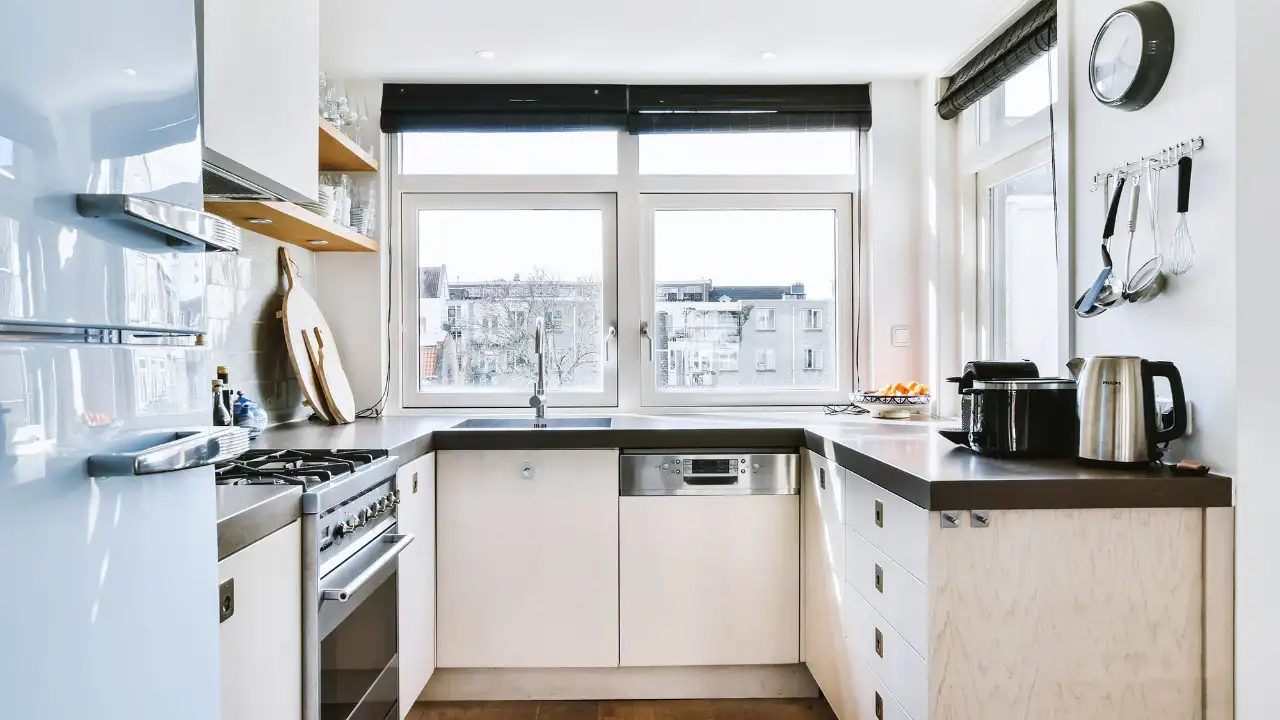
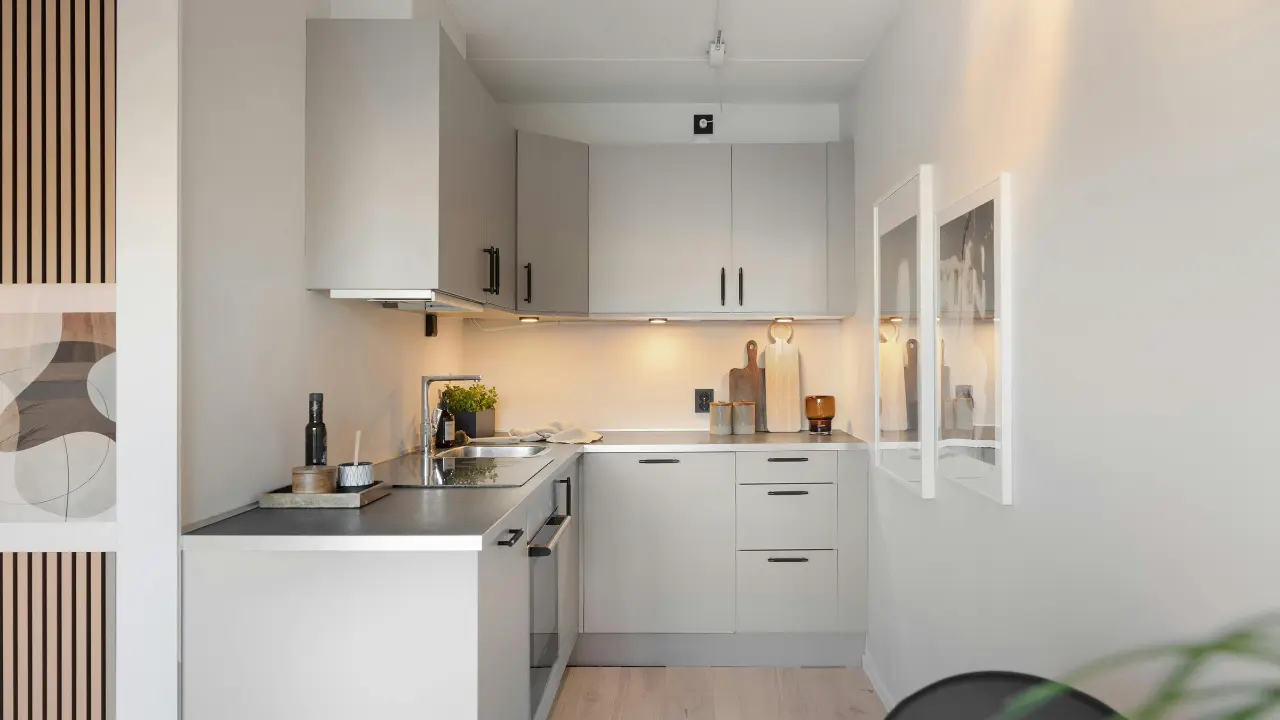
A sage green kitchen can add color, warmth, and personality without making the room feel overly bold. Its muted, nature-inspired appearance works particularly well with natural wood, white, cream, stone, brass, black, and other understated finishes.
But choosing sage green is only the beginning. The exact shade, lighting, cabinet style, countertop, backsplash, flooring, and hardware all influence how the finished kitchen looks.
Some sage greens appear soft and warm, while others lean gray, yellow, or deeper green. A color that looks perfect in an online photograph may appear noticeably different in your own kitchen because of natural and artificial lighting.

This guide explores 35 sage green kitchen ideas for 2026, along with cabinet styles, color combinations, countertops, backsplashes, hardware, wood pairings, lighting, small-kitchen solutions, decorating ideas, budget options, common mistakes, and practical planning advice.
What Is a Sage Green Kitchen?
A sage green kitchen uses a soft, muted green inspired by natural foliage as a primary or accent color. Sage green can appear on cabinets, walls, islands, backsplashes, or decorative elements and pairs naturally with materials such as wood, stone, white, cream, brass, and black.
The most successful combinations depend on the kitchen’s:
- Natural lighting
- Size and proportions
- Existing undertones
- Cabinet style
- Countertop
- Backsplash
- Flooring
- Hardware
- Overall design direction
Understanding Sage Green Undertones
Sage green is not one specific color. Different formulations can have very different undertones.
Warm sage can contain subtle yellow or beige influences, making it work well with cream, warm wood, brass, and beige.
Gray-green sage has a cooler, more subdued appearance and can complement white, gray stone, brushed metal, and minimalist interiors.
Yellow-green sage feels more organic and can pair nicely with natural wood and warm neutral finishes.
Muted sage has lower visual intensity and is useful when you want color without making the cabinets the only thing people notice.
Deeper sage creates more visual weight and can give larger kitchens a dramatic or sophisticated appearance, particularly when balanced with lighter countertops and good lighting.
Before committing to a cabinet color, compare a large sample against your existing countertop, flooring, backsplash, and wall color.
Why Sage Green Works in Kitchens
Sage green has several practical design advantages.
It introduces color while remaining relatively subdued, connects naturally with plants and wood, and can transition between traditional and contemporary styles.
It also works well as either a dominant or supporting color. You can use sage across an entire cabinet system, restrict it to an island, paint only the lower cabinets, or introduce it through walls and accessories.
That flexibility makes it easier to adapt sage green to different kitchen sizes and budgets.
Is Sage Green a Good Color for a Kitchen?
Sage green can be an effective kitchen color when its undertones and surrounding finishes are carefully coordinated.
Advantages
- Adds color without necessarily overwhelming the room
- Works naturally with wood
- Pairs with white, cream, beige, and stone
- Can suit modern, farmhouse, cottage, Japandi, and Scandinavian-inspired spaces
- Works on cabinets, islands, walls, backsplashes, or accessories
- Can create either a subtle or dramatic effect depending on the shade
Things to Consider
Lighting can significantly change how sage appears. A deeper green may look substantially darker in a low-light kitchen, while a warm sage can become more yellow under certain lighting.
You should also consider the undertones of your countertops and flooring. A sage cabinet color that looks balanced beside one stone surface may clash with another because of differences in warm and cool undertones.
For that reason, test cabinet samples in the actual kitchen rather than choosing solely from a digital image.
35 Best Sage Green Kitchen Ideas for 2026
1. Classic Sage Green Kitchen Cabinets
Using sage green across the main cabinetry creates a clear focal point without requiring complicated decoration.
This approach works especially well when the surrounding materials are relatively restrained. White walls, light countertops, natural wood, and simple hardware allow the cabinets to establish the color direction.
If your kitchen has limited natural light, consider a lighter or less saturated sage.
2. Sage Green Shaker Cabinets
Sage green Shaker cabinets combine a familiar door profile with a muted color palette.
The simple recessed-panel design works well in farmhouse, cottage, transitional, and modern farmhouse kitchens.
Pair the cabinets with warm white walls, natural wood, simple hardware, and stone or quartz countertops.
For a more contemporary interpretation, use streamlined pulls and fewer decorative accessories.
3. Modern Sage Green Flat-Panel Cabinets
Flat-panel cabinets create a cleaner appearance than traditional framed or detailed doors.
A muted sage finish can soften the visual simplicity of flat-panel cabinetry without compromising a contemporary aesthetic.
Consider pairing sage green flat-panel cabinets with quartz countertops, integrated appliances, minimal hardware, and simple pendant lighting.
4. Sage Green and White Kitchen
A sage green and white kitchen is a practical combination when you want color without making the room feel visually heavy.
White can appear on:
- Countertops
- Walls
- Upper cabinets
- Backsplash
- Ceiling
- Open shelving
The contrast is especially useful when the sage cabinets are deeper in tone.
5. Sage Green and Natural Wood Kitchen
Natural wood is one of the easiest ways to make sage green feel warmer and more organic.
White oak, natural oak, ash, and walnut can all work, but each creates a different level of contrast.
Light oak produces an airy appearance, while walnut introduces deeper visual weight.
Use wood selectively across shelving, flooring, an island, dining furniture, or cabinet sections rather than introducing several competing wood tones.
6. Sage Green and Cream Kitchen
Cream creates a softer contrast than bright white.
This combination is particularly useful for traditional, cottage, farmhouse, and warm transitional kitchens.
Pair sage cabinets with creamy walls or countertops, warm wood, brass hardware, and softly textured materials for a relaxed palette.
7. Sage Green and Brass Kitchen
Brass hardware can add warmth and definition to sage cabinetry.
You can introduce brass through:
- Cabinet pulls
- Knobs
- Faucets
- Pendant lights
- Sconces
- Decorative accents
The exact brass finish matters. Highly polished brass can create a different effect from aged or brushed brass.
8. Sage Green and Black Kitchen
Black creates stronger contrast against sage green.
Instead of making every element black, consider using it selectively through cabinet hardware, faucets, window frames, lighting, or appliances.
Balance the contrast with light countertops, natural wood, or warm neutral walls.
9. Sage Green Kitchen With Marble
Marble or marble-look surfaces can introduce natural movement against relatively quiet sage cabinetry.
White marble with subtle gray or warm veining can create a refined appearance.
However, always compare the stone’s undertones with the sage sample. Strongly cool gray veining may produce a different result from warm beige or gold-toned veining.
10. Sage Green Kitchen With Quartz Countertops
Quartz is available in a wide range of white, cream, stone, and marble-inspired appearances.
For sage cabinets, consider:
- White quartz for crisp contrast
- Warm white quartz for softer contrast
- Stone-look quartz for a natural appearance
- Marble-look quartz for visual movement
Consider maintenance requirements, edge profiles, veining, and the overall amount of pattern in the room before selecting a surface.
11. Sage Green Kitchen Island
You do not have to paint every cabinet sage green.
A sage green island can act as the main accent while perimeter cabinets remain white, cream, wood-toned, or another neutral.
This approach is useful when you like sage but want more flexibility.
It also makes changing the accent color later less involved than replacing an entire cabinet palette.
12. Two-Tone Sage Green Kitchen Cabinets
Two-tone cabinetry can divide the kitchen visually.
Possible combinations include:
- Sage + white
- Sage + natural oak
- Sage + cream
- Sage + walnut
- Sage + black
For a balanced result, allow one finish to act as the dominant color and use the second strategically.
13. Sage Green Lower Cabinets With White Upper Cabinets
Using sage on the lower cabinets and white above can help preserve visual openness.
This arrangement is particularly useful in smaller kitchens where full-height colored cabinetry might feel visually dense.
The transition also creates a natural horizontal division between the work zone and upper storage.
14. Sage Green Floor-to-Ceiling Cabinets
Tall sage cabinetry can create a strong architectural statement.
It works particularly well on pantry walls or appliance-storage zones.
Because tall cabinets occupy substantial visual space, consider using lighter countertops, warm flooring, open shelving, or contrasting walls to prevent the room from feeling overly enclosed.
15. Sage Green Kitchen With Open Shelving
Wood open shelves can soften a wall of sage cabinetry while providing space for frequently used or decorative items.
Display:
- Ceramics
- Wooden boards
- Cookbooks
- Glassware
- Plants
- Neutral pottery
Avoid filling every shelf. Negative space helps the kitchen remain visually organized.
16. Sage Green Backsplash
A sage green backsplash can introduce color without changing the entire cabinet system.
Options include:
- Green tile
- Zellige-style tile
- Subway tile
- Natural stone
- Marble-look surfaces
- Sage-colored porcelain or ceramic tile
A backsplash with noticeable variation can become a focal point, so keep other finishes relatively controlled.
17. Sage Green Kitchen Walls
If you prefer neutral cabinetry, use sage green on the walls instead.
This can be a practical solution when you want to experiment with the color without making a permanent cabinet-level commitment.
Use the wall color to connect cabinetry, flooring, furniture, and decorative accessories.
18. Small Sage Green Kitchen
A small sage green kitchen can work beautifully when the color and surrounding finishes are carefully controlled.
Consider:
- Lighter sage
- Simple cabinet profiles
- Vertical storage
- Light countertops
- Reflective or light-colored surfaces
- Limited open shelving
- Under-cabinet lighting
For additional storage strategies, combine the color plan with practical small kitchen organization ideas.
19. Modern Sage Green Kitchen
A modern sage green kitchen can combine flat-panel or slab cabinetry with quartz, minimal hardware, integrated appliances, and clean lighting.
Modern design does not require eliminating warmth.
Natural oak, textured stone, linen, or warm lighting can prevent the room from feeling overly clinical.
20. Sage Green Farmhouse Kitchen
A farmhouse-inspired sage kitchen can use Shaker cabinets, a farmhouse sink, natural wood, warm white, simple hardware, and pendant lighting.
Stone or quartz countertops can provide a practical work surface.
Avoid adding too many farmhouse-themed accessories. A restrained material palette often feels more sophisticated than excessive decorative styling.
21. Sage Green Cottage Kitchen
Soft sage is well suited to cottage-inspired kitchens.
Traditional cabinet profiles, vintage-inspired hardware, natural textures, ceramic accessories, and soft lighting can reinforce the character.
Keep the background relatively calm so the kitchen does not become visually crowded.
22. Sage Green Japandi Kitchen
Japandi-inspired design benefits from muted sage, natural oak, simple cabinet fronts, minimal hardware, neutral stone, and functional storage.
The goal is restraint rather than decoration.
Use a small number of carefully selected materials and allow the cabinetry and natural textures to provide most of the visual interest.
23. Sage Green Scandinavian Kitchen
A Scandinavian-inspired palette can combine light sage with white, light oak, simple cabinets, natural light, and minimal accessories.
The result can feel bright without relying exclusively on white.
Keep decorative items purposeful and avoid introducing too many competing colors.
24. Sage Green Minimalist Kitchen
Minimalist design requires careful control of visual noise.
Use simple cabinet fronts, consistent hardware, limited countertop accessories, and a restrained palette.
Sage can then function as the primary visual color without competing with numerous decorative elements.
25. Sage Green Kitchen With Brass Lighting
Lighting is an opportunity to repeat the warmth introduced by brass hardware.
Pendant lights over an island or dining area can create a visual connection between the cabinet finish and lighting.
Use brass thoughtfully rather than repeating it on every visible surface.
26. Sage Green Kitchen With Wood Flooring
Wood flooring can warm a sage green kitchen and visually connect cabinetry with adjacent living spaces.
Consider the flooring’s undertone before selecting the cabinet shade.
If the floor is strongly orange or yellow, a cool gray-green sage may create more contrast than expected. A warmer sage may create a more unified appearance.
27. Sage Green Kitchen With White Countertops
White countertops are particularly useful when working with deeper sage cabinetry.
They create a lighter work surface and provide clear visual separation between the cabinets and upper portions of the room.
Warm white surfaces can create a softer effect than very crisp white.
28. Sage Green Kitchen With Beige and Taupe
Beige and taupe can create a warm, earthy color scheme.
This combination works well when you want the kitchen to feel softer than a sage-and-white palette.
Use beige through walls, stone, flooring, seating, textiles, or accessories.
29. Dark Sage Green Kitchen
Dark sage can create depth and a more dramatic atmosphere.
Because darker cabinets have greater visual weight, balance them with:
- Light countertops
- Good task lighting
- Warm wood
- Light walls
- Reflective surfaces
Room size is not the only consideration. A well-lit smaller kitchen may handle a deeper color better than a poorly lit large room.
30. Light Sage Green Kitchen
Light sage can work particularly well in small kitchens, Scandinavian-inspired rooms, minimalist spaces, and rooms with limited natural light.
Its lower visual weight allows you to introduce color while maintaining a relatively open appearance.
Pair it with white, cream, light oak, or other soft neutrals.
31. Sage Green Pantry or Tall Cabinet
A pantry wall or tall storage unit can become an accent area.
This approach allows you to introduce sage without applying it across every cabinet.
It can also visually define a storage zone within a larger open-plan kitchen.
32. Sage Green Kitchen With Glass-Front Cabinets
Glass-front doors can break up large areas of solid cabinetry.
Use them selectively to display attractive but practical items such as glassware, ceramics, or dishes.
If the cabinet interior becomes cluttered, however, the glass can add visual noise. Keep displayed items coordinated.
33. Sage Green Kitchen With Mixed Metals
Different metal finishes can influence the personality of the room.
Brass tends to introduce warmth, black provides contrast, chrome feels crisp, and brushed nickel offers a quieter appearance.
Mixed metals can work, but establish a clear hierarchy rather than using numerous finishes randomly.
34. Sage Green Kitchen With a Statement Range Hood
A range hood can become an architectural focal point against sage cabinetry.
A white, plaster-look, wood, stainless, or contrasting painted hood can change the balance of the entire kitchen.
If the hood is already visually prominent, keep the backsplash and accessories relatively restrained.
35. Timeless Sage Green Kitchen
A timeless sage green kitchen does not depend on making every component fashionable at the same time.
Focus instead on:
- Balanced proportions
- Practical storage
- Simple cabinet profiles
- Adaptable materials
- Controlled color
- Quality installation
- Functional lighting
- Hardware that is comfortable to use
The goal is a kitchen that can evolve through accessories and smaller changes rather than requiring a complete redesign whenever design preferences change.
Sage Green Kitchen Color Combinations
The surrounding palette can completely change the character of sage green.
| Sage Green Combination | Overall Effect | Works Well With |
|---|---|---|
| Sage + White | Fresh and bright | Marble, light wood |
| Sage + Cream | Warm and soft | Brass, beige |
| Sage + Natural Wood | Organic and warm | Oak, stone |
| Sage + Walnut | Rich and sophisticated | Cream, brass |
| Sage + Black | Strong contrast | Black fixtures |
| Sage + Beige | Soft and earthy | Stone, wood |
| Sage + Brass | Warm and refined | Cream, white |
| Sage + Gray | Subtle and contemporary | Concrete, stone |
| Sage + Navy | Layered and dramatic | Brass, white |
| Sage + Terracotta | Earthy and expressive | Natural textures |
The important principle is that there is no universal color combination that works identically in every kitchen.
Lighting and undertones can change the relationship between colors. Always compare actual material samples together rather than evaluating each finish independently.
Sage Green Kitchen Cabinet Ideas
Cabinets are usually the largest opportunity to introduce sage green.
Sage Green Shaker Cabinets
Shaker cabinets are flexible because their simple paneling can support farmhouse, cottage, transitional, and contemporary interpretations.
Hardware and surrounding materials largely determine the final style.
Sage Green Flat-Panel Cabinets
Flat-panel cabinets emphasize clean lines and work particularly well in modern and minimalist kitchens.
Pair them with simple pulls, quartz, wood accents, and restrained lighting.
Sage Green Slab Cabinets
Slab doors provide an even simpler surface.
They can work well in contemporary kitchens where you want the sage color to provide the visual character rather than decorative door detailing.
Sage Green Raised-Panel Cabinets
Raised-panel doors create a more traditional appearance.
A deeper sage combined with classic hardware and natural stone can produce a richer traditional palette.
Sage Green Glass-Front Cabinets
Glass-front doors are useful for adding display space and breaking up solid cabinet runs.
Use them selectively so the kitchen remains organized.
Sage Green Kitchen Ideas by Cabinet Color Combination
Sage Green + White Cabinets
Use sage on the base cabinets and white on upper cabinets, or reverse the arrangement.
This creates a clear contrast while maintaining a light visual field.
Sage Green + Natural Wood
Use natural wood for an island, pantry, shelving, or selected cabinet sections.
Light oak keeps the combination airy, while walnut introduces stronger contrast.
Sage Green + Cream
Cream creates a warm, understated transition and can work especially well in traditional kitchens.
Sage Green + Walnut
Walnut creates deeper contrast and can make a sage kitchen feel more substantial.
Balance it with cream, white, or light stone.
Sage Green + Black
Black can define edges through hardware, lighting, appliances, or fixtures.
Use it selectively if you want contrast without making the kitchen feel overly dark.
Sage Green Kitchen Countertop Ideas
| Countertop | Effect With Sage Green |
|---|---|
| White quartz | Clean and bright |
| Warm white quartz | Softer and warmer |
| Marble | Refined and natural |
| Light granite | Textured and grounded |
| Beige stone | Warm and earthy |
| Dark stone | Strong contrast |
| Wood | Warm and organic |
When choosing a countertop, look beyond the dominant color.
Consider Veining
A countertop with strong veining can become a major visual feature. If your sage cabinetry is already distinctive, subtle veining may provide better balance.
Consider Undertones
A warm countertop beside a cool sage can create intentional contrast, but it can also look mismatched if the undertones are too far apart.
Consider Maintenance
Natural stone and engineered surfaces have different care requirements. Choose a surface based on how you actually use the kitchen rather than appearance alone.
Consider Finish
Polished surfaces reflect more light, while matte or honed finishes create a softer appearance.
Sage Green Kitchen Backsplash Ideas
White Subway Tile
White subway tile creates a familiar contrast and keeps the cabinet color prominent.
Cream Tile
Cream is a warmer alternative that works particularly well with warm sage and natural wood.
Zellige-Style Tile
Irregular-looking, handmade-inspired tile can introduce subtle variation and texture.
Natural Stone
Stone can connect the cabinet color with the natural inspiration behind sage green.
Marble
Marble can add movement and refinement, particularly when its veining complements the cabinet undertone.
Sage Green Tile
A sage backsplash creates a more monochromatic design.
If you use sage on both cabinets and backsplash, vary texture or value so the surfaces do not visually merge.
Wood-Look Materials
Wood-look surfaces can add warmth, but they should be used carefully around areas exposed to moisture and heat.
Once you’ve selected the cabinet shade, use these kitchen backsplash ideas to compare complementary wall finishes.
Sage Green Kitchen Hardware Ideas
Hardware can change the style of the same cabinet color dramatically.
| Hardware | Effect |
|---|---|
| Brass | Warm and decorative |
| Matte black | Strong contrast |
| Chrome | Crisp and reflective |
| Brushed nickel | Subtle and versatile |
| Aged metal | Traditional and relaxed |
| Integrated | Minimal and streamlined |
Brass can make sage feel warmer, while black provides stronger definition.
Chrome and brushed nickel can create a cleaner, more contemporary appearance.
Integrated hardware can reduce visual interruption and work well with flat-panel cabinetry.
However, finish is only part of the decision. Handle shape, scale, grip, placement, and durability matter just as much.
Sage Green Kitchen Ideas With Wood
Wood and sage green naturally reinforce an organic kitchen palette.
Sage + White Oak
White oak keeps the combination light and contemporary.
Sage + Natural Oak
Natural oak introduces warmth without overwhelming the green.
Sage + Walnut
Walnut creates deeper contrast and works well in richer interiors.
Sage + Ash
Ash can provide a lighter, subtle grain that suits minimalist spaces.
Sage + Wood Flooring
Wood flooring can visually connect the kitchen to nearby living areas.
Sage + Wood Shelves
Open wood shelves can soften a wall of cabinetry and provide display space.
Sage + Wood Island
A wood island paired with sage perimeter cabinets creates a useful material contrast.
The key is consistency. Too many unrelated wood tones can make the kitchen feel fragmented.
Sage Green Kitchen Ideas for Small Kitchens
A small kitchen does not automatically require white cabinetry.
Lighter sage can add personality while maintaining a relatively open visual appearance.
Use vertical storage to maximize wall height and reduce countertop clutter.
Choose simple cabinet profiles so the room does not contain too many competing lines.
Light countertops can create contrast against the cabinets, while under-cabinet lighting can improve both task visibility and perceived brightness.
Open shelving should be limited. Although shelves can make a kitchen feel open, too many displayed objects can quickly create visual clutter.
For more practical organization strategies, explore small kitchen ideas and small kitchen organization ideas alongside your color plan.
Modern Sage Green Kitchen Ideas
Modern sage kitchens often combine:
- Flat-panel cabinets
- Slab doors
- Minimal hardware
- Quartz countertops
- Integrated appliances
- Large-format backsplash materials
- Natural wood
- Clean lighting
A modern sage green kitchen does not have to be cold or completely handleless.
Warm oak, textured stone, woven seating, and warm lighting can add character while preserving clean contemporary lines.
Sage Green Farmhouse Kitchen Ideas
For a farmhouse direction, consider:
- Sage Shaker cabinets
- Farmhouse sink
- Natural wood
- Warm white
- Simple hardware
- Pendant lighting
- Stone or quartz countertops
Keep the decorative theme restrained. A few authentic materials generally create a more balanced result than filling the kitchen with farmhouse signs and accessories.
Sage Green Japandi Kitchen Ideas
A Japandi-inspired sage kitchen works best when the palette remains quiet.
Use muted sage, natural oak, simple cabinet fronts, minimal hardware, neutral stone, functional storage, and soft lighting.
Prioritize useful objects and clean surfaces.
The design should feel calm because of its proportions and material choices rather than because of excessive decoration.
Sage Green Scandinavian Kitchen Ideas
Scandinavian-inspired kitchens can combine soft sage with:
- White
- Light oak
- Natural light
- Simple cabinetry
- Minimal accessories
- Pale stone
The goal is visual simplicity with enough warmth to prevent the kitchen from feeling sterile.
Sage Green Kitchen Lighting Ideas
Lighting can significantly change how sage green appears.
Natural Light
Observe the room at different times of day. Morning, midday, and afternoon light can make the same cabinet sample appear noticeably different.
Under-Cabinet Lighting
Under-cabinet lighting improves visibility across countertops and can make darker cabinet colors easier to use.
Pendant Lighting
Pendant fixtures are particularly useful above islands and can introduce another layer of material or metal.
Wall Sconces
Sconces can add decorative and task lighting around sinks, open shelving, or coffee stations.
Warm vs. Cool Bulbs
The color temperature of artificial lighting influences the perceived warmth of both the cabinet finish and surrounding materials.
Because sage green can shift noticeably under different lighting conditions, review these modern kitchen lighting ideas before finalizing your cabinet color.
Sage Green Kitchen Decor Ideas
Decor can reinforce the color without turning the entire room green.
Consider:
- Ceramic accessories
- Green plants
- Linen textiles
- Artwork
- Cookbooks
- Wooden boards
- Neutral rugs
- Coordinated dining chairs
- Decorative pottery
A useful rule is to treat the cabinet color as the anchor.
You do not need green plates, green rugs, green curtains, and green artwork simply because the cabinets are sage.
Natural materials and neutral accessories often provide better balance.
Sage Green Kitchen Ideas by Design Style
| Style | Sage Green Direction |
|---|---|
| Modern | Flat-panel + quartz + minimal hardware |
| Farmhouse | Shaker + wood + warm white |
| Japandi | Muted sage + natural wood |
| Scandinavian | Light sage + white + light oak |
| Cottage | Soft sage + traditional details |
| Traditional | Deeper sage + classic hardware |
| Minimalist | Simple sage cabinetry + limited accessories |
| Organic modern | Sage + wood + stone |
| Coastal | Light sage + white + natural textures |
| Luxury | Deep sage + refined stone + quality hardware |
The same sage cabinet color can therefore produce very different results depending on the supporting materials.
Light Sage Green vs. Dark Sage Green
| Feature | Light Sage | Dark Sage |
|---|---|---|
| Visual weight | Lighter | Stronger |
| Small kitchens | Often easier to balance | Requires careful contrast |
| Natural light | Works well | Can create depth |
| Countertop pairing | White, cream, wood | White, cream, light stone |
| Style | Scandinavian, minimalist | Traditional, luxury, dramatic |
| Hardware | Brass, nickel, black | Brass, black, refined metals |
Neither option is universally better.
Light sage can provide a softer appearance, while dark sage can create more depth. The right choice depends on the room’s proportions, lighting, existing finishes, and desired atmosphere.
How to Choose the Right Sage Green Shade
Step 1: Identify Natural Light
Determine how much natural light enters the kitchen and when.
Consider whether the room receives primarily:
- North-facing light
- South-facing light
- East-facing light
- West-facing light
You do not need to follow a rigid rule about which direction is “best.” Instead, observe how the actual room behaves.
Step 2: Identify Existing Undertones
Check your:
- Flooring
- Countertop
- Backsplash
- Walls
- Appliances
- Cabinet materials
A new sage shade should be evaluated against these existing elements.
Step 3: Test Large Samples
Small paint cards can make colors look deceptively simple.
Use larger samples whenever possible and view them beside the actual materials.
Step 4: View Samples at Different Times
Check the sample in morning, afternoon, and evening lighting.
Also compare it under the artificial lighting you normally use.
Step 5: Compare With Hardware
Place the sage sample next to your countertop, backsplash, flooring, and preferred hardware.
This reveals relationships that are difficult to judge from individual samples.
Common Sage Green Kitchen Mistakes to Avoid
1. Choosing From an Online Photograph Alone
Screens display colors differently, and photographs can be affected by editing and lighting.
2. Ignoring Undertones
A green that appears neutral online may have noticeable yellow or gray undertones in person.
3. Using Too Many Green Finishes
Sage cabinets plus a strong green backsplash plus numerous green accessories can become repetitive.
4. Forgetting Lighting
Both daylight and artificial lighting influence the final appearance.
5. Matching Every Element Too Closely
A kitchen can look more sophisticated when related colors have subtle variation rather than everything being identical.
6. Choosing Hardware Too Late
Hardware affects the visual character of cabinetry and should be considered alongside the cabinet color.
7. Ignoring Countertop Undertones
The countertop occupies a large visual area and can strongly influence whether the palette feels warm or cool.
8. Using Too Many Wood Tones
Multiple unrelated wood colors can make an otherwise calm palette feel disorganized.
9. Overloading Open Shelving
Shelves should support storage and display, not become a collection of everything you own.
10. Choosing Dark Sage Without Considering Lighting
Deep colors need enough contrast and illumination to remain visually comfortable.
11. Making a Small Kitchen Visually Busy
Smaller spaces benefit from fewer competing finishes.
12. Following a Trend Without Considering Long-Term Use
Choose a sage shade and material palette that works with your home rather than relying entirely on what is currently fashionable.
How to Make a Sage Green Kitchen Look More Expensive
A polished kitchen is not necessarily the result of choosing the most expensive materials.
Focus on:
- Consistent cabinet proportions
- Comfortable, quality-looking hardware
- Coordinated materials
- Effective lighting
- Restrained accessories
- Natural stone or convincing stone-look surfaces
- Clean cabinet installation
- Thoughtful backsplash selection
- Organized storage
- Consistent wood tones
A kitchen often looks more refined when its elements relate to one another.
Proportion, consistency, lighting, installation quality, and material coordination can have a greater visual effect than simply choosing expensive finishes.
Sage Green Kitchen Ideas on a Budget
You do not necessarily need a complete renovation to introduce sage green.
Consider:
Paint Suitable Existing Cabinets
If the cabinet material and construction are appropriate, painting can dramatically change the room.
Proper preparation and durable kitchen-suitable coatings are important.
Replace Cabinet Hardware
New hardware can change the cabinet appearance without replacing the doors.
Paint the Island
An accent island can introduce sage without changing all cabinetry.
Add Sage Accessories
Ceramics, textiles, artwork, and small decorative pieces offer a low-commitment approach.
Add a Sage Backsplash
Changing a backsplash can introduce more permanent color while leaving cabinets intact.
Replace Selected Cabinet Doors
In some kitchens, replacing selected fronts can provide a middle ground between painting and a complete cabinet replacement.
Always consider the condition and construction of the existing cabinetry before choosing between painting, refacing, and replacement.
How to Plan a Sage Green Kitchen Step by Step
Step 1: Evaluate the Existing Kitchen
Look at the current layout, storage, flooring, countertops, appliances, and natural light.
Step 2: Choose Where Sage Green Will Appear
Decide whether sage belongs on:
- All cabinets
- Lower cabinets
- An island
- A pantry
- Walls
- Backsplash
- Accessories
Step 3: Select the Sage Green Shade
Compare warm, cool, light, muted, and deep options.
Step 4: Test It Under Actual Lighting
View large samples at different times of day.
Step 5: Choose Countertops
Consider color, undertone, veining, maintenance, and finish.
Step 6: Select the Backsplash
Choose whether you want contrast, texture, subtle variation, or a coordinated monochromatic effect.
Step 7: Choose Cabinet Hardware
Consider the finish, shape, size, grip, and placement.
Step 8: Coordinate Flooring and Wood
Make sure wood tones support rather than compete with the sage finish.
Step 9: Plan Lighting
Include ambient, task, and accent lighting where appropriate.
Step 10: Add Decor
Use plants, ceramics, textiles, artwork, and other accessories selectively.
Step 11: Review the Entire Palette
Place your samples together before ordering major materials.
Step 12: Confirm Practical Requirements
Before finalizing the design, check:
- Storage
- Workflow
- Maintenance
- Appliance placement
- Budget
- Installation requirements
A beautiful color cannot compensate for inadequate storage or an inefficient kitchen layout.
Sage Green Kitchen Checklist
Use this checklist before committing to your design:
- Measure the kitchen
- Identify natural light
- Check existing undertones
- Choose the sage shade
- Decide where sage will appear
- Select cabinet door style
- Choose countertop
- Select backsplash
- Choose hardware
- Coordinate flooring
- Plan lighting
- Plan storage
- Test large samples
- Review colors at different times of day
- Consider maintenance
- Set a realistic budget
- Confirm installation details
Frequently Asked Questions About Sage Green Kitchens
Is sage green a good color for kitchen cabinets?
Sage green can work well for kitchen cabinets because it provides color while remaining relatively muted. However, the final appearance depends on the specific shade, lighting, countertop, backsplash, hardware, and surrounding materials.
What colors go well with a sage green kitchen?
White, cream, beige, natural wood, walnut, black, brass, stone, and soft blue can all work with sage green.
The important consideration is the relationship between undertones. A warm sage may work differently with cream and wood than a cool gray-green sage does.
Does sage green work in a small kitchen?
Yes. Lighter sage, simple cabinet profiles, vertical storage, light countertops, and effective lighting can help a small kitchen maintain an open appearance.
What countertop goes with sage green cabinets?
Common options include white quartz, warm white quartz, marble, beige stone, light granite, and wood.
The countertop’s undertone and veining should be compared with the actual cabinet sample before making a final decision.
What backsplash goes with sage green cabinets?
White tile, cream tile, marble, natural stone, sage tile, and zellige-style tile can all work.
Choose based on the desired level of contrast and texture.
What hardware looks best with sage green cabinets?
Brass, matte black, brushed nickel, chrome, aged metal, and integrated hardware can all work.
The appropriate choice depends on the cabinet profile, surrounding materials, desired style, and practical requirements. No single finish is universally right.
Does sage green go with natural wood?
Yes. Natural oak, white oak, ash, and walnut can all complement sage green.
Light woods generally create a brighter combination, while walnut creates stronger depth and contrast.
Is sage green modern or traditional?
It can be either.
Flat-panel or slab cabinets with minimal hardware can create a modern appearance, while Shaker or raised-panel cabinets with classic hardware can create a traditional or farmhouse direction.
The surrounding materials and lighting also influence the result.
Is sage green still popular for kitchens in 2026?
Sage green continues to be a relevant design direction for kitchens in 2026, particularly as part of nature-inspired and muted color palettes.
However, popularity should not be the only reason to choose it. A more useful test is whether the color works with your home’s existing materials, lighting, layout, and long-term preferences.
What is the difference between sage green and olive green?
Sage green is generally associated with a softer, muted green that often contains gray or subdued undertones.
Olive green typically appears deeper and warmer, with stronger yellow or earthy undertones.
The exact difference depends on the specific paint or cabinet finish, so compare actual samples rather than relying only on color names.
What colors should I avoid with sage green?
There are no universal colors that must be avoided.
Problems usually occur when undertones clash, several strong colors compete for attention, or the palette contains too many unrelated finishes.
Instead of asking whether a color is categorically wrong, compare the actual materials together under the kitchen’s lighting.
How can I make a sage green kitchen look timeless?
Use simple cabinet profiles, balanced proportions, natural materials, a controlled color palette, quality installation, practical hardware, and adaptable finishes.
Avoid making every component dependent on a short-term design trend.
Can I use sage green on the kitchen island only?
Yes.
A sage green island can introduce color while keeping perimeter cabinets neutral. White, cream, natural wood, and light neutral cabinetry can all create useful contrast around a sage island.
Final Thoughts on Sage Green Kitchen Ideas
A successful sage green kitchen is about more than choosing a green cabinet color.
The final result depends on how the sage interacts with:
- Lighting
- Countertops
- Backsplash
- Flooring
- Wood
- Hardware
- Cabinet style
- Kitchen size
- Overall design direction
Start with the materials and practical requirements already present in your kitchen. Then choose the sage shade that works with them rather than selecting a color first and trying to force everything else around it.
A small kitchen may benefit from lighter sage, simple cabinetry, light countertops, and efficient storage. A larger or well-lit kitchen may have more flexibility for deeper sage, contrasting islands, tall cabinetry, richer wood, or stronger stone patterns.
If you’re still comparing cabinet profiles and storage configurations, explore these kitchen cabinet ideas before selecting your sage green finish.
For compact spaces, combine the color with practical small kitchen organization ideas so the room remains functional as well as attractive.
If you want to use sage green as an accent rather than across the entire kitchen, explore kitchen island ideas for additional layout inspiration.
Once the cabinet shade is selected, use kitchen backsplash ideas to compare complementary wall finishes.
The most successful design is not necessarily the most colorful or trend-driven one. It is the kitchen where the color, materials, lighting, storage, and layout work together intentionally.