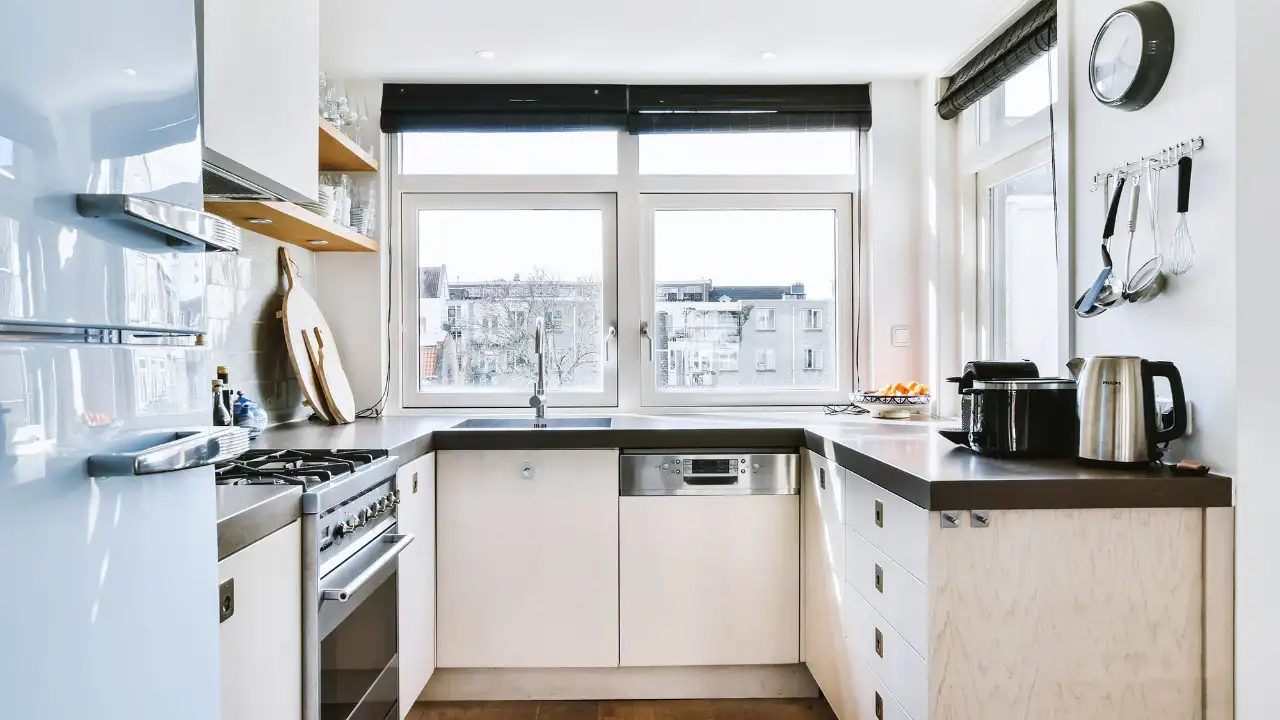
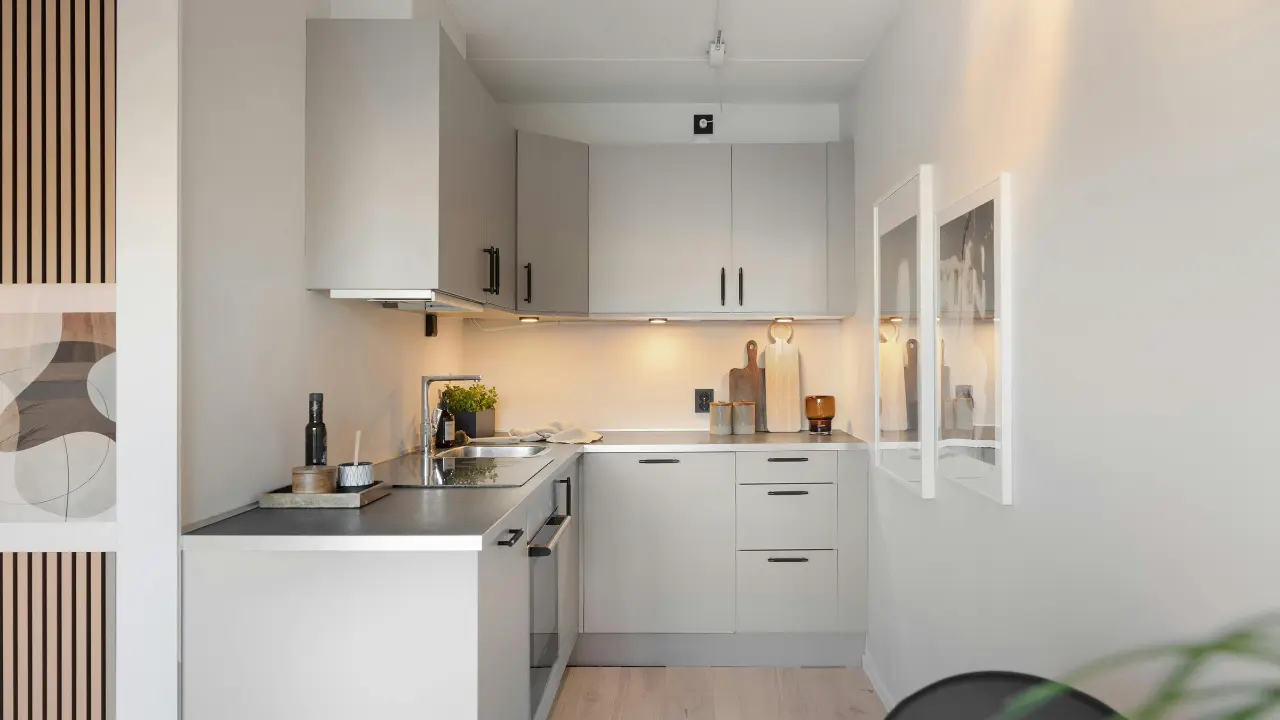
Warm wood kitchens are bringing a more comfortable, natural feeling to contemporary interiors. Instead of relying on stark white cabinetry or cool gray finishes, today’s kitchens increasingly combine visible wood grain, warm neutrals, natural stone, thoughtful lighting, and streamlined cabinetry.
The result does not have to look rustic or traditional. A warm wood kitchen can be minimalist, contemporary, Scandinavian-inspired, Japandi, transitional, organic modern, or even luxurious.
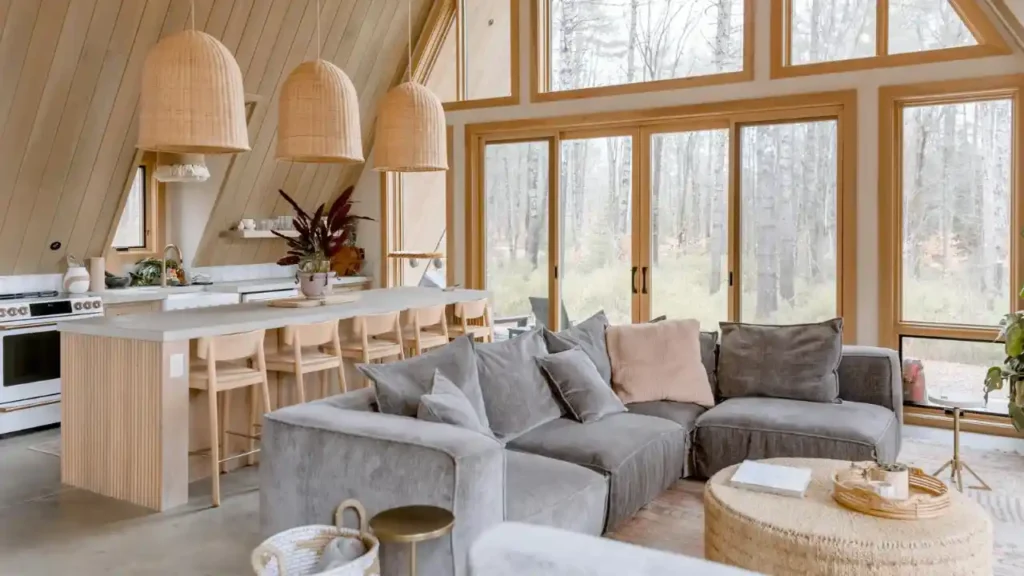
In this guide to warm wood kitchen trends, you’ll find practical ideas for choosing wood species, cabinet finishes, countertops, backsplashes, hardware, lighting, colors, and layouts. You’ll also learn how to mix wood tones, make wood cabinetry look modern, avoid common design mistakes, and introduce warmth without completely remodeling your kitchen.
What Is a Warm Wood Kitchen?
A warm wood kitchen uses natural or wood-look surfaces with warm visual undertones to create a welcoming atmosphere. Depending on the species and finish, the cabinetry might appear light and golden, honey-colored, caramel-toned, medium brown, or deep walnut.
Warm wood is not simply one particular shade.
The appearance can come from:
- Natural white oak
- Medium-toned oak
- Walnut
- Cherry
- Maple with a warm finish
- Hickory
- Ash with a warm stain
- Toasted or honey-toned finishes
- Natural wood veneer
The surrounding materials also affect how warm the kitchen feels. Cream walls, beige stone, warm lighting, bronze hardware, natural textiles, and earthy colors can emphasize the warmth of the wood.
What Makes Wood Look Warm?
Warm wood usually has golden, honey, caramel, reddish, or brown undertones.
For example, natural oak can look relatively light while still feeling warm because of its golden grain. Walnut creates a deeper and richer effect, while cherry naturally brings reddish-brown character.
The finish matters just as much as the species. A clear matte finish may preserve the natural appearance, while a tinted finish can significantly change the final color.
Warm Wood vs. Cool Wood Tones
Not all wood finishes create the same atmosphere.
Warm wood commonly includes:
- Golden oak
- Honey oak
- Natural oak
- Walnut
- Warm cherry
- Toasted brown
Cooler-looking wood may have:
- Gray undertones
- Ashy stains
- Blue-gray finishes
- Strongly weathered appearances
The same wood species can also look different depending on the stain, finish, surrounding colors, and lighting.
Does Warm Wood Mean Rustic?
Not at all.
Warm wood can look highly contemporary when combined with flat-panel doors, integrated appliances, simple hardware, large-format stone, clean lines, and modern lighting.
It can also work beautifully in:
- Modern kitchens
- Organic modern kitchens
- Scandinavian kitchens
- Japandi kitchens
- Transitional kitchens
- Traditional kitchens
- Rustic-modern kitchens
- Mid-century-inspired kitchens
The cabinet profile, finish, proportions, and surrounding materials determine the overall style.
Why Warm Wood Kitchen Trends Are Popular in 2026
Current kitchen design is increasingly interested in natural materials, warmer palettes, functional storage, and interiors that feel comfortable rather than overly clinical.
Wood naturally contributes texture and visual warmth while allowing the grain to become part of the design.
A warm wood kitchen can also feel more personalized because every piece of natural wood has variations in grain, color, and character.
However, popularity should not be confused with a universal design rule. Whether warm wood works well depends on the home’s architecture, natural light, flooring, countertop, room size, budget, and personal taste.
The goal is not to use wood simply because it is fashionable. The better approach is to determine how wood can solve a design or functional need in your particular kitchen.
25 Warm Wood Kitchen Trends to Try in 2026
1. Natural White Oak Kitchen Cabinets
Natural white oak remains a versatile option for homeowners who want warmth without a visually heavy kitchen.
White oak can work especially well with:
- Flat-panel doors
- Shaker cabinetry
- White countertops
- Cream walls
- Natural stone
- Matte black hardware
- Brass fixtures
Rift-sawn or quarter-sawn oak can create different grain patterns, so it is worth looking at actual samples before ordering cabinetry.
A natural finish can allow the wood’s character to remain visible while keeping the overall design relatively light.
Why It Works
White oak provides texture without necessarily dominating the room. It can also bridge the gap between minimalist cabinetry and more traditional kitchen materials.
2. Medium-Toned Oak Kitchens
Medium oak introduces more visual richness than pale natural oak while remaining versatile.
Possible finishes include:
- Honey oak
- Toasted oak
- Medium natural oak
- Golden brown oak
Medium wood tones can work particularly well in transitional and organic-modern kitchens.
Pair them with cream, taupe, beige stone, warm white, or muted green for a balanced palette.
If the room already has warm wood flooring, compare the cabinet sample against the floor before committing. Similar colors can either complement one another or create an unintended overly-matched appearance.
3. Walnut Kitchen Cabinets
Walnut brings a deeper brown tone and naturally distinctive grain to a kitchen.
It can be used for:
- Full cabinetry
- An island
- Tall storage
- A coffee station
- A feature wall
- Open shelving
Walnut works particularly well with cream, ivory, white, marble, quartzite, brushed brass, and bronze.
Because walnut is visually substantial, lighting becomes especially important. A darker wood kitchen can feel dramatically different in a dim room compared with a space filled with natural light.
4. Warm Wood Kitchen Islands
You do not have to use wood on every cabinet.
A wood island can introduce warmth while the perimeter cabinetry remains painted.
Popular combinations include:
- White perimeter cabinets + oak island
- Cream cabinets + walnut island
- Sage cabinets + natural oak island
- Taupe cabinets + medium wood island
- Deep green cabinets + walnut island
This approach is also useful when homeowners want to update an existing kitchen without replacing every cabinet.
The island can become the room’s visual anchor while the rest of the cabinetry provides a quieter backdrop.
5. Two-Tone Wood and Painted Cabinets
Two-tone cabinetry gives a warm wood kitchen more visual structure.
Consider combinations such as:
- White and oak
- Cream and walnut
- Beige and natural wood
- Sage green and oak
- Deep green and walnut
- Taupe and medium oak
One useful strategy is to use wood on the lower cabinets or island and a painted finish on the upper cabinets.
This can help keep the room from feeling visually dense while still giving natural wood a prominent role.
6. Warm Wood With Cream Cabinets
Cream is an excellent alternative to bright white when you want a softer kitchen.
Try:
- Cream perimeter cabinets + wood island
- Wood lower cabinets + cream uppers
- Walnut cabinets + cream walls
- Oak cabinets + warm ivory backsplash
Cream tends to create a softer transition between wood and light surfaces.
It is particularly useful in kitchens where bright white would feel too stark against the existing flooring or architectural details.
7. Warm Wood With White Countertops
Light countertops can provide visual contrast against warm wood cabinetry.
Options include:
- White quartz
- Soft-veined quartz
- Marble
- Quartzite
- Porcelain surfaces
The amount of veining matters.
A subtle surface can keep the kitchen calm, while dramatic stone can become a major focal point.
If you are selecting several permanent materials at once, view cabinet, countertop, backsplash, and flooring samples together rather than making each decision separately.
8. Warm Wood and Natural Stone
Natural wood and natural stone share an organic visual quality, making them a natural pairing.
Consider:
- Marble
- Quartzite
- Granite
- Limestone-inspired surfaces
- Travertine-inspired materials
The key is coordination rather than exact matching.
Wood has grain while stone has veining, so the two surfaces do not need to look identical. Instead, look for compatible undertones.
For example, warm oak can work with stone containing cream, beige, taupe, or subtle brown notes.
9. Warm Wood With Deep Green
Deep green and warm wood create a rich, nature-inspired palette.
Possible combinations include:
- Forest green + oak
- Olive + walnut
- Moss green + natural oak
- Deep sage + medium wood
Brass or bronze hardware can add another warm accent, but it does not need to appear everywhere.
If the kitchen receives limited natural light, test the green paint beside the wood sample at different times of day. Dark colors can appear substantially different under artificial lighting.
10. Warm Wood and Taupe
Taupe provides a sophisticated neutral background for wood.
Try:
- Taupe walls
- Taupe painted cabinets
- Warm wood islands
- Beige stone countertops
- Cream backsplashes
This palette can create a layered neutral kitchen without relying entirely on white.
The most important detail is undertone coordination. A taupe with a cool gray base can look disconnected from strongly golden wood, while a warmer taupe may create a smoother transition.
11. Floor-to-Ceiling Wood Cabinetry
Full-height wood cabinetry can give a kitchen a strong architectural presence.
It works particularly well for:
- Pantry storage
- Appliance walls
- Tall cabinet runs
- Built-in refrigerators
- Storage surrounding ovens
Vertical cabinetry can also emphasize ceiling height.
However, floor-to-ceiling wood requires careful planning because a large uninterrupted wood surface can become visually dominant. Break it up with appropriate lighting, stone, painted cabinetry, open space, or carefully positioned appliances.
12. Minimalist Flat-Panel Wood Cabinets
Flat-panel doors are a natural choice for a modern warm wood kitchen.
They typically feature:
- Clean surfaces
- Minimal decoration
- Straight lines
- Simple hardware
- Integrated handles or pulls
This allows the natural grain to become the main decorative element.
Flat-panel cabinetry works particularly well in contemporary, minimalist, Scandinavian, and Japandi-inspired spaces.
13. Warm Wood Shaker Cabinets
Shaker cabinetry provides a different interpretation of the warm wood look.
The framed door profile adds architectural detail without requiring ornate decoration.
Warm wood Shaker cabinets can be paired with:
- Natural stone
- Cream walls
- Brass hardware
- Bronze fixtures
- Simple pendant lights
- Traditional or contemporary stools
This makes them especially useful for transitional kitchens where homeowners want a connection between classic and modern design.
14. Vertical Wood Grain
Vertical grain can give wood cabinetry a tailored architectural appearance.
It can:
- Emphasize ceiling height
- Create visual rhythm
- Make tall cabinets feel more integrated
- Add subtle contemporary character
Grain direction should be planned carefully across doors, drawer fronts, panels, and islands.
If you want a highly refined appearance, ask the cabinetmaker how grain matching will be handled before production begins.
15. Rift-Sawn Oak Kitchens
Rift-sawn oak is known for its relatively straight and consistent grain appearance.
It can be particularly effective in modern kitchens where homeowners want the warmth of oak without highly varied grain movement.
It works well with:
- Slab doors
- Minimal hardware
- Light stone
- Cream cabinetry
- Matte finishes
- Contemporary lighting
The final appearance still depends on the specific wood, cut, veneer, stain, and finish, so always review the actual sample.
16. Warm Wood With Mixed Metals
Wood provides a warm natural foundation for different metal finishes.
Potential options include:
- Brass
- Bronze
- Black
- Stainless steel
- Chrome
Mixed metals can work when each finish has a clear role.
For example, cabinet hardware might use one finish while the faucet and lighting introduce another.
The goal is intentional repetition rather than placing a different metal on every fixture.
17. Warm Wood With Minimal Hardware
Minimal hardware lets the natural cabinet material remain the focus.
Options include:
- Slim bar pulls
- Edge pulls
- Integrated pulls
- Small knobs
- Simple linear handles
- Subtle knurled details
The right hardware depends on the cabinet style and how the kitchen will actually be used.
For frequently used drawers, choose hardware that is comfortable to grip rather than selecting a design based entirely on appearance.
18. Warm Wood With Sculptural Lighting
Lighting can turn a simple wood kitchen into a more distinctive space.
Consider:
- Sculptural pendants
- Glass pendants
- Brass fixtures
- Organic-shaped fixtures
- Linear island lighting
Scale matters.
A large island may need a longer fixture or multiple pendants, while a compact kitchen may look better with one appropriately sized statement light.
The lighting should complement the cabinet proportions rather than compete with them.
19. Warm Wood With Layered Lighting
Good lighting is essential because wood changes appearance depending on illumination.
A practical kitchen may combine:
Ambient Lighting
Provides general illumination throughout the room.
Task Lighting
Helps illuminate work areas such as countertops and the sink.
Accent Lighting
Highlights cabinetry, shelving, artwork, or architectural details.
Decorative Lighting
Adds visual character through pendants or statement fixtures.
Under-cabinet lighting can be especially useful because it illuminates the countertop while also highlighting the cabinetry.
Dimmers provide additional control, allowing the kitchen to shift from bright daytime functionality to a softer evening atmosphere.
20. Warm Wood With Hidden Storage
Warm wood cabinetry can be beautiful while still providing highly functional storage.
Consider:
- Deep drawers
- Pull-out pantry shelves
- Appliance garages
- Integrated trash and recycling
- Tray dividers
- Spice drawers
- Corner storage
- Vertical sheet-pan storage
A visually attractive kitchen becomes much more useful when everyday items have designated places.
Storage should therefore be planned around actual cooking habits rather than simply maximizing the number of cabinets.
21. Warm Wood and Integrated Appliances
Integrated appliances can preserve the visual continuity of a wood kitchen.
Possible features include:
- Panel-ready refrigerators
- Integrated dishwashers
- Built-in ovens
- Hidden microwaves
- Concealed coffee stations
Panel-ready appliances can reduce visual interruptions across a cabinet wall.
However, appliance placement should still prioritize workflow, ventilation, service access, and practical use rather than appearance alone.
22. Warm Wood Coffee Stations
A built-in coffee station is a natural companion to warm wood cabinetry.
Ideas include:
- Walnut coffee bars
- Oak appliance cabinets
- Pocket-door coffee stations
- Hidden espresso setups
- Dedicated mug drawers
- Open shelves for coffee accessories
A pocket-door station can be particularly useful because it allows appliances and supplies to disappear when the kitchen is being cleaned or when you want a more streamlined appearance.
For more ideas, explore your kitchen site’s built-in coffee bar ideas content.
23. Warm Wood Butler’s Pantries
A warm wood butler’s pantry can extend the kitchen’s material palette into a secondary preparation or storage area.
Depending on the home’s layout, it can provide space for:
- Small appliances
- Pantry goods
- Beverage preparation
- Entertaining supplies
- Food preparation
- Additional countertop space
A butler’s pantry should solve a genuine storage or workflow problem. It is not automatically necessary for every home.
If space is limited, a tall pantry wall or dedicated appliance cabinet may provide some of the same benefits with a smaller footprint.
24. Warm Wood in Small Kitchens
Warm wood can work beautifully in a compact kitchen.
The key is controlling visual weight.
Try:
- Light-to-medium wood tones
- Wood on lower cabinets
- A single wood feature wall
- Light countertops
- Reflective backsplash materials
- Simple hardware
- Vertical storage
- Integrated appliances
A small kitchen does not need to be entirely white to feel open.
Natural wood can actually make a compact kitchen feel more welcoming when the surrounding materials provide enough visual breathing room.
25. Warm Wood With Timeless Design Details
One of the most effective ways to use trends is to combine them with durable design fundamentals.
Prioritize:
- Functional layout
- Quality cabinetry
- Appropriate proportions
- Durable countertops
- Good lighting
- Useful storage
- Comfortable work areas
Then use more changeable elements for trend-driven decisions:
- Hardware
- Pendant lights
- Paint
- Bar stools
- Artwork
- Accessories
This approach makes it easier to refresh the kitchen later without replacing major components.
Best Wood Species for Warm Kitchen Cabinets
Different wood species produce different visual effects.
| Wood Species | Visual Character | Overall Warmth | Suitable Design Directions |
|---|---|---|---|
| White Oak | Refined, visible grain | Medium | Modern, transitional, organic |
| Walnut | Rich brown grain | High | Contemporary, luxury, organic modern |
| Cherry | Naturally reddish-brown | High | Traditional, transitional |
| Maple | Smooth, subtle grain | Medium | Clean, contemporary |
| Hickory | Strong grain variation | High | Rustic, organic |
| Ash | Open, expressive grain | Medium | Contemporary, Scandinavian |
There is no universally best wood species.
The right choice depends on the desired color, grain pattern, durability requirements, finish, budget, cabinetry construction, and surrounding materials.
Warm Wood Cabinet Finishes to Consider in 2026
Natural Clear Finish
A clear finish allows much of the wood’s natural character to remain visible.
This is particularly appealing for homeowners who want an authentic material appearance.
Honey Oak
Honey-toned finishes create a traditional and distinctly warm atmosphere.
They can work well when the rest of the room uses warm neutrals and natural materials.
Toasted Oak
A toasted finish gives oak a richer appearance while maintaining its recognizable grain.
It can work well in contemporary and transitional kitchens.
Medium Brown
Medium brown finishes provide more depth without reaching the visual weight of very dark cabinetry.
They can pair well with beige, cream, taupe, and natural stone.
Walnut Brown
Walnut naturally provides a deep, sophisticated brown appearance.
It can become a major visual feature, especially when used across a large cabinet wall.
Cerused or Wire-Brushed Finishes
These finishes emphasize texture and grain.
They can add character, but they should be selected carefully because highly textured finishes may have a stronger stylistic identity than a simple natural finish.
Always view wood samples in the actual lighting conditions of the kitchen before making a final decision.
Best Color Combinations for Warm Wood Kitchens
Warm Wood + Cream
Cream softens the contrast and creates a comfortable palette.
Warm Wood + White
White provides a crisp contrast that can make the wood grain more noticeable.
Warm Wood + Beige
Beige creates a layered neutral look that works well with natural stone.
Warm Wood + Taupe
Taupe gives the kitchen a sophisticated, muted appearance.
Warm Wood + Sage Green
Sage and oak create a soft, nature-inspired combination.
Warm Wood + Deep Green
Deep green creates stronger contrast and works especially well with walnut or medium oak.
Warm Wood + Charcoal
Charcoal can create a dramatic contemporary kitchen, particularly when balanced with lighter countertops.
Warm Wood + Soft Blue
Soft blue provides contrast without creating an overly harsh color combination.
Warm Wood + Terracotta
Terracotta introduces an earthy, Mediterranean-inspired accent.
When selecting a color, consider the entire room rather than the cabinets alone. Natural light, flooring, countertops, backsplash materials, ceiling height, and adjacent rooms can all affect the final appearance.
Countertops That Work With Warm Wood Cabinets
White Quartz
White quartz can provide a clean contrast while keeping the room relatively bright.
Marble
Marble introduces natural veining and can create a sophisticated relationship with wood grain.
Quartzite
Quartzite can provide the visual character of natural stone with different performance characteristics depending on the specific material.
Soapstone
Soapstone’s deeper color can create dramatic contrast with lighter wood.
Warm Beige Stone
Warm beige stone can create a seamless, earthy palette with medium or dark wood.
Wood Countertops
Wood countertops can create a highly cohesive material palette, but they require careful consideration of sealing, moisture, heat, scratches, and maintenance.
When comparing countertop materials, look beyond appearance. Consider:
- Staining
- Scratching
- Heat exposure
- Sealing requirements
- Cleaning
- Fabrication
- Installation
- Long-term maintenance
Always follow the manufacturer’s care instructions for the specific material.
Best Backsplash Ideas for Warm Wood Kitchens
A backsplash can either quietly support the cabinetry or become a major focal point.
Popular options include:
- White tile
- Cream tile
- Handmade-look tile
- Marble slab
- Quartzite
- Large-format porcelain
- Zellige-inspired tile
- Neutral stone
- Subtle patterned tile
Full-Height Stone Backsplash
A full-height slab can create a strong visual connection between the countertop and upper portion of the kitchen.
It works especially well when the wood cabinetry is relatively simple.
Textured Tile Backsplash
Textured tile can add dimension without requiring another strong color.
Minimal Neutral Backsplash
A simple backsplash can be useful when the wood grain, stone countertop, or lighting is already visually prominent.
The best backsplash is usually the one that supports the overall material balance rather than competing with everything else.
Warm Wood Kitchens for Different Design Styles
Modern Warm Wood Kitchen
Modern kitchens often combine:
- Flat-panel cabinets
- Minimal hardware
- Stone countertops
- Integrated appliances
- Clean lighting
- Simple architectural lines
Organic Modern Warm Wood Kitchen
Organic modern kitchens emphasize:
- Natural wood
- Stone
- Earth tones
- Soft textures
- Organic shapes
- Comfortable lighting
Scandinavian Warm Wood Kitchen
Scandinavian-inspired spaces often use:
- Light wood
- Simple cabinetry
- Functional storage
- Soft neutral colors
- Minimal decoration
Japandi-Inspired Warm Wood Kitchen
Japandi design combines Japanese simplicity with Scandinavian warmth.
Typical characteristics include:
- Natural materials
- Simple forms
- Warm neutral colors
- Minimal decoration
- Strong attention to function
Transitional Warm Wood Kitchen
Transitional kitchens can combine:
- Shaker cabinetry
- Natural stone
- Traditional proportions
- Modern appliances
- Contemporary lighting
Rustic Modern Warm Wood Kitchen
This style can include:
- More pronounced wood grain
- Natural stone
- Textured surfaces
- Matte or aged metals
- Organic decorative details
The same wood species can look completely different depending on which design language surrounds it.
Warm Wood Kitchen Ideas for Small and Large Spaces
Small Kitchens
In a small kitchen, consider prioritizing:
- Light or medium wood
- Vertical cabinetry
- Integrated appliances
- Light countertops
- Efficient drawers
- Minimal visual clutter
- Under-cabinet lighting
Avoid automatically assuming that every surface needs to be wood.
A strategic wood element may have more impact than covering the entire kitchen.
Large Kitchens
Larger kitchens provide more room for:
- Large islands
- Full-height cabinetry
- Multiple storage zones
- Beverage stations
- Butler’s pantries
- More than one wood tone
- Larger lighting fixtures
However, more space does not mean every available surface needs decoration.
Good proportions and visual breathing room remain important.
How to Mix Wood Tones in a Kitchen Without Making It Look Busy
Mixing wood tones can add depth, but too many competing finishes can make the kitchen feel disconnected.
Follow a few practical principles.
Match Undertones Rather Than Exact Colors
Two woods do not need to be identical.
They should, however, feel compatible in temperature.
Give One Wood Tone Visual Priority
For example, use oak as the primary cabinetry and walnut as a smaller accent.
Repeat Each Wood Tone Intentionally
If walnut appears on the island, repeating a small walnut detail elsewhere can make the combination feel deliberate.
Consider Flooring Separately
Kitchen flooring is often overlooked when cabinet wood is selected.
Place the samples next to each other before making a final decision.
Avoid Too Many Competing Finishes
Two or three coordinated wood finishes may be enough. Adding several unrelated tones can create visual noise.
Use Stone and Paint as Breathing Room
Light stone, cream walls, or painted cabinetry can help separate different wood surfaces.
Common Warm Wood Kitchen Mistakes to Avoid
1. Choosing Wood From an Online Photo Alone
Screens can distort color and grain.
Always request physical samples where possible.
2. Ignoring Undertones
A cabinet can look different depending on the surrounding colors.
3. Mixing Too Many Wood Species
Too many unrelated finishes can make the kitchen look fragmented.
4. Matching Everything Too Perfectly
A kitchen does not need every wood element to be identical.
Some variation can create character.
5. Using Poor-Quality Finishes
The finish affects both appearance and long-term care.
6. Ignoring Natural Light
A wood color that looks beautiful in a showroom may look completely different at home.
7. Choosing the Countertop Too Late
Cabinet and countertop undertones should be evaluated together.
8. Forgetting Flooring Compatibility
Flooring can strongly influence how warm the cabinetry appears.
9. Overusing Rustic Elements
Wood alone does not make a kitchen rustic. Too many rustic details can push the design in a direction you may not want.
10. Using Oversized Hardware
Hardware should be proportional to cabinet doors and drawers.
11. Neglecting Cabinet Interiors
Beautiful exteriors do not compensate for inefficient storage.
12. Poor Lighting Planning
A beautiful material can look flat or overly dark without appropriate lighting.
13. Choosing Trendy Colors Without Considering Longevity
If you are investing heavily in cabinetry, consider how the color will work several years from now.
14. Ignoring Maintenance Requirements
Different wood finishes and countertop materials have different care requirements.
15. Prioritizing Appearance Over Workflow
The kitchen should function well for the people who use it every day.
How to Make Warm Wood Cabinets Look Modern
If you love natural wood but are concerned about creating an old-fashioned kitchen, use these strategies.
1. Choose Clean Cabinet Profiles
Flat-panel and simplified Shaker doors can immediately make wood feel more contemporary.
2. Pair Wood With Refined Stone
A clean countertop can balance the organic character of the grain.
3. Use Simple Hardware
Minimal pulls allow the wood to remain the visual focus.
4. Add Contemporary Lighting
Modern pendants or linear fixtures can shift the overall design direction.
5. Keep the Backsplash Controlled
A simple backsplash can prevent the kitchen from becoming visually overloaded.
6. Use Integrated Appliances
Panel-ready appliances can create a cleaner cabinet wall.
7. Introduce One Contrasting Color
Green, cream, charcoal, or muted blue can give the room additional depth.
8. Avoid Excessive Matching Wood
Wood cabinetry, wood ceiling, wood backsplash, wood countertops, and wood furniture can become too much when used without visual separation.
9. Keep Countertops Organized
Visual clutter can make even an expensive kitchen look less refined.
10. Prioritize Proportion
Modern design is not only about color. Cabinet height, island size, walkway width, lighting scale, and hardware placement all matter.
How to Create a High-End Warm Wood Kitchen Look
A luxurious kitchen does not necessarily require the most expensive materials.
The sense of quality often comes from coordination and execution.
Focus on:
- Consistent cabinet proportions
- High-quality installation
- Carefully aligned grain
- Thoughtful hardware placement
- Layered lighting
- Well-selected stone
- Integrated storage
- Appropriate appliance scale
- Consistent metal finishes
- Minimal countertop clutter
A beautifully designed medium-budget kitchen can feel more refined than a costly room where materials compete with one another.
Which Warm Wood Kitchen Features Are Worth Prioritizing?
| Feature | Visual Impact | Functional Value | Planning Priority |
|---|---|---|---|
| Quality cabinetry | High | High | High |
| Durable countertop | High | High | High |
| Good lighting | High | High | High |
| Custom storage | Medium | High | High |
| Wood island | High | High | Medium–High |
| Premium hardware | Medium | Medium | Medium |
| Statement pendants | High | Medium | Medium |
| Decorative accessories | Medium | Low | Low |
These priorities are not universal. A homeowner who rarely cooks may prioritize aesthetics differently from a family that prepares multiple meals every day.
The most important question is how the kitchen will actually be used.
How to Add Warm Wood to an Existing Kitchen
You do not necessarily need to replace the entire kitchen.
Consider smaller updates such as:
- Replacing an island
- Adding a wood island
- Replacing selected cabinet doors
- Installing wood floating shelves
- Adding a wood range hood
- Introducing wood furniture
- Replacing cabinet hardware
- Adding wood stools
- Adding a wood accent
- Improving lighting
- Introducing natural wood accessories
For example, a white kitchen can become warmer simply by introducing a walnut island, oak shelving, warm stools, and softer lighting.
This approach can be more practical than completely replacing functional cabinetry.
How to Plan a Warm Wood Kitchen Remodel
Step 1: Assess the Existing Kitchen
Measure and document:
- Walls
- Ceiling height
- Windows
- Doors
- Existing cabinets
- Appliance openings
- Plumbing locations
- Electrical locations
Accurate measurements help prevent expensive mistakes.
Step 2: Identify Functional Problems
Ask:
- Is storage insufficient?
- Are the work zones inefficient?
- Is the island too large?
- Is lighting inadequate?
- Are appliances poorly positioned?
- Are frequently used items difficult to access?
Solve these problems before focusing on decorative details.
Step 3: Choose the Wood Direction
Decide on:
- Species
- Cut
- Tone
- Finish
- Door style
- Grain direction
Step 4: Select Permanent Materials
Prioritize major decisions such as:
- Cabinetry
- Countertops
- Flooring
- Appliances
- Plumbing fixtures
Step 5: Plan Lighting
Create layers for:
- Ambient light
- Task lighting
- Accent lighting
- Decorative lighting
Step 6: Add Changeable Details
Hardware, stools, paint, artwork, and accessories are easier to replace later.
Step 7: Test Samples
View samples:
- During daylight
- At night
- Under the planned LED lighting
- Beside the flooring
- Beside the backsplash
- Beside the countertop
A sample that looks perfect in a showroom can look very different in your actual kitchen.
What Can You DIY in a Warm Wood Kitchen?
| Project | DIY Potential | Professional Consideration |
|---|---|---|
| Hardware replacement | High | Usually unnecessary |
| Styling | High | Optional |
| Painting | Medium–High | Optional |
| Open shelving | Medium | Depends on wall structure |
| Backsplash | Medium | Depends on material |
| Cabinet installation | Low–Medium | Professional help may be appropriate |
| Countertops | Low | Professional installation |
| Plumbing | Low | Qualified professional |
| Electrical | Low | Qualified professional |
| Structural changes | Low | Professional |
Decorative updates are often suitable for DIY work, while technical work can require specialized knowledge, tools, permits, or code compliance.
Electrical, gas, plumbing, structural, and ventilation work should be handled according to local requirements and by appropriately qualified professionals where necessary.
How to Maintain Warm Wood Kitchen Cabinets
Wood cabinetry can remain beautiful when it receives appropriate care.
Follow the cabinet manufacturer’s cleaning and maintenance recommendations.
General principles include:
- Wipe spills promptly.
- Avoid excessive moisture.
- Do not allow water to sit on cabinet surfaces.
- Protect wood from prolonged heat and steam exposure.
- Use recommended cleaning products.
- Check and tighten hardware when necessary.
- Follow finish-specific maintenance instructions.
Does Warm Wood Require More Maintenance?
There is no single answer.
Maintenance depends on:
- Wood species
- Finish
- Cabinet construction
- Kitchen environment
- Household use
- Exposure to moisture
- Manufacturer recommendations
A properly finished cabinet can be practical for everyday use, but homeowners should understand the care requirements of the specific product they purchase.
Warm Wood Kitchen Trends 2026 FAQs
Are warm wood kitchens still popular in 2026?
Warm wood remains a significant direction in contemporary kitchen design, particularly through natural and medium-toned cabinetry.
However, popularity varies by market, homeowner preference, architecture, and design style. A trend should be treated as an option rather than a requirement.
What is the most popular warm wood for kitchen cabinets?
White oak, medium oak, walnut, cherry, maple, and other species can all work in warm kitchen designs.
The best choice depends on the desired color, grain, finish, room lighting, budget, and surrounding materials.
What colors go best with warm wood kitchen cabinets?
Warm wood can pair with:
- Cream
- White
- Beige
- Taupe
- Sage
- Deep green
- Soft blue
- Charcoal
- Terracotta
The most successful combination usually depends on the wood’s undertone and the amount of natural light.
Are warm wood kitchens modern?
Yes.
Flat-panel doors, integrated appliances, minimal hardware, contemporary lighting, and refined stone can make warm wood cabinetry look distinctly modern.
Is walnut too dark for a kitchen?
Not necessarily.
The result depends on room size, natural light, cabinet coverage, countertop color, wall color, and lighting.
If the kitchen is small or relatively dark, consider using walnut as an island or feature rather than covering every cabinet.
Can I mix white cabinets with warm wood?
Yes.
White or cream cabinetry combined with a natural wood island is one of the simplest ways to introduce warmth while maintaining visual contrast.
What countertop looks best with warm wood cabinets?
Potential options include:
- Quartz
- Marble
- Quartzite
- Porcelain
- Granite
- Soapstone
- Warm natural stone
Instead of selecting a countertop based solely on popularity, compare its undertone, maintenance requirements, durability, and visual relationship with the wood.
Can warm wood work in a small kitchen?
Yes.
Use lighter or medium wood, light countertops, efficient storage, simple hardware, vertical cabinetry, and good lighting to maintain visual balance.
Are warm wood kitchens timeless?
Natural wood can provide a long-lasting foundation, but no particular finish is guaranteed to remain fashionable forever.
A functional layout, quality cabinetry, appropriate proportions, and durable materials generally have greater long-term value than highly specific decorative trends.
How can I add warm wood without remodeling the entire kitchen?
Try:
- A wood island
- Floating shelves
- Wood stools
- A wood range hood
- Cabinet door replacements
- Wood furniture
- Warm hardware
- Natural wood accessories
- Improved lighting
Small changes can introduce warmth without replacing every cabinet.
Final Thoughts on Warm Wood Kitchen Trends
The strongest warm wood kitchens are not simply collections of wooden surfaces. They are coordinated spaces where material, color, lighting, storage, proportions, and everyday function work together.
When planning your kitchen, start with the fundamentals.
Choose wood based on your room’s natural light and architecture. Compare undertones before combining materials. Consider how flooring, countertops, backsplash, hardware, and paint interact with the cabinetry. Give storage and workflow as much attention as appearance.
You also do not have to cover the entire kitchen in wood. A warm oak island, walnut coffee station, wood shelving, or carefully selected cabinet section can introduce natural character while allowing other materials to provide contrast.
The best warm wood kitchen trends are ultimately the ones that make sense for your home, your lifestyle, and the way you use your kitchen every day.