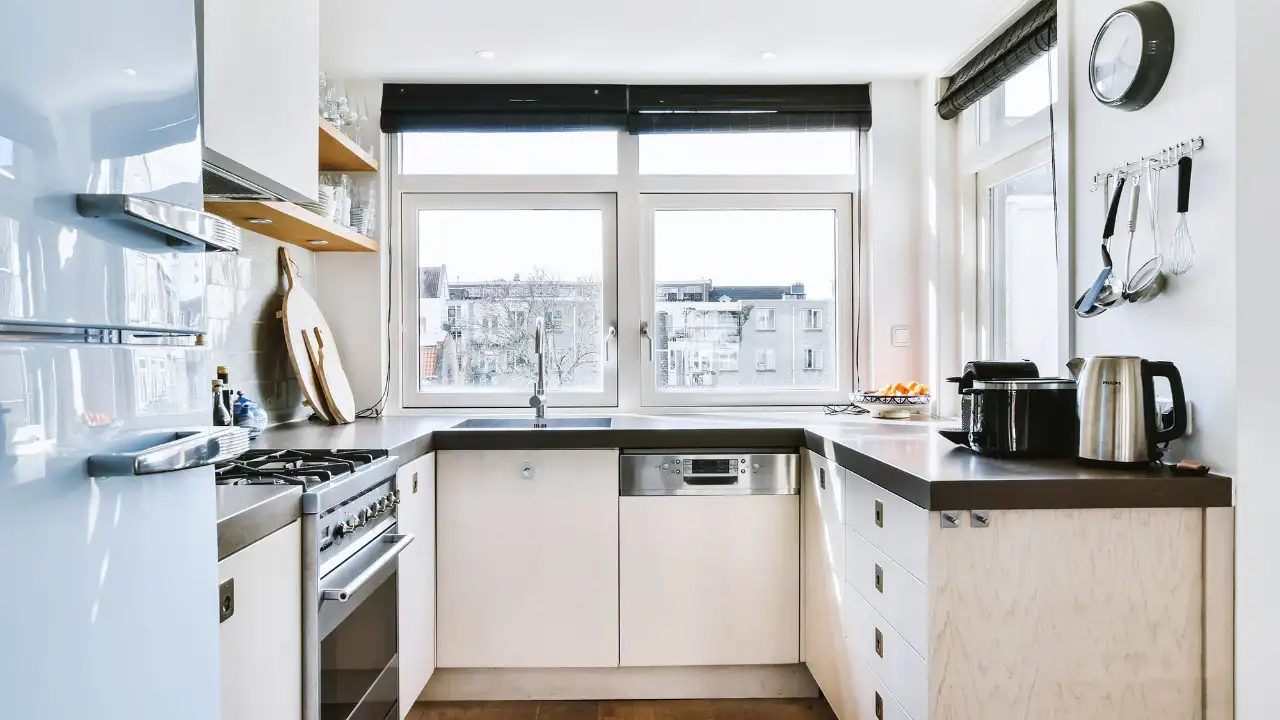
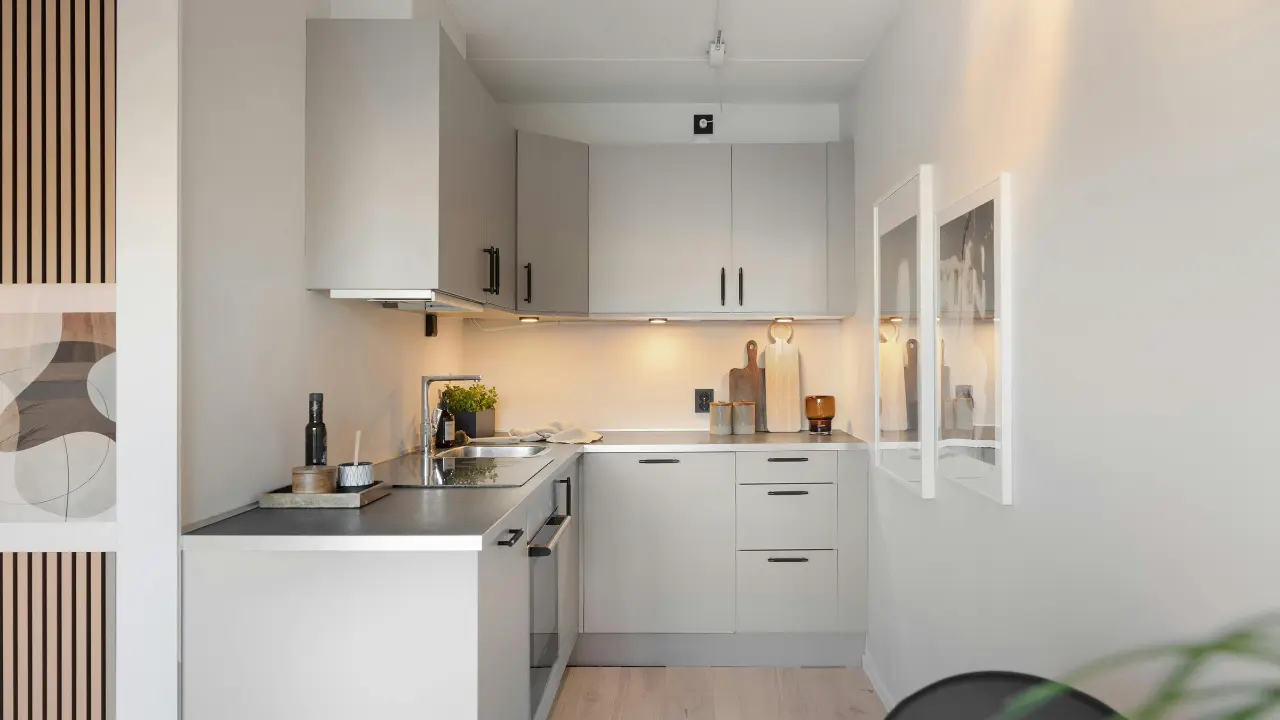
A white oak and black kitchen combines the natural warmth and visible grain of white oak with the depth and contrast of black cabinetry, hardware, appliances, lighting, countertops, or other accents. The result can feel modern, sophisticated, warm, or minimalist depending on the proportions, materials, lighting, and finishes you choose.
The combination is also remarkably flexible. You can use white oak as the dominant material and introduce black through small details, or create a more dramatic design with black cabinetry and a natural oak island.
The key is balance. White oak can brighten and soften the visual weight of black, while black can give natural wood stronger definition. But the right balance depends on your kitchen’s size, natural light, ceiling height, existing flooring, countertop, backsplash, and personal style.
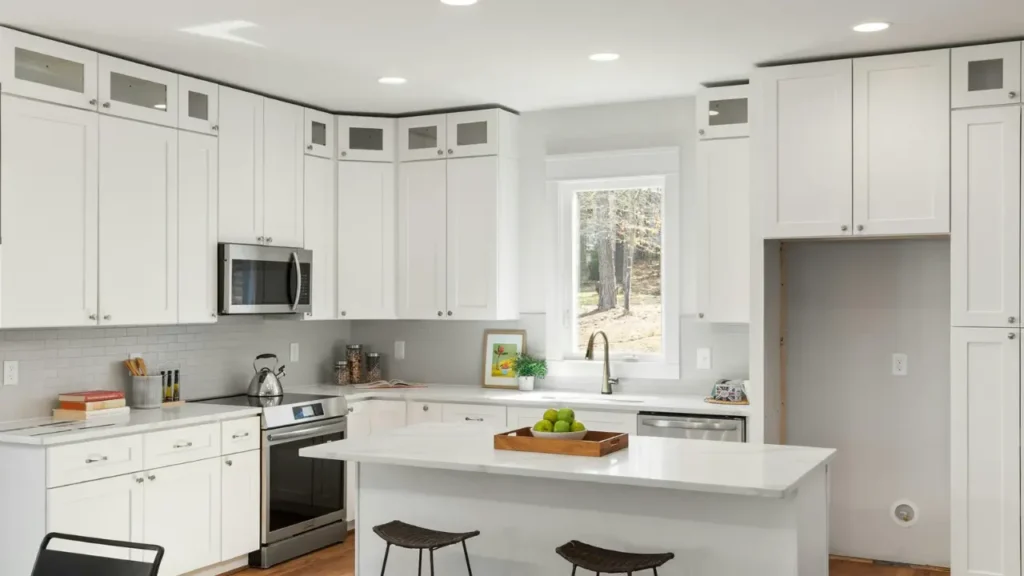
Whether you’re planning a complete remodel or simply updating cabinet hardware and lighting, these white oak and black kitchen ideas can help you build a cohesive design that looks intentional rather than overly coordinated.
White Oak and Black Kitchen: Quick Combination Guide
| Combination | Overall Effect | Best Supporting Materials |
|---|---|---|
| White Oak + Black Hardware | Subtle contrast | White, cream, stone |
| White Oak + Black Island | Strong focal point | Light countertops |
| White Oak + Black Cabinets | Dramatic | White oak accents, light stone |
| White Oak + Black Countertops | Modern contrast | Cream backsplash |
| White Oak + Black Appliances | Cohesive and contemporary | Natural stone, oak |
| White Oak + Black Lighting | Graphic contrast | Oak, warm neutrals |
| White Oak + Black Backsplash | Bold | Light oak, white counters |
| Oak + Black + White | Crisp and balanced | Quartz, marble |
| Oak + Black + Brass | Warm and refined | Cream, stone |
| Oak + Black + Green | Organic | Stone, brass |
What Is a White Oak and Black Kitchen?
A white oak and black kitchen is a design palette that combines light natural wood with black finishes and accents.
White oak typically contributes:
- Visible natural grain
- Warm beige or neutral tones
- Texture and variation
- A lighter visual presence
- Organic character
Black can be introduced in many different ways. A black kitchen does not necessarily mean using black cabinetry throughout the entire room.
Black may appear on:
- Cabinet doors
- Kitchen islands
- Hardware
- Faucets
- Pendant lights
- Appliances
- Range hoods
- Countertops
- Backsplashes
- Window frames
- Open shelving
- Dining furniture
This flexibility makes the palette suitable for both large and small kitchens.
For example, a compact kitchen might use natural white oak cabinets with matte black pulls and a black faucet. A larger kitchen could combine full-height black cabinetry with a white oak island and light stone countertops.
The first approach creates subtle contrast. The second creates a much stronger architectural statement.
Why Do White Oak and Black Work Together?
White oak and black occupy opposite ends of the light-dark spectrum, which gives the kitchen natural visual contrast.
What White Oak Provides
White oak introduces:
- Warmth
- Texture
- Natural variation
- Lightness
- Organic character
The grain keeps large wood surfaces from looking completely flat, while the lighter color can help balance darker finishes.
What Black Provides
Black contributes:
- Definition
- Contrast
- Visual depth
- Strong focal points
- Architectural character
Black can also visually connect different elements. For example, black hardware, appliances, and pendant lights can create repetition throughout an otherwise oak-dominant kitchen.
The Combination
Together, the materials can create a balanced relationship between light and dark, natural and graphic, warm and cool.
However, there is no single formula that works in every room. A black finish that looks elegant in a bright kitchen may feel heavy in a poorly illuminated space. Similarly, a warm golden oak can look different next to a cool charcoal black than it does beside a warmer black.
Proportion and material coordination matter more than simply choosing the two colors.
Is White Oak and Black a Good Kitchen Combination?
It can be an effective combination when the materials are coordinated carefully.
Potential Advantages
- Strong light-dark contrast
- Natural warmth from the oak
- Flexible design possibilities
- Works with contemporary cabinetry
- Can complement traditional cabinet profiles
- Black can define islands and architectural features
- Oak can soften large dark surfaces
- Easy to combine with white, cream, beige, stone, and metallic accents
Potential Challenges
Too much black can increase visual weight, particularly in a small or poorly lit kitchen.
White oak can also vary considerably. Some finishes appear neutral, while others have noticeable beige, golden, or yellow undertones.
Other factors to consider include:
- Natural daylight
- Artificial lighting
- Countertop undertones
- Backsplash color
- Flooring
- Black sheen
- Cabinet door style
- Amount of open space
- Number of wood tones
The safest approach is to evaluate physical samples together before committing to the complete palette.
Understanding White Oak Undertones
White oak is not one universal color.
Depending on the species characteristics, cut, finish, stain, sealant, lighting, and surrounding materials, it can appear:
- Neutral beige
- Warm beige
- Golden
- Slightly yellow
- Soft tan
- More muted and contemporary
Rift-sawn and quarter-sawn white oak can also create different grain patterns and visual textures compared with other cuts.
The finish matters just as much as the wood itself. A clear finish may preserve a relatively natural appearance, while a tinted stain can significantly alter the color.
Your kitchen lighting also affects how the oak appears.
A sample that looks neutral in a showroom may appear warmer beside a cream backsplash or cooler beside a gray countertop.
The Best Sampling Method
Before choosing cabinetry, compare a large white oak sample alongside:
- Your black cabinet or hardware finish
- Countertop sample
- Backsplash sample
- Flooring
- Wall color
- Lighting conditions
View the samples in both daylight and artificial light.
Always compare a large white oak sample with the black finish and major countertop and backsplash materials before finalizing the palette.
Understanding Different Black Finishes
Black is not a single visual category either.
Matte Black
Matte black has limited reflection and works well for:
- Cabinetry
- Hardware
- Faucets
- Lighting
- Shelving
It can create a restrained contemporary appearance.
Satin Black
Satin black has a softer amount of reflection and can bridge the gap between matte and glossy finishes.
Glossy Black
Glossy black is more reflective and can create a dramatic appearance. However, reflective surfaces can make fingerprints, smudges, and surface marks more noticeable.
Charcoal Black
Charcoal is softer than an extremely deep black and can be useful if pure black feels too intense.
Warm Black
A warmer black can coordinate more comfortably with warm natural wood.
Cool Black
A cooler black can create a sharper, more graphic contrast.
The most important point is to evaluate the actual finish beside your chosen white oak rather than selecting a black color from a screen alone.
35 Best White Oak and Black Kitchen Ideas for 2026
1. White Oak Cabinets With Black Hardware
One of the simplest ways to create a white oak black kitchen is to keep the cabinetry natural and introduce black through knobs and pulls.
This approach works particularly well when you want contrast without committing to a large black surface.
Use black hardware consistently across the main cabinet run, then coordinate it with a black faucet or lighting fixture if appropriate.
Consider the scale of the hardware carefully. Long pulls can emphasize modern flat-panel cabinets, while smaller knobs and pulls can suit Shaker or transitional doors.
Best for: subtle contrast and flexible updates.
2. White Oak Cabinets With a Black Island
A black island can become the visual center of a kitchen surrounded by natural oak cabinetry.
Pair the island with:
- White oak perimeter cabinets
- A light countertop
- Neutral backsplash
- Black pendant lights
- Coordinated black hardware
A lighter countertop can prevent the black island from becoming too visually dense.
3. Full White Oak Cabinets With Black Accents
If you love natural wood, let white oak remain the dominant material.
Use black for:
- Hardware
- Faucet
- Pendant lights
- Appliances
- Bar stools
- Small accessories
This approach allows the grain and warmth of the oak to remain the primary visual feature.
It is also relatively easy to update because many of the black elements can be changed without replacing cabinetry.
4. White Oak and Black Two-Tone Cabinets
Two-tone cabinetry gives you several possibilities.
You could use:
- White oak lowers with black uppers
- Black lowers with white oak uppers
- White oak perimeter cabinets with a black island
- Black pantry cabinetry with oak surrounding cabinets
Think about visual weight before choosing the arrangement. Dark cabinetry generally attracts more visual attention, so placing it over or below the oak can produce different effects.
5. White Oak Cabinets With Black Countertops
Black countertops create strong contrast against natural oak.
Options include dark quartz, black granite, and other dark stone surfaces.
This combination works especially well when the backsplash introduces a lighter or warmer transition.
For example:
White oak + black countertop + cream backsplash + black hardware
can feel softer than using black across the countertop and backsplash.
6. White Oak With White Countertops and Black Accents
For a brighter interpretation, combine:
Oak + White + Black
White countertops provide visual breathing room between natural oak cabinetry and black details.
This arrangement can work particularly well when the kitchen receives limited daylight or when you want the black elements to remain accents rather than dominant surfaces.
7. White Oak and Black Marble Kitchen
Marble can introduce movement and variation into an oak-and-black palette.
Depending on the stone, you could use it for:
- Countertops
- Full-height backsplash
- Island
- Feature wall
Consider the direction and intensity of the veining. A highly active stone can become another major focal point, so it may need simpler cabinetry and hardware.
8. White Oak and Black Quartz Kitchen
Quartz provides another route for creating contrast.
You can choose:
- White quartz
- Warm white quartz
- Black quartz
- Marble-look quartz
- Stone-look quartz
White quartz produces a lighter overall composition, while black quartz increases drama.
A marble-look surface can add visual movement without introducing another major color.
9. White Oak and Black Backsplash
A black backsplash can create a bold backdrop behind white oak cabinetry.
Possible materials include:
- Black ceramic tile
- Dark stone
- Charcoal tile
- Large-format slabs
This approach works best when there is enough light and sufficient lighter material elsewhere in the room.
If the backsplash, countertops, and cabinetry are all dark, the kitchen can become visually heavy.
10. White Oak With White Backsplash and Black Hardware
This is one of the more adaptable combinations.
Use:
- White oak cabinets
- White backsplash
- Light countertop
- Black hardware
- Black faucet
- Black lighting
The white surfaces create breathing room while the black details establish contrast.
11. White Oak Kitchen With Black Appliances
Black appliances can repeat the darker color across the room without requiring black cabinetry.
Consider:
- Black refrigerator
- Black range
- Black dishwasher
- Black microwave
- Black hood
When several appliances are visible, consistent finishes can help the kitchen feel more coordinated.
12. White Oak Kitchen With Black Range Hood
A black range hood can become an architectural focal point.
Depending on the style of the kitchen, the hood could be:
- Black metal
- Painted black
- Black-stained wood
- Minimalist and integrated
A black hood looks particularly intentional when another black element, such as pendant lighting or hardware, appears elsewhere in the room.
13. White Oak Kitchen With Black Pendant Lights
Black pendant lights can connect the island visually with other black elements.
When selecting fixtures, consider:
- Island size
- Ceiling height
- Fixture diameter
- Number of pendants
- Light output
- Viewing angles
The goal is not simply to add black but to create useful illumination and proportionate visual rhythm.
14. White Oak and Matte Black Kitchen
Natural oak paired with matte black creates a restrained contemporary palette.
Use matte black for:
- Handles
- Faucet
- Lighting
- Appliances
- Island cabinetry
- Shelving
Keep the number of finishes controlled so the kitchen feels intentional.
15. White Oak and Black Minimalist Kitchen
A minimalist design can use:
- Flat-panel doors
- Integrated appliances
- Minimal hardware
- Simple countertops
- Limited accessories
- Clean lighting
Natural white oak prevents the minimalist space from becoming visually sterile, while black provides definition.
Storage becomes particularly important because unnecessary countertop clutter can undermine the clean appearance.
16. Modern White Oak and Black Kitchen
A modern white oak and black kitchen often combines flat-panel cabinetry, natural wood grain, black hardware, quartz surfaces, integrated appliances, and streamlined lighting.
For additional warmth, consider:
- Cream walls
- Warm lighting
- Natural stone
- Soft textiles
- Greenery
The modern appearance should come from the overall composition rather than from adding as many contemporary details as possible.
17. White Oak and Black Japandi Kitchen
Japandi-inspired kitchens benefit from a restrained palette.
Combine:
- Natural white oak
- Soft black
- Neutral stone
- Minimal hardware
- Simple cabinet fronts
- Warm lighting
- Functional storage
Avoid decorating every surface.
A few carefully chosen ceramic pieces or natural accessories can be more effective than a crowded display.
18. White Oak and Black Scandinavian Kitchen
For a Scandinavian interpretation, let white oak and light neutrals dominate.
Use black selectively through:
- Hardware
- Lighting
- Appliances
- Window frames
- Furniture
White walls and natural daylight can help preserve an airy feeling.
19. White Oak and Black Organic Modern Kitchen
Organic modern design gives you more room to layer textures.
Combine white oak and black with:
- Natural stone
- Cream
- Beige
- Textured surfaces
- Plants
- Curved furniture
Curved stools or rounded pendant fixtures can soften the stronger geometry of cabinetry and black accents.
20. White Oak and Black Farmhouse Kitchen
For a modern farmhouse interpretation, consider:
- White oak Shaker cabinets
- Black hardware
- Black pendant lights
- Farmhouse-style sink
- Warm white walls
- Natural stone or quartz
Avoid adding rustic accessories simply to make the kitchen look farmhouse-inspired.
Simple materials and practical details can create a more refined result.
21. White Oak and Black Luxury Kitchen
A luxury-looking kitchen depends heavily on proportion and coordination.
Consider:
- Rift-sawn oak
- Refined stone
- Black cabinetry
- Carefully selected hardware
- Integrated appliances
- Statement lighting
You do not need every surface to be dramatic. In many cases, a restrained material palette makes the individual finishes more noticeable.
22. White Oak Kitchen With Black Lower Cabinets
Black lower cabinetry can visually ground the kitchen while lighter oak appears above.
This arrangement can work when you want a darker foundation without putting black at eye level throughout the room.
Use a light countertop to create a transition between the two colors.
23. White Oak Kitchen With Black Upper Cabinets
Black upper cabinets create a more dramatic appearance.
Because they occupy the upper visual field, consider:
- Ceiling height
- Natural light
- Countertop brightness
- Backsplash color
A lighter backsplash can prevent dark upper cabinets from visually closing in the room.
24. White Oak Island With Black Perimeter Cabinets
Reverse the typical arrangement by making the island the warm focal point.
A white oak island surrounded by black cabinetry creates a clear center of attention.
This approach works especially well when the island is large enough to showcase the wood grain.
25. Black Island With White Oak Perimeter Cabinets
This arrangement is a practical way to introduce a significant amount of black without using it everywhere.
The black island anchors the room while white oak perimeter cabinets maintain warmth and lightness.
A light countertop can help connect both materials.
26. White Oak Kitchen With Black Open Shelving
Black shelving can introduce contrast without replacing a large amount of cabinetry.
Use it for:
- Cookbooks
- Ceramics
- Everyday dishes
- Small plants
- Decorative objects
Keep the display selective. Too many objects can create visual clutter.
27. White Oak and Black With Brass Accents
Brass can add warmth to an oak-and-black palette.
Use it selectively on:
- Faucets
- Cabinet hardware
- Pendant lights
- Sconces
- Decorative details
Because white oak is already a warm material, a small amount of brass may be enough.
28. White Oak and Black With Green Accents
Muted green can introduce an organic layer.
Consider:
- Sage
- Olive
- Soft green
Green could appear on a backsplash, island, wall, upholstery, or decorative accessories.
Keep the green relatively controlled if the goal is a calm palette.
29. White Oak and Black With Cream
Cream is useful when pure white feels too stark.
Use cream for:
- Walls
- Countertops
- Backsplash
- Dining chairs
- Textiles
It creates a softer transition between warm oak and dark black.
30. White Oak and Black With Natural Stone
Natural stone can connect the palette through texture.
Potential choices include:
- Marble
- Limestone
- Quartzite
- Travertine-inspired surfaces
- Stone-look materials
Look at the stone’s undertones carefully. Beige or warm stone may support a warmer oak, while cool gray stone can create sharper contrast.
31. White Oak and Black With Wood Flooring
The floor does not need to be an exact match for the cabinetry.
Instead, coordinate:
- Undertones
- Grain intensity
- Overall visual weight
- Finish sheen
Using several nearly identical wood tones can sometimes look less intentional than using clearly related but distinct finishes.
32. White Oak and Black Glass-Front Cabinets
Glass-front doors can break up a long cabinet run.
Black framing can provide additional contrast, while white oak cabinetry keeps the surrounding composition warm.
Use glass-front cabinets for items you actually want to display rather than treating them as storage for everything.
33. White Oak and Black Mixed-Metal Kitchen
You can combine black with another metal, such as:
- Brass
- Brushed nickel
- Chrome
- Aged metal
The key is hierarchy.
For example, black might be the dominant hardware and lighting finish while brass appears only on the faucet or a few decorative details.
34. Small White Oak and Black Kitchen
A small kitchen does not automatically need to avoid black.
Instead, control visual weight.
Try:
- White oak as the dominant cabinet finish
- Black hardware
- Black lighting
- Light countertops
- Reflective or light backsplash
- Vertical storage
- Integrated appliances
- Strong task lighting
Keeping the oak dominant can preserve a lighter visual foundation while black creates definition.
35. Timeless White Oak and Black Kitchen
If long-term appeal is your priority, concentrate on fundamentals:
- Simple cabinet profiles
- Natural-looking white oak
- Controlled black accents
- Neutral stone
- Classic hardware
- Effective lighting
- Practical storage
- Balanced proportions
Decorative elements can be changed later, so prioritize the parts of the kitchen that are expensive or difficult to replace.
White Oak and Black Kitchen Color Combinations
The supporting palette can significantly change the personality of the room.
| Color Combination | Overall Feel | Supporting Materials |
|---|---|---|
| Oak + Black | Strong and modern | White, stone |
| Oak + Black + White | Crisp and balanced | Quartz, marble |
| Oak + Black + Cream | Soft and sophisticated | Brass, stone |
| Oak + Black + Beige | Warm and grounded | Natural stone |
| Oak + Black + Brass | Refined and warm | Marble, cream |
| Oak + Black + Green | Organic | Stone, brass |
| Oak + Black + Blue | Layered and dramatic | White, oak |
| Oak + Black + Gray | Contemporary | Concrete-look quartz |
| Oak + Black + Terracotta | Earthy | Ceramic, stone |
| Oak + Black + Natural Stone | Organic and refined | Brass, neutral textiles |
The more colors you introduce, the more important proportion becomes. A three-color palette can feel controlled when one color dominates and the others serve as accents.
White Oak and Black Kitchen Cabinet Ideas
White Oak Flat-Panel Cabinets
Flat-panel cabinetry is particularly suitable for:
- Modern kitchens
- Minimalist kitchens
- Japandi kitchens
- Scandinavian interiors
The simple door profile allows the wood grain to remain a major visual feature.
White Oak Shaker Cabinets
Shaker cabinetry can work well for:
- Farmhouse kitchens
- Transitional kitchens
- Cottage-inspired designs
- Traditional spaces
Black hardware adds definition without requiring black cabinetry.
White Oak Slab Cabinets
Slab doors provide a cleaner contemporary appearance and can work well with:
- Black countertops
- Matte black hardware
- Integrated appliances
- Large-format backsplash materials
Black Cabinets With a White Oak Island
This arrangement makes the island the warm focal point.
Use a light or neutral countertop to visually connect the island with the surrounding kitchen.
White Oak Cabinets With a Black Island
This reverses the emphasis.
The black island becomes the grounding element while oak cabinetry maintains warmth around the perimeter.
Glass-Front White Oak Cabinets
Glass-front doors provide visual relief and can make a large cabinet wall feel less solid.
Use them strategically rather than converting every cabinet to glass.
White Oak and Black Kitchen Countertop Ideas
| Countertop | Visual Effect | Pairing |
|---|---|---|
| White Quartz | Bright and clean | Oak + black |
| Warm White Quartz | Soft | Oak + black + cream |
| Black Quartz | Dramatic | White oak |
| Marble | Refined | Oak + black |
| Light Granite | Textured | Oak + black |
| Beige Stone | Warm | Natural oak |
| Gray Stone | Contemporary | Oak + matte black |
| Wood | Organic | Black cabinetry |
When choosing countertops, consider more than color.
Look at:
- Veining
- Undertones
- Surface sheen
- Maintenance
- Edge profile
- Pattern scale
- Visual weight
A heavily veined countertop may need quieter cabinetry. A simple countertop can allow the oak grain or black island to become the primary feature.
White Oak and Black Kitchen Backsplash Ideas
White Backsplash
White creates maximum visual breathing room and can work especially well with black islands or lower cabinets.
Cream Backsplash
Cream provides a warmer transition between black and natural oak.
Black Backsplash
A black backsplash creates a continuous, dramatic appearance but should be balanced with enough light or lighter surfaces.
Marble Backsplash
Marble introduces movement and natural variation.
Gray Backsplash
Gray can create a quieter transition between warm oak and black.
Green Backsplash
Muted green adds color while maintaining an organic feeling.
Textured Tile
Texture can create depth without requiring another strong color.
White Oak and Black Kitchen Hardware Ideas
| Hardware | Character |
|---|---|
| Matte Black | Strong and contemporary |
| Brass | Warm and decorative |
| Brushed Nickel | Subtle and versatile |
| Chrome | Crisp and reflective |
| Aged Metal | Traditional and relaxed |
| Integrated | Minimal and streamlined |
Choose hardware based on more than appearance.
Consider:
- Pull versus knob
- Handle length
- Grip comfort
- Cabinet profile
- Faucet coordination
- Lighting coordination
- Durability
- Placement consistency
Long pulls can emphasize horizontal cabinet lines, while smaller hardware can produce a more traditional appearance.
White Oak and Black Kitchen Lighting Ideas
Lighting should be treated as both a functional and visual component.
Natural Light
Daylight can change how you perceive:
- White oak
- Black
- White countertops
- Backsplash
- Flooring
Observe the kitchen at different times of day before finalizing major colors.
Under-Cabinet Lighting
Under-cabinet lighting supports:
- Food preparation
- Counter visibility
- Evening ambiance
It can also help illuminate darker countertop surfaces.
Black Pendant Lighting
Black pendants can visually connect an island with black hardware, appliances, or cabinetry.
Wall Sconces
Sconces can add both decorative and functional illumination, especially around open shelving or sink areas.
Ceiling Lighting
General lighting should illuminate the entire workspace rather than relying only on decorative fixtures.
Warm vs. Cool Lighting
Light temperature changes how materials are perceived.
Warmer illumination can emphasize the warmth of natural oak, while cooler light can make the overall palette appear crisper.
This is one reason it is useful to test material samples under the actual lighting conditions of your kitchen.
White Oak and Black Kitchen Flooring Ideas
Several flooring directions can work:
- Light oak
- Medium wood
- Dark wood
- Stone
- Concrete-look flooring
- Neutral tile
The flooring does not have to match the cabinetry exactly.
A better approach is to coordinate undertones and visual weight.
For example, if the cabinets have a warm beige undertone, an extremely cool gray floor may create an unintended disconnect.
Coordinate undertones rather than forcing an exact wood match.
White Oak and Black Kitchen Decor Ideas
Decor can soften and personalize a high-contrast kitchen.
Consider:
- Ceramic pottery
- Green plants
- Neutral artwork
- Linen textiles
- Wooden cutting boards
- Woven baskets
- Natural rugs
- Cookbooks
- Cream dining chairs
- Stone accessories
Avoid making every accessory black simply because black is part of the cabinetry palette.
Likewise, adding many additional wood objects can make the kitchen feel overly wood-heavy.
Choose accessories based on function and texture first.
White Oak and Black Kitchen Ideas by Design Style
| Style | Design Direction |
|---|---|
| Modern | Flat-panel oak + black + quartz |
| Minimalist | Simple oak + limited black |
| Japandi | Oak + soft black + neutral stone |
| Scandinavian | Oak + white + selective black |
| Farmhouse | Oak Shaker + black hardware |
| Cottage | Oak + black accents + cream |
| Traditional | Oak/walnut details + black |
| Organic Modern | Oak + black + stone |
| Coastal | Light oak + white + restrained black |
| Luxury | Refined oak + black + stone + brass |
The same two primary materials can therefore create very different results.
How Much Black Should You Use?
There is no universal percentage that every kitchen should follow. Instead, think about visual weight.
Low Amount of Black
Use black for:
- Hardware
- Faucet
- Lighting
- Small accessories
Effect: Subtle contrast.
This is a useful approach if you want natural white oak to remain dominant.
Medium Amount of Black
Use black for:
- Island
- Appliances
- Hardware
- Lighting
Effect: Noticeable architectural contrast.
This creates a stronger focal point without making the entire kitchen dark.
High Amount of Black
Use black for:
- Cabinetry
- Island
- Countertops
- Backsplash
Effect: Dramatic and visually heavy.
This approach requires more careful attention to natural light, room proportions, ceiling height, and lighter balancing materials.
Small White Oak and Black Kitchen Ideas
A small kitchen can absolutely use black. The goal is to control visual weight rather than eliminate contrast.
Consider making white oak the dominant cabinet finish and using black selectively.
Helpful strategies include:
Keep Major Cabinet Surfaces Light
White oak can provide a lighter visual foundation.
Use Black as a Focal Accent
A black island, appliance wall, faucet, or lighting fixture may be enough.
Choose a Light Countertop
White, warm white, beige, or light stone can help maintain visual openness.
Consider a Reflective Backsplash
A light backsplash can bounce available light and provide separation between cabinet and countertop colors.
Use Vertical Storage
Tall cabinets can make better use of limited wall space without requiring additional furniture.
Prioritize Task Lighting
A small kitchen benefits from effective lighting beneath cabinets and around work areas.
Keep Counters Uncluttered
The fewer unnecessary objects occupying the workspace, the more spacious the kitchen can feel.
For more compact-kitchen planning, related resources such as Small Kitchen Ideas and Small Kitchen Organization Ideas can help you combine visual design with practical storage.
Modern White Oak and Black Kitchen Ideas
A modern white oak and black kitchen can feature:
- Flat-panel cabinets
- Natural oak
- Matte black finishes
- Quartz
- Integrated appliances
- Minimal hardware
- Large-format backsplash
- Clean lighting
If the combination starts to feel too stark, add:
- Cream
- Warm white
- Natural stone
- Soft textiles
- Plants
- Warm illumination
The objective is to create contrast without making every surface compete for attention.
White Oak and Black Japandi Kitchen
A Japandi-inspired kitchen benefits from restraint.
Use:
- Natural white oak
- Soft black
- Neutral stone
- Simple cabinet fronts
- Minimal hardware
- Functional storage
- Warm lighting
- Limited accessories
Avoid excessive decorative contrast.
A few handmade-looking ceramics, natural textiles, or carefully selected plants can provide enough personality without overwhelming the composition.
White Oak and Black Scandinavian Kitchen
Scandinavian-inspired kitchens generally benefit from a lighter foundation.
Combine:
- Light white oak
- White walls
- Light countertops
- Natural daylight
- Selective black accents
- Simple cabinetry
Black can appear through hardware, lighting, appliances, or furniture without becoming the dominant material.
White Oak and Black Farmhouse Kitchen
For a modern farmhouse interpretation, combine:
- White oak Shaker cabinets
- Black hardware
- Black pendant lights
- Farmhouse-style sink
- Warm white walls
- Natural stone or quartz
Keep decorative accessories restrained.
The goal is to capture the comfortable character of farmhouse design without filling the room with unnecessary rustic elements.
White Oak and Black Luxury Kitchen
For a refined appearance, focus on:
- Carefully selected oak
- Consistent cabinet proportions
- Refined stone
- Coordinated black finishes
- Integrated appliances
- Strong layered lighting
- Restrained accessories
A luxury appearance does not require every finish to be expensive or dramatic.
Often, the impression of quality comes from how well the materials relate to one another.
How to Make a White Oak and Black Kitchen Feel Warmer
If your kitchen feels too stark, consider adding:
- Cream
- Warm white
- Beige
- Natural stone
- Brass
- Warm lighting
- Plants
- Soft textiles
- Natural oak
Avoid solving a cold-looking palette by introducing too many unrelated colors.
Instead, add warmth through texture, lighting, and a few coordinated materials.
How to Make a White Oak and Black Kitchen Look More Expensive
A polished appearance usually comes from coordination rather than simply increasing the number of premium finishes.
Focus on:
- Consistent cabinet proportions
- Carefully selected oak finish
- Coordinated black finishes
- Quality-looking hardware
- Refined countertops
- Cohesive backsplash
- Layered lighting
- Consistent hardware placement
- Organized storage
- Clean installation
- Limited decorative clutter
- Clear material hierarchy
A beautiful kitchen can feel visually expensive when the major elements appear intentional and properly proportioned.
White Oak and Black Kitchen Ideas on a Budget
You do not necessarily need to replace every cabinet to introduce this palette.
Budget-conscious updates may include:
- Replacing cabinet hardware
- Adding black pulls to existing oak cabinets
- Painting an island black
- Installing black pendant lights
- Adding black bar stools
- Updating the backsplash
- Adding oak shelving
- Refinishing suitable existing cabinets
- Improving cabinet organization
- Replacing a faucet
- Introducing a few coordinated accessories
Cabinet refinishing should be evaluated based on the cabinet material, construction, existing finish, condition, and manufacturer’s recommendations.
When making smaller updates, prioritize changes that create visible cohesion without compromising function.
Common White Oak and Black Kitchen Mistakes
Choosing Oak From a Photo Alone
Online photography can change color and warmth. Always inspect physical samples whenever possible.
Ignoring Oak Undertones
A warm oak can react differently with cool gray surfaces than with warm cream or beige materials.
Using Too Much Black
Large amounts of black increase visual weight and may require stronger lighting and lighter surrounding materials.
Using Too Many Wood Tones
Several unrelated wood finishes can compete with the white oak.
Choosing Countertops Too Late
Countertops connect cabinets, backsplash, island, and flooring, so they should be considered early.
Ignoring Natural Light
A palette can look substantially different depending on window orientation and daylight levels.
Mixing Too Many Black Finishes
Matte, satin, glossy, charcoal, and other black finishes can have noticeably different appearances.
Overusing Brass
Brass can become visually dominant if it appears on every fixture and accessory.
Making Everything High Contrast
Some neutral space helps the eye rest.
Ignoring Hardware Scale
Hardware that is too small or too large can disrupt the proportions of otherwise well-designed cabinetry.
Overloading Open Shelves
Open shelving should support the kitchen rather than become a permanent display problem.
Prioritizing Appearance Over Function
Storage, workflow, countertop workspace, appliance placement, and cleaning requirements should remain central to the design.
Designing Entirely Around a Short-Term Trend
A kitchen is a significant investment. Consider whether you will enjoy the major finishes for years rather than choosing them solely because they are currently fashionable.
How to Plan a White Oak and Black Kitchen Step by Step
Step 1: Evaluate Your Kitchen
Start with:
- Room dimensions
- Ceiling height
- Natural light
- Flooring
- Appliances
- Existing countertops
- Storage
- Layout
Step 2: Choose Your Dominant Material
Decide whether:
- White oak dominates
- Black dominates
- Both are used in roughly balanced amounts
Step 3: Decide Where Black Appears
Choose from:
- Hardware
- Island
- Cabinets
- Appliances
- Countertops
- Backsplash
- Lighting
- Range hood
Step 4: Select the White Oak
Compare natural and finished samples, including different grain patterns and cuts where relevant.
Step 5: Test the Black Finish
Compare:
- Matte black
- Satin black
- Gloss black
- Charcoal
- Warmer black options
Step 6: Choose the Countertop
Consider:
- White
- Warm white
- Black
- Marble
- Gray
- Beige
- Stone-look quartz
Step 7: Select the Backsplash
Possible choices include:
- White
- Cream
- Marble
- Black
- Gray
- Green
- Textured tile
Step 8: Coordinate Hardware
Select cabinet pulls, knobs, faucet, and lighting as a related group.
Step 9: Plan Flooring
Coordinate undertones rather than trying to force an exact wood match.
Step 10: Plan Lighting
Include:
- Ambient lighting
- Task lighting
- Accent lighting
- Natural light
Step 11: Add Decor
Use natural, neutral, functional, and restrained accessories.
Step 12: Review the Complete Palette
Place all major samples together and examine them in different lighting conditions.
Step 13: Confirm Practical Requirements
Before ordering materials, verify:
- Storage capacity
- Workflow
- Cleaning requirements
- Maintenance
- Budget
- Installation requirements
- Appliance placement
White Oak and Black Kitchen Checklist
Before finalizing your design:
- ☐ Measure the kitchen
- ☐ Identify natural light
- ☐ Evaluate ceiling height
- ☐ Check existing flooring
- ☐ Identify oak undertones
- ☐ Choose white oak finish
- ☐ Select black finish
- ☐ Decide how much black to use
- ☐ Choose cabinet style
- ☐ Select countertop
- ☐ Choose backsplash
- ☐ Select hardware
- ☐ Coordinate faucet
- ☐ Choose appliances
- ☐ Plan lighting
- ☐ Coordinate flooring
- ☐ Plan storage
- ☐ Test large samples
- ☐ View samples throughout the day
- ☐ Check artificial lighting
- ☐ Consider maintenance
- ☐ Set the budget
- ☐ Confirm installation requirements
Frequently Asked Questions
Is white oak and black a good kitchen combination?
White oak and black can create a strong light-dark contrast while allowing natural wood grain to add warmth and texture. The result depends on proportions, lighting, undertones, room size, and the surrounding materials.
Does white oak look good with black cabinets?
White oak can create a strong contrast with black cabinetry. The natural grain and lighter color can also soften the visual weight of a large black cabinet installation.
What countertop goes with white oak and black cabinets?
Possible options include white quartz, warm white quartz, marble, light stone, gray stone, black stone, and beige stone.
Choose based on whether you want a stronger contrast or a softer transition.
What backsplash works with white oak and black?
White, cream, marble, black, gray, natural stone, green, and textured tile can all work depending on the rest of the palette.
A light backsplash can help balance larger areas of black.
What hardware looks best with white oak cabinets?
Potential options include matte black, brass, brushed nickel, chrome, aged metal, and integrated hardware.
The appropriate choice depends on your cabinet profile, other fixtures, desired contrast, and overall style.
Is white oak and black too trendy?
White oak and black are individual materials and finishes that can be used across many design styles. Long-term appeal depends heavily on cabinet profiles, proportions, functionality, material coordination, and personal preference.
A restrained design is generally easier to adapt over time than one built entirely around highly specific decorative trends.
Does black make a kitchen look smaller?
Large black surfaces can increase visual weight, especially in a small or poorly illuminated kitchen.
However, black does not automatically make a kitchen unusable or visually smaller. Light countertops, natural oak, thoughtful lighting, and controlled contrast can help balance darker surfaces.
Can I use black in a small kitchen?
Yes. Consider using black on hardware, lighting, appliances, a small island, faucet, or limited cabinet sections instead of automatically using it across every major surface.
Does white oak work with matte black?
Yes. Matte black can create a clear contrast with natural oak while avoiding the stronger reflection associated with glossy surfaces.
The exact appearance will still depend on the specific oak finish and lighting.
What colors soften a white oak and black kitchen?
Consider:
- Cream
- Warm white
- Beige
- Taupe
- Soft green
- Natural stone
- Warm metallic finishes
These colors can reduce the starkness of a high-contrast palette without eliminating the contrast entirely.
Can white oak and black work in a farmhouse kitchen?
Yes. White oak Shaker cabinets, black hardware, warm white walls, natural stone or quartz, and simple pendant lights can create a modern farmhouse interpretation.
Can white oak and black work in a Japandi kitchen?
Yes. Natural oak, softened black, neutral stone, simple cabinet fronts, minimal hardware, warm lighting, and restrained decor can create a calm Japandi-inspired palette.
Should white oak cabinets match the wood floor?
Not necessarily.
The cabinetry and flooring can have different finishes as long as their undertones, grain intensity, and visual weight work together.
Are white oak cabinets difficult to maintain?
Maintenance depends on the specific cabinet construction and finish.
Follow the cabinet manufacturer’s cleaning and care instructions, particularly regarding moisture, heat, spills, abrasive cleaners, and prolonged exposure to water.
How do I make a white oak and black kitchen timeless?
Focus on:
- Simple cabinet profiles
- Balanced proportions
- Natural-looking materials
- Controlled black accents
- Classic hardware
- Practical lighting
- Functional storage
- Quality installation
- Adaptable decor
The most permanent elements should be selected for how well they support your kitchen’s function and how comfortable you expect to be living with them long term.
Final Thoughts
A white oak and black kitchen can be adapted to many different homes because neither material has to dominate the entire design.
You can create subtle contrast with white oak cabinetry and black hardware, introduce a dramatic focal point with a black island, or build a more architectural composition around black cabinetry and a warm white oak island.
The most important decisions are not simply whether you like oak and black individually. Consider how they interact with your countertop, backsplash, flooring, lighting, cabinet profile, and available natural light.
Start with the permanent elements, test large samples, control the amount of black, and leave room for practical storage and comfortable workflow.
For additional kitchen planning inspiration, explore related topics such as Kitchen Cabinet Ideas, Kitchen Cabinet Color Ideas, Warm Wood Kitchen, Warm Minimalist Kitchen Cabinet Ideas, Kitchen Island Ideas, Kitchen Backsplash Ideas, and Modern Kitchen Lighting Ideas.
If you’re working with limited space, combine the visual strategy here with Small Kitchen Ideas and Small Kitchen Organization Ideas so the finished kitchen looks cohesive while remaining practical.
The goal is not to create a kitchen that follows a particular trend perfectly. It is to create a space where natural wood, dark contrast, lighting, storage, materials, and everyday function work together.