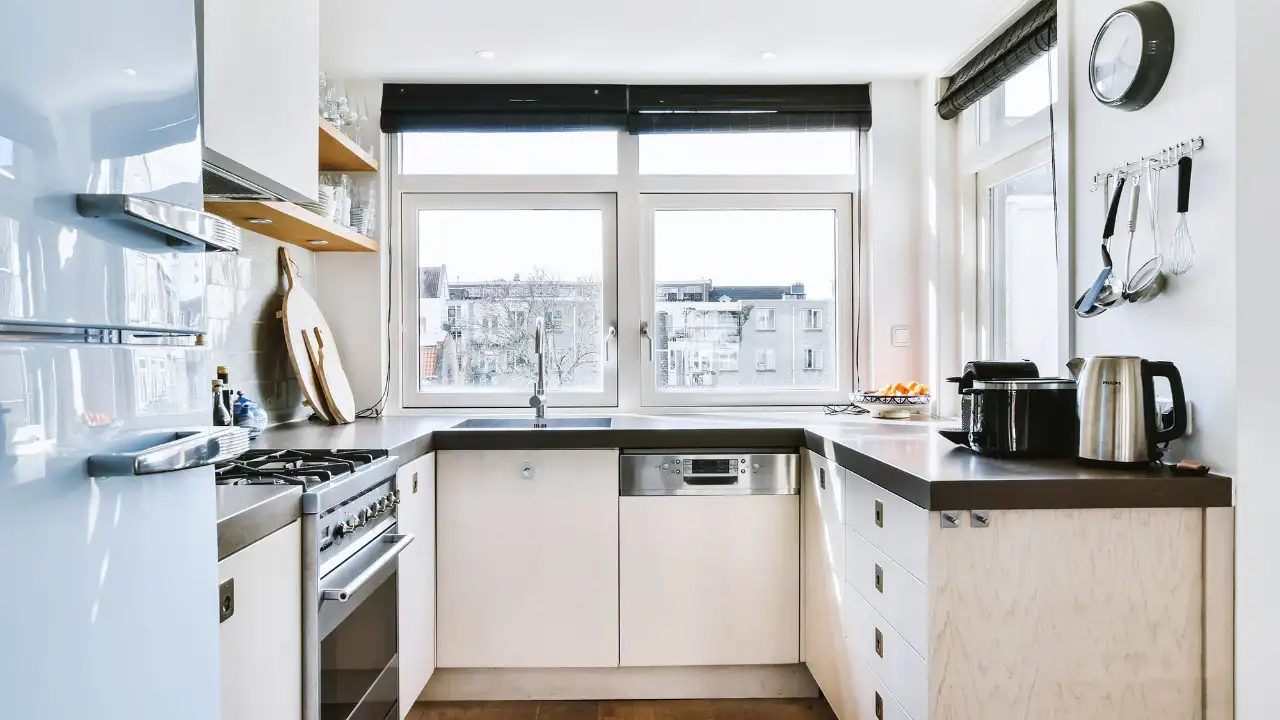
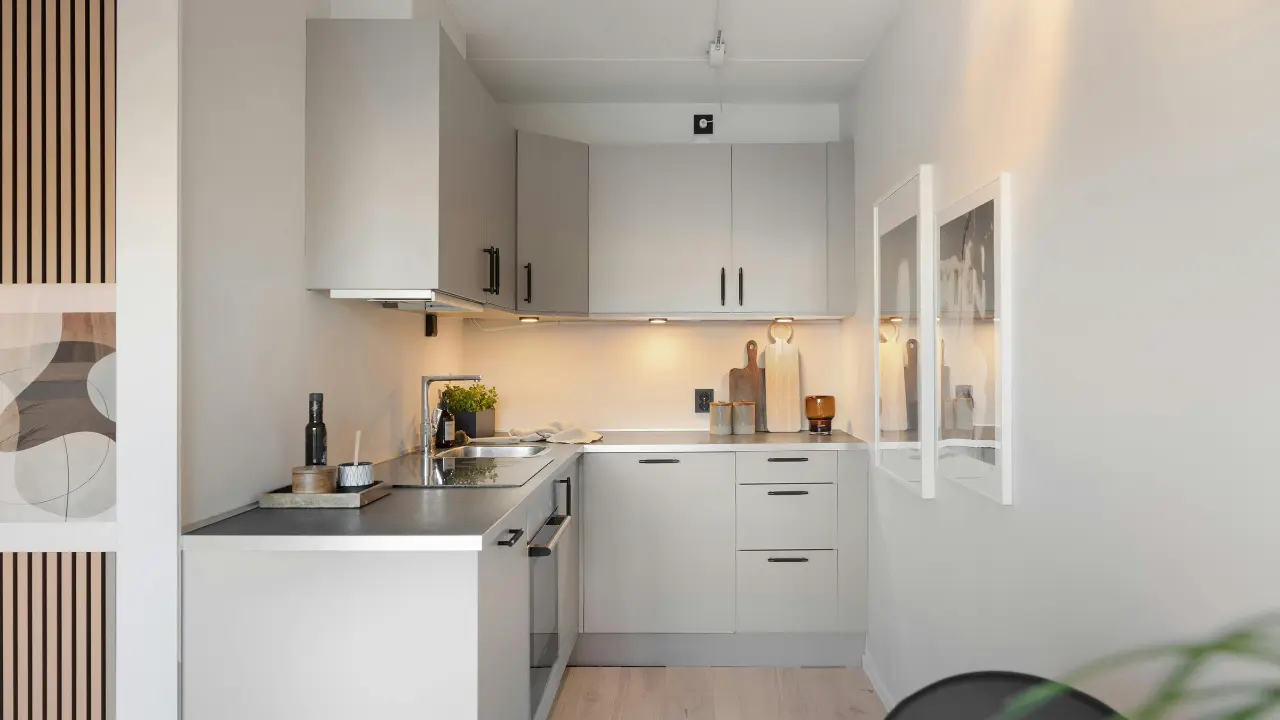
Aubergine is one of those kitchen colors that can completely change the atmosphere of a room. Deep, rich, and more complex than ordinary purple, this shade can create a kitchen that feels sophisticated, warm, dramatic, and highly individual.
But using aubergine successfully is about more than choosing a dark purple paint or cabinet finish.
The surrounding colors, natural light, wood tones, countertops, backsplash, hardware, flooring, and lighting all influence how the finished kitchen looks. In a small room, the amount of aubergine matters too. In a large kitchen, the same color can become an architectural feature rather than simply an accent.
The good news is that you do not need to cover every surface in aubergine to create an impressive result. You can use it on full cabinetry, lower cabinets, an island, a pantry wall, furniture, or even smaller decorative details.

In this guide, you’ll find 25 aubergine kitchen ideas, color combinations, countertop and backsplash suggestions, cabinet styles, lighting advice, small-kitchen solutions, budget-friendly updates, and practical planning tips to help you decide how much aubergine is right for your space.
What Is an Aubergine Kitchen?
An aubergine kitchen uses a deep purple shade inspired by the skin of the eggplant. Depending on the particular paint, cabinet finish, or material, aubergine can have purple, red, brown, or even slightly gray undertones.
That variation matters.
Two colors labeled “aubergine” by different manufacturers may look noticeably different once they are placed beside white cabinets, natural wood, stone, or metallic hardware.
Aubergine is generally deeper and more muted than bright purple, which makes it easier to use as a substantial kitchen color. It can also overlap visually with plum, eggplant, burgundy, and other deep purple-red shades.
| Color | General Character | Possible Kitchen Effect |
|---|---|---|
| Aubergine | Deep purple with warm undertones | Rich and sophisticated |
| Plum | Purple with red or warm influence | Dramatic and elegant |
| Burgundy | Deep red-purple | Warm and traditional |
| Eggplant | Similar to deep aubergine | Dark and earthy |
| Lavender | Pale, soft purple | Airy and delicate |
| Navy | Deep blue | Classic and cooler |
Because color names aren’t standardized across every manufacturer, order physical samples whenever possible. Look at them in natural daylight as well as under your kitchen’s artificial lighting before committing to cabinets or paint.
25 Aubergine Kitchen Ideas for 2026
1. Choose Full Aubergine Kitchen Cabinets
One of the most dramatic ways to use the color is to make aubergine the main cabinetry finish.
Full aubergine cabinets can work especially well when the rest of the room provides enough contrast. Consider pairing them with:
- Warm white walls
- Cream backsplash tile
- Light stone countertops
- Natural oak flooring
- Brass or aged-brass hardware
- Simple lighting
Cabinet style also changes the personality of the color. Aubergine Shaker doors can feel more traditional, while flat-panel or slab cabinets can give the same shade a more contemporary appearance.
If the kitchen receives limited natural light, consider using lighter surrounding surfaces rather than automatically covering the walls, ceiling, island, and floor in additional dark finishes.
2. Use Aubergine Lower Cabinets With Light Upper Cabinets
If full aubergine cabinetry feels too intense, use the color on the lower cabinets and choose a lighter finish above.
This creates a useful visual division while allowing the darker shade to remain a major part of the kitchen.
Good upper-cabinet options include:
- Warm white
- Cream
- Soft beige
- Light greige
- Natural oak
- Pale wood tones
This approach can be particularly useful in smaller kitchens because the lighter upper section can keep the eye moving toward the brighter part of the room.
3. Create an Aubergine Kitchen Island
An aubergine island can become the focal point without requiring the entire kitchen to use the color.
Try an aubergine island with:
- White perimeter cabinets
- Cream cabinets
- Natural oak cabinetry
- Light quartz
- Marble-look porcelain
- Brass hardware
For a more substantial design, the island can use aubergine on the cabinets while the countertop introduces a contrasting light stone.
Before choosing the size of an island, measure actual circulation space. Cabinet doors, drawers, dishwasher doors, oven doors, and seating all need room to operate comfortably.
4. Pair Aubergine With Warm White
Warm white is one of the easiest ways to balance the depth of aubergine.
Instead of choosing an extremely bright white, consider warmer whites with subtle cream or beige undertones.
Use warm white for:
- Walls
- Ceiling
- Upper cabinets
- Backsplash
- Trim
- Open shelving
The combination of aubergine and warm white can create strong contrast without making the room feel as stark as a deep purple-and-bright-white palette.
5. Combine Aubergine With Natural Wood
Natural wood can soften the visual intensity of a deep purple kitchen.
Oak is particularly useful when you want a lighter, more relaxed appearance. Walnut creates a richer and deeper combination.
Consider aubergine cabinets with:
- Oak shelving
- A natural wood island
- Walnut stools
- Wood flooring
- Wooden cutting boards
- Open wood shelves
The key is to choose a wood tone deliberately. If the kitchen already contains several wood species, adding another unrelated tone can make the palette feel disconnected.
6. Add Brass Hardware to Aubergine Cabinets
Aubergine and brass can create a warm, sophisticated combination.
Possible brass applications include:
- Cabinet knobs
- Pull handles
- Faucet
- Pendant lights
- Shelf brackets
- Appliance details
Brushed, aged, or antique brass can create a softer appearance than highly polished metal.
You also don’t necessarily need every metal element to be identical. A kitchen can combine finishes, but the relationship should look intentional rather than accidental.
Pay attention to the scale of hardware too. Large cabinet doors may need longer pulls, while smaller drawers may work better with compact handles or knobs.
7. Try an Aubergine and Cream Kitchen
Cream can make aubergine feel softer and warmer.
A balanced palette might include:
Aubergine + cream + natural wood + warm metal
For example, aubergine lower cabinets can be combined with cream walls, a light stone countertop, oak shelves, and aged-brass hardware.
This combination works especially well for homeowners who want a colorful kitchen without creating an extremely high-contrast appearance.
8. Create an Aubergine and Beige Kitchen
Beige is another useful partner for deep purple.
Use beige for:
- Walls
- Stone surfaces
- Backsplash tile
- Flooring
- Textiles
Greige can provide an alternative when a room needs a neutral that sits between gray and beige.
Because beige shades can have pink, yellow, gray, or green undertones, test samples alongside the actual aubergine finish rather than selecting them separately.
9. Pair Aubergine With Marble or Marble-Look Surfaces
Aubergine cabinets can provide a strong backdrop for marble or marble-look surfaces.
Potential combinations include:
- Aubergine + white marble
- Aubergine + cream marble
- Aubergine + warm-veined stone
- Aubergine + quartz
- Aubergine + porcelain slab
If the stone contains prominent veining, let the stone remain one of the visual features rather than adding several other highly patterned surfaces.
A simple cabinet profile and restrained backsplash can help a dramatic stone surface feel intentional.
10. Use an Aubergine Backsplash
You don’t have to use aubergine only on cabinets.
An aubergine backsplash can become a smaller but noticeable color statement.
Options include:
- Glossy aubergine tile
- Matte tile
- Handmade-look tile
- Small-format tile
- Mosaic accents
- Large-format porcelain
A colorful backsplash is often easier to change than cabinetry, making it an option for homeowners who want to experiment with the color without committing to a full cabinet replacement.
When using a strong aubergine backsplash, consider keeping the countertop and cabinetry relatively restrained.
11. Try a Full-Height Stone Backsplash With Aubergine Cabinets
A full-height stone or stone-look backsplash can provide a calm background for saturated cabinetry.
This approach works particularly well when the stone has subtle movement rather than a very busy pattern.
Consider:
- Vein direction
- Slab size
- Countertop continuity
- Outlet placement
- Cabinet height
- Grout requirements
- Transition points
If you are using the same material for the countertop and backsplash, confirm the manufacturer’s installation and fabrication requirements before ordering.
12. Choose an Aubergine Shaker Kitchen
Shaker cabinetry gives aubergine a more traditional or transitional interpretation.
Pair aubergine Shaker doors with:
- Aged brass
- Natural stone
- Cream walls
- Wood flooring
- Traditional-inspired lighting
The recessed center panel of a Shaker door adds some visual detail, so keeping the rest of the kitchen relatively edited can prevent the design from becoming too busy.
For a transitional kitchen, combine the Shaker cabinets with a simple stone countertop and contemporary lighting.
13. Create a Modern Aubergine Kitchen With Flat-Panel Cabinets
For a cleaner contemporary appearance, use aubergine on flat-panel or slab-front cabinetry.
Combine it with:
- Minimal hardware
- Integrated appliances
- Simple countertops
- Large-format backsplash materials
- Linear pendant lights
- Clean architectural lines
The lack of decorative cabinet detailing lets the color itself become the primary feature.
Handleless cabinetry can create an especially streamlined appearance, although the practicality of different opening systems should be considered before selecting them.
14. Add Aubergine to a Small Kitchen
A small kitchen doesn’t automatically rule out deep colors.
The more important questions are how much of the color you use, how much natural light the room receives, and what surfaces surround it.
Try:
- Aubergine lower cabinets
- Light upper cabinets
- A light countertop
- A reflective backsplash
- Vertical storage
- Strong task lighting
- Minimal countertop clutter
A small one-wall kitchen can use aubergine as its main cabinet color if the surrounding finishes and lighting provide enough visual balance.
For more small-space planning ideas, see our guide to small kitchen ideas.
15. Use Aubergine in a Galley Kitchen
Galley kitchens can benefit from a controlled color strategy.
Instead of using several competing colors, consider one dominant aubergine cabinetry finish with a restrained neutral on the walls and countertop.
Useful techniques include:
- Lightening one side of the room
- Adding under-cabinet lighting
- Using vertical storage
- Keeping flooring consistent
- Limiting open shelving
- Reducing visual clutter
In a narrow kitchen, cabinet functionality is especially important because every inch of storage affects how much can remain on the countertop.
16. Try an Aubergine Pantry or Tall Cabinet Wall
If you like aubergine but don’t want it throughout the kitchen, consider using it on a single tall cabinetry wall.
Possible applications include:
- Pantry cabinets
- Appliance towers
- Utility storage
- Built-in cabinets
- One full-height wall
This approach turns the cabinetry into an architectural feature.
It can also make a large kitchen feel more intentional by giving one area a stronger visual identity.
17. Combine Aubergine With Dark Wood
For a moody and sophisticated kitchen, aubergine can be combined with walnut or another deep wood tone.
The combination may work well with:
- Light stone countertops
- Brass details
- Warm lighting
- Cream walls
- Simple backsplash materials
However, too many dark surfaces can reduce visual contrast.
If you use aubergine cabinets and dark wood, consider introducing a lighter countertop, backsplash, ceiling, or wall finish to create breathing room.
18. Balance Aubergine With Light Countertops
Light countertops can provide useful contrast against deep cabinetry.
Consider:
- White quartz
- Cream quartz
- Pale granite
- Light marble
- Light porcelain
Don’t choose the countertop based only on whether it is “light.”
Check its undertone too.
A cool gray-white surface can create a very different result from a warm cream-white surface. Place physical samples next to the aubergine cabinet sample before making the final decision.
19. Use Matte Aubergine for a Contemporary Look
Matte and glossy aubergine finishes can produce noticeably different results.
Matte Aubergine
- Softer visual appearance
- More understated
- Contemporary
- Less reflective
Gloss Aubergine
- More reflective
- Visually dramatic
- Can reflect surrounding light
- Creates a more polished appearance
The practical choice depends on the specific product. Ask the manufacturer about cleaning requirements, durability, fingerprints, and recommended maintenance for the finish you are considering.
20. Use Aubergine With Black Accents
Black can give aubergine cabinetry stronger definition.
Possible black accents include:
- Faucets
- Cabinet hardware
- Pendant lights
- Window fixtures
- Stools
- Shelving brackets
However, if the kitchen already has dark cabinets, dark floors, and dark countertops, adding black everywhere may reduce contrast.
Use black selectively when you want the fixtures to provide visual punctuation.
21. Create a Soft Aubergine Kitchen With Sage Green
Aubergine and sage green can create a more layered and unexpected palette.
Try combining:
- Warm aubergine
- Muted sage
- Natural oak
- Cream stone
Because both colors can have different undertones, physical sampling is particularly important.
A yellow-green sage may look very different next to a red-toned aubergine than a gray-green sage.
Use one shade as the dominant color and the other as an accent rather than giving every surface equal visual weight.
22. Add Aubergine Through Kitchen Furniture
You don’t have to renovate your cabinets to bring aubergine into the kitchen.
Try:
- Aubergine bar stools
- Dining chairs
- Bench seating
- Curtains
- A kitchen runner
- Accent furniture
- Decorative ceramics
This approach is particularly useful for renters or homeowners who want to experiment with the color before committing to a larger renovation.
Furniture also gives you an easier way to change the color later.
23. Use Aubergine With Open Shelving
Open shelving can break up a long run of colored cabinets.
Natural oak or walnut shelves can work particularly well with aubergine.
Style them with:
- Neutral ceramics
- Glassware
- Wooden boards
- Plants
- Simple artwork
- Everyday kitchen items
Avoid treating every shelf as a display cabinet. Leaving some space between objects can make the kitchen feel more visually relaxed.
If open shelving becomes cluttered, the strong cabinet color can make that clutter even more noticeable.
24. Create an Aubergine Kitchen With Vintage Character
Aubergine can work beautifully in a vintage-inspired kitchen.
Combine it with:
- Traditional cabinet profiles
- Aged brass
- Natural stone
- Wood accents
- Vintage-inspired pendant lights
- Classic hardware
The key is to create a coherent design period or visual language rather than simply adding random “vintage” objects.
For example, traditional hardware, a classic cabinet profile, and warm stone can tell a more consistent story than mixing several unrelated decorative styles.
25. Create a Warm Modern Aubergine Kitchen
For a balanced contemporary look, bring several elements together:
- Aubergine cabinets
- Warm white walls
- Natural oak
- Light stone
- Brass accents
- Layered lighting
- Minimal decoration
This approach allows the aubergine to remain the defining color while wood and warm neutrals keep the room from feeling overly severe.
The result can feel modern without relying on an entirely monochromatic or ultra-minimal palette.
What Colors Go With an Aubergine Kitchen?
Choosing companion colors is one of the most important parts of designing with aubergine.
| Color | Overall Effect | Good Uses |
|---|---|---|
| Warm white | Brightens and softens | Walls, backsplash, cabinets |
| Cream | Warm and gentle | Walls, cabinetry, trim |
| Beige | Relaxed and earthy | Walls, flooring, stone |
| Greige | Balanced neutral | Walls and cabinetry |
| Natural oak | Warm and organic | Islands, shelves, flooring |
| Walnut | Rich and sophisticated | Islands and furniture |
| Brass | Warm contrast | Hardware and lighting |
| Matte black | Strong definition | Fixtures and accents |
| Sage green | Muted color contrast | Accent areas and decor |
| Light gray | Clean and restrained | Walls and stone |
The best combination depends on the specific aubergine shade. A warm red-toned aubergine may work differently with beige than a cooler purple-gray version.
Choosing a Countertop for Aubergine Cabinets
Your countertop should be selected alongside the cabinet color rather than as an isolated decision.
Quartz
Quartz offers a wide range of colors and patterns, including relatively consistent designs that can work well in contemporary kitchens.
For aubergine cabinets, consider:
- Soft white
- Cream
- Warm gray
- Subtle stone patterns
Check the manufacturer’s care instructions and specifications for the particular product.
Quartzite
Quartzite is a natural stone with individual variation.
It can provide natural movement and visual depth alongside simple aubergine cabinetry.
Maintenance requirements vary by stone and finish, so confirm the specific product’s care recommendations.
Marble
Marble can create a dramatic combination with aubergine because of its natural veining.
It can be especially effective when the cabinet color is relatively simple and the stone becomes the main secondary feature.
However, marble requires appropriate care, and homeowners should understand the material’s characteristics before installation.
Granite
Granite offers natural variation and comes in many different colors and patterns.
When selecting granite for aubergine cabinets, look for colors that coordinate with the cabinet undertones rather than relying only on a sample viewed under showroom lighting.
Porcelain
Porcelain can offer a wide range of stone-inspired and contemporary appearances.
Large-format options can also reduce the number of visible joints, depending on the installation.
Always confirm fabrication and installation requirements with the manufacturer and installer.
Butcher Block
Butcher block adds natural warmth to a deep-colored kitchen.
It can work particularly well with:
- Aubergine
- Oak shelving
- Natural wood floors
- Warm white walls
Wood countertops require appropriate cleaning and maintenance, so understand the recommended finish and care routine before choosing them.
Best Backsplash Ideas for an Aubergine Kitchen
The backsplash can either calm the cabinet color or reinforce it.
Consider these options:
1. Warm White Subway Tile
A classic option that gives strong contrast without adding another major color.
2. Cream Handmade-Look Tile
Adds subtle texture and warmth.
3. Marble Backsplash
Introduces natural movement and can create a more refined appearance.
4. Marble-Look Porcelain
Offers another route to a stone-inspired appearance.
5. Full-Height Stone Slab
Creates a more continuous visual surface.
6. Neutral Textured Tile
Adds depth without competing directly with aubergine.
7. Aubergine Tile
Creates a color-drenched appearance, especially when used with matching cabinetry.
8. Beige Porcelain
Works well in warmer kitchens.
9. Minimal-Grout Large Format Tile
Can produce a cleaner visual field.
10. Simple Backsplash With Dramatic Cabinets
Often the easiest way to let aubergine remain the primary feature.
If your cabinets already have a strong color and your countertop has noticeable veining, a quieter backsplash may create a better overall balance.
Which Cabinet Style Works Best With Aubergine?
There isn’t one universally correct cabinet style. The best choice depends on the overall kitchen design.
| Cabinet Style | Design Character | Works Well With |
|---|---|---|
| Shaker | Traditional-modern | Brass, marble, wood |
| Slab | Contemporary | Quartz, black accents |
| Flat-panel | Minimal | Stone, integrated appliances |
| Raised panel | Traditional | Aged brass, natural stone |
| Handleless | Modern | Simple countertops |
| Two-tone | Transitional | Aubergine + cream or wood |
Think about the architecture of the home as well. A highly traditional room may benefit from a more detailed cabinet profile, while a contemporary open-plan space may look more cohesive with flat-panel cabinetry.
Best Hardware for Aubergine Cabinets
Hardware is a relatively small detail, but it can influence the overall character of the kitchen.
Popular choices include:
- Brass
- Aged brass
- Antique brass
- Matte black
- Brushed nickel
- Chrome
Knobs vs. Pulls
Knobs can create a more traditional appearance, while longer pulls often feel more contemporary.
The size should also relate to the cabinet and drawer dimensions. A tiny knob on a very large drawer can look disproportionate, while oversized hardware can dominate smaller doors.
Consider coordinating the hardware with:
- Faucet
- Pendant lighting
- Appliance details
- Shelf brackets
But perfect matching is not mandatory if the combination looks intentional.
Aubergine Kitchen Lighting Ideas
Lighting becomes especially important when using a deep cabinet color.
Aubergine can appear dramatically different under daylight, warm artificial light, cool LEDs, and dim lighting.
Ambient Lighting
Use general illumination to light the entire room.
Options include:
- Recessed fixtures
- Ceiling lights
- Larger central fixtures
Task Lighting
Task lighting should illuminate the areas where food preparation and other activities take place.
Consider:
- Under-cabinet lighting
- Sink lighting
- Countertop work-area lighting
- Island lighting
Accent Lighting
Accent lighting can highlight architectural or decorative features.
Try:
- Interior cabinet lighting
- Shelf lighting
- Pendant lights
- Display lighting
Think About Color Temperature
The color temperature of your lighting can influence how aubergine appears.
Instead of selecting cabinet colors from an online photograph, place samples in the actual room and examine them at different times of day.
How Does Natural Light Affect an Aubergine Kitchen?
Natural light can change the way deep purple shades appear.
Consider the direction and amount of daylight entering the room.
North-Facing Rooms
These may receive less direct warm sunlight, which can make colors appear different from how they look in a sunny showroom.
South-Facing Rooms
These may receive stronger daylight for more of the day, potentially changing how warm or bright the color appears.
East-Facing Rooms
Morning light can influence the appearance of the cabinets differently from afternoon and evening lighting.
West-Facing Rooms
Afternoon and evening light can introduce another visual shift.
The practical solution is simple:
Test the actual cabinet or paint sample in the kitchen before making the final decision.
Look at it in morning, afternoon, and evening light.
Aubergine Kitchen Island Ideas
An aubergine island can be one of the easiest ways to introduce this color without committing to an entirely aubergine kitchen.
Ideas include:
- Full aubergine island
- Aubergine island with white cabinets
- Aubergine island with oak cabinets
- Aubergine island with marble countertop
- Waterfall-edge island
- Compact aubergine island
- Island with seating
- Island with deep drawers
- Island designed primarily for food preparation
Before ordering an island, consider more than appearance.
Check:
- Walking clearance
- Seating clearance
- Appliance doors
- Drawer operation
- Sink location
- Electrical requirements
- Traffic patterns
- Countertop overhang
- Storage needs
A beautiful island that interrupts the main circulation route will be frustrating in everyday use.
Aubergine Kitchen Ideas by Interior Style
Modern Aubergine Kitchen
Use flat-panel cabinets, simple countertops, minimal hardware, and integrated appliances.
Contemporary Aubergine Kitchen
Combine the color with large-format surfaces, clean lines, sculptural lighting, and restrained accessories.
Traditional Aubergine Kitchen
Consider Shaker or raised-panel cabinetry, natural stone, classic hardware, and warm lighting.
Modern Farmhouse Aubergine Kitchen
Pair aubergine with warm white, natural wood, simple lighting, and practical furniture.
Organic Modern Aubergine Kitchen
Use natural stone, oak, soft neutrals, greenery, and tactile materials.
Japandi-Inspired Aubergine Kitchen
Keep the color controlled and pair it with natural wood, simple forms, uncluttered surfaces, and restrained decoration.
Vintage Aubergine Kitchen
Use traditional hardware, classic cabinet details, natural stone, and carefully selected vintage-inspired accessories.
Transitional Aubergine Kitchen
Combine traditional cabinet forms with contemporary surfaces, lighting, and hardware.
How to Use Aubergine in a Small Kitchen
Small kitchens can still use strong colors.
The goal is to control the visual weight of the room.
Consider:
- Aubergine lower cabinets
- Light upper cabinets
- A light countertop
- Reflective backsplash material
- Floor-to-ceiling storage
- Integrated appliances
- Strong task lighting
- Limited open shelving
- Clear countertops
You can also use aubergine on only one wall or the island while keeping other major surfaces lighter.
For additional storage solutions, see our guides to small kitchen storage ideas and small kitchen organization ideas.
Remember that storage and organization solve different problems. Storage creates places to put things; organization arranges those things so they remain easy to find and use.
How to Brighten an Aubergine Kitchen
If your kitchen feels too dark after introducing aubergine, consider these adjustments.
1. Add Layered Lighting
Use ambient, task, and accent lighting instead of relying on one ceiling fixture.
2. Use a Lighter Countertop
A pale countertop can create a strong visual break against dark cabinets.
3. Choose a Lighter Backsplash
Warm white, cream, or pale stone can reflect more light visually.
4. Introduce Natural Wood
Oak and other lighter woods can soften the overall composition.
5. Keep Windows Visually Open
Avoid unnecessary objects that block available daylight.
6. Use Reflective Surfaces Selectively
Glossy tile, glass, or polished surfaces can reflect light, but excessive reflectivity can also make a kitchen feel visually busy.
7. Reduce Countertop Clutter
Clear surfaces allow the cabinet color and architecture to remain the main visual elements.
8. Be Careful With Dark Flooring
A dark floor isn’t automatically wrong, but combining it with very dark cabinets and countertops can reduce contrast.
9. Choose Lighting Carefully
The appearance of aubergine changes with lighting, so test the complete palette under the lighting you will actually use.
10. Balance Dark Cabinetry With Lighter Surrounding Surfaces
You don’t need to remove aubergine. You can simply adjust what surrounds it.
How to Create a Sophisticated Aubergine Kitchen
A sophisticated kitchen isn’t necessarily created by using the most expensive materials.
Instead, focus on coordination, proportion, detailing, and execution.
Consider:
- Consistent cabinet finish
- Carefully selected hardware
- Natural stone or a well-chosen stone alternative
- Integrated appliances
- Full-height backsplash
- Walnut or oak accents
- Brass details
- Layered lighting
- Minimal countertop clutter
- Larger-scale materials
The overall design should feel intentional.
For example, aubergine cabinets with ten different accent colors may feel less cohesive than the same cabinets paired with one wood tone, one neutral stone, and one metal finish.
Affordable Ways to Add Aubergine to a Kitchen
You don’t necessarily need a complete remodel.
Lower-cost updates can include:
- Painting suitable walls
- Replacing cabinet hardware
- Adding aubergine bar stools
- Using an aubergine runner
- Adding textiles
- Introducing artwork
- Styling with ceramics
- Installing selected lighting
- Adding open shelving
- Refinishing suitable cabinetry
More substantial projects include:
- Replacing cabinets
- Installing new countertops
- Changing flooring
- Moving plumbing
- Adding electrical circuits
- Changing ventilation
- Structural alterations
Separate cosmetic changes from structural remodeling when planning your budget.
For a broader refresh, you can also explore our kitchen makeover ideas guide.
Aubergine Kitchen Design Mistakes to Avoid
Mistake 1: Choosing the Color From a Screen Alone
Online images are affected by photography, screens, lighting, and editing.
Always test physical samples.
Mistake 2: Ignoring Natural Light
The same aubergine finish can look different in a bright room and a dim room.
Mistake 3: Using Too Many Competing Colors
A strong cabinet color already provides visual interest.
Mistake 4: Combining Too Many Dark Materials
Dark cabinetry, flooring, counters, backsplash, and ceiling can reduce contrast.
Mistake 5: Forgetting Storage
A beautiful kitchen won’t work well if everyday appliances and cookware have nowhere to go.
Mistake 6: Overloading the Backsplash
A dramatic cabinet color doesn’t always need a dramatic patterned backsplash.
Mistake 7: Using Too Many Metallic Finishes
Multiple metals can work, but they should look deliberately coordinated.
Mistake 8: Choosing the Countertop Separately
Cabinet, countertop, and backsplash samples should be viewed together.
Mistake 9: Ignoring Appliance Integration
Large appliances can interrupt an otherwise cohesive cabinet design.
Mistake 10: Decorating Before Solving Function
Solve layout, storage, lighting, and workflow first. Add decorative styling afterward.
How to Plan an Aubergine Kitchen Step by Step
Step 1: Measure the Kitchen
Record wall dimensions, ceiling height, doorways, windows, existing cabinets, appliances, and important utility locations.
Step 2: Evaluate Natural Light
Note which areas receive direct sunlight and which remain relatively shaded.
Step 3: Select the Aubergine Undertone
Compare several physical samples instead of choosing a color based solely on its name.
Step 4: Choose the Cabinet Style
Decide between Shaker, slab, flat-panel, raised-panel, handleless, or another suitable profile.
Step 5: Select the Main Neutral
Choose the warm white, cream, beige, greige, or other neutral that will surround the aubergine.
Step 6: Choose Countertop and Backsplash Together
Look at both materials alongside the actual cabinet sample.
Step 7: Select Wood Tones
Choose oak, walnut, ash, or another wood deliberately.
Step 8: Choose Hardware
Consider finish, size, shape, and placement.
Step 9: Plan Lighting
Include ambient, task, and accent lighting.
Step 10: Plan Storage and Workflow
Make sure everyday cooking, cleaning, food preparation, and appliance storage are convenient.
Step 11: Add Furniture and Decor
Choose stools, textiles, artwork, plants, and accessories after the major elements are established.
Step 12: Test the Complete Palette
View the samples together in the actual kitchen at different times of day.
For major remodeling involving electrical, plumbing, ventilation, structural changes, or appliance installation, follow applicable local requirements, manufacturer instructions, and qualified professional guidance.
Best Materials to Pair With Aubergine
| Material | Where to Use It | Visual Effect |
|---|---|---|
| Oak | Cabinets, shelves, island | Warm and natural |
| Walnut | Island, cabinetry, furniture | Rich and sophisticated |
| Marble | Countertops, backsplash | Organic veining |
| Quartz | Countertops | Consistent and contemporary |
| Porcelain | Backsplash, flooring | Versatile |
| Brass | Hardware, lighting | Warm metallic accent |
| Matte black | Fixtures, hardware | Strong definition |
| Ceramic | Backsplash, accessories | Texture and color |
| Hardwood | Flooring | Warm foundation |
| Linen | Window treatments, textiles | Softens harder surfaces |
Aubergine vs Navy vs Forest Green vs Charcoal
Aubergine isn’t the only dark color that can work in a kitchen.
| Color | General Mood | Typical Pairings |
|---|---|---|
| Aubergine | Rich, dramatic, warm | Brass, walnut, cream |
| Navy | Classic, deep, cooler | White, brass, oak |
| Forest green | Organic, grounded | Wood, cream, brass |
| Charcoal | Neutral, architectural | White, wood, black |
| Burgundy | Warm, dramatic | Cream, brass, dark wood |
The right choice depends on the existing architecture, lighting, personal taste, and the other materials you want to use.
How to Decorate an Aubergine Kitchen
Once the major kitchen elements are complete, use accessories to reinforce the color palette without overwhelming it.
Consider:
- Ceramic vessels
- Wooden cutting boards
- Natural bowls
- Green plants
- Linen textiles
- Neutral artwork
- Brass accessories
- Sculptural lighting
- Wooden stools
- Simple countertop styling
Try to avoid filling every available surface with small objects.
A strong cabinet color often looks better when the surrounding styling is edited.
How to Style Open Shelves in an Aubergine Kitchen
Open shelves can provide a useful break between cabinet sections.
Good options include:
- Oak shelves
- Walnut shelves
- Neutral ceramics
- Glassware
- Plants
- Wooden cutting boards
- Small artwork
Arrange objects by varying their height and leaving some empty space.
The goal isn’t to fill the shelf. The goal is to display useful or visually meaningful objects while maintaining a sense of order.
Storage and Organization Tips for an Aubergine Kitchen
A beautiful color scheme cannot compensate for poor kitchen organization.
Remember the difference:
Storage creates places to keep things.
Organization arranges those things so they are easy to access.
Useful storage features include:
- Deep drawers
- Tall pantry cabinets
- Pull-out cabinets
- Appliance storage
- Under-sink organizers
- Drawer dividers
- Vertical storage
- Cooking-zone storage
- Cleaning-zone storage
- Coffee-station storage
Place frequently used items where they are easiest to reach.
Less frequently used items can occupy higher or deeper storage.
For additional practical solutions, explore our guides to small kitchen storage ideas and small kitchen organization ideas.
Aubergine Kitchen Design Checklist
Before finalizing your design, check the following:
- Cabinet color tested physically
- Aubergine undertone evaluated
- Natural light considered
- Artificial lighting considered
- Cabinet style selected
- Countertop coordinated
- Backsplash coordinated
- Hardware selected
- Wood tone selected
- Appliance finishes coordinated
- Storage planned
- Walkways measured
- Lighting planned
- Maintenance requirements understood
- Decor kept purposeful
This checklist can help prevent the common mistake of choosing individual finishes separately without seeing how they work together.
Frequently Asked Questions About Aubergine Kitchens
Is aubergine a good color for a kitchen?
Aubergine can be a strong choice when you want a kitchen with a rich, distinctive color. Whether it works in a particular room depends on factors such as natural light, cabinet finish, surrounding colors, room size, and personal preference.
It can be used across all cabinetry or introduced more selectively through an island, lower cabinets, pantry wall, backsplash, or furniture.
What colors go best with an aubergine kitchen?
Warm white, cream, beige, natural wood, walnut, brass, and selected gray or green tones can work with aubergine.
The exact combination depends on the undertones of the aubergine finish. Always compare actual samples together before making a final decision.
Are aubergine kitchen cabinets still stylish in 2026?
Deep purple, plum, burgundy, and related rich color families continue to appear in contemporary kitchen and interior-design coverage in 2026.
However, kitchen design trends change over time. Instead of choosing a cabinet color solely because it is currently fashionable, consider whether you will enjoy the color and whether it works with your home’s architecture and lighting.
What countertop goes with aubergine cabinets?
Light quartz, quartzite, marble, granite, porcelain, and butcher block can all be considered.
Light surfaces can provide stronger contrast, while wood countertops create a warmer and more organic combination.
The most important factors are the countertop’s undertone, pattern, maintenance requirements, and relationship to the backsplash.
What hardware looks best with aubergine cabinets?
Brass and aged brass can create a warm combination, while matte black can provide stronger contrast. Brushed nickel and chrome offer cooler alternatives.
Hardware style should also relate to the cabinet profile and overall kitchen design.
Can aubergine work in a small kitchen?
Yes. A small kitchen can use aubergine successfully when the color is balanced with lighting and surrounding finishes.
Options include aubergine lower cabinets, a single accent wall, a small island, or selected cabinetry combined with lighter surfaces.
Does aubergine make a kitchen look dark?
Not necessarily.
The effect depends on how much aubergine is used, the amount of natural light, artificial lighting, cabinet finish, countertop, backsplash, flooring, and surrounding colors.
A lighter countertop and backsplash can provide substantial contrast against deep cabinetry.
What wood goes with aubergine?
Oak, walnut, ash, and other natural wood tones can work.
Oak tends to provide a lighter, more relaxed contrast, while walnut creates a deeper and richer palette.
Always compare wood samples against the exact aubergine finish.
Is aubergine the same as purple?
Aubergine is a type of deep purple, but the exact appearance varies.
Compared with brighter purple shades, aubergine is generally darker and more muted, often with warm red or brown undertones.
How can I add aubergine without replacing my cabinets?
You can introduce aubergine through:
- Bar stools
- Dining chairs
- Paint
- Artwork
- Textiles
- Kitchen runners
- Accessories
- Lighting
- Accent furniture
- Selected backsplash areas
This allows you to experiment with the color before making a larger investment.
Final Thoughts on Aubergine Kitchen Ideas
The most successful aubergine kitchen ideas aren’t necessarily the ones that use the most purple.
They are the designs that use the color intentionally.
Aubergine can become the foundation of a dramatic kitchen with full cabinetry, or it can be a carefully controlled accent on an island, lower cabinets, pantry wall, backsplash, or furniture.
The most important elements to consider are:
- Color undertones
- Natural light
- Cabinet style
- Countertop
- Backsplash
- Wood tones
- Hardware
- Storage
- Lighting
- Everyday functionality
Before committing to a major renovation, test your cabinet, paint, countertop, backsplash, and hardware samples together. Look at them under both natural and artificial lighting.
Most importantly, design the kitchen around how you actually use it.
Aubergine can be dramatic without being overwhelming, colorful without being chaotic, and sophisticated without requiring every surface to be expensive. With thoughtful proportions and a controlled material palette, it can become a distinctive foundation for a kitchen that feels personal, functional, and comfortable for everyday life.
For more ideas, explore related guides on small kitchen ideas, warm minimalist kitchen cabinet ideas, luxury quartz kitchen island styling, and kitchen makeover ideas.