Choosing seating for a kitchen island can look like a simple decorating decision, but the right stool needs to do much more than match your cabinets. It should fit the counter height, provide enough legroom, feel comfortable for everyday use, and work with the way your kitchen actually functions.
The best kitchen bar stools balance comfort, proportion, durability, and style. A beautiful stool that is too tall, too wide, difficult to clean, or awkward to move around can quickly become frustrating.
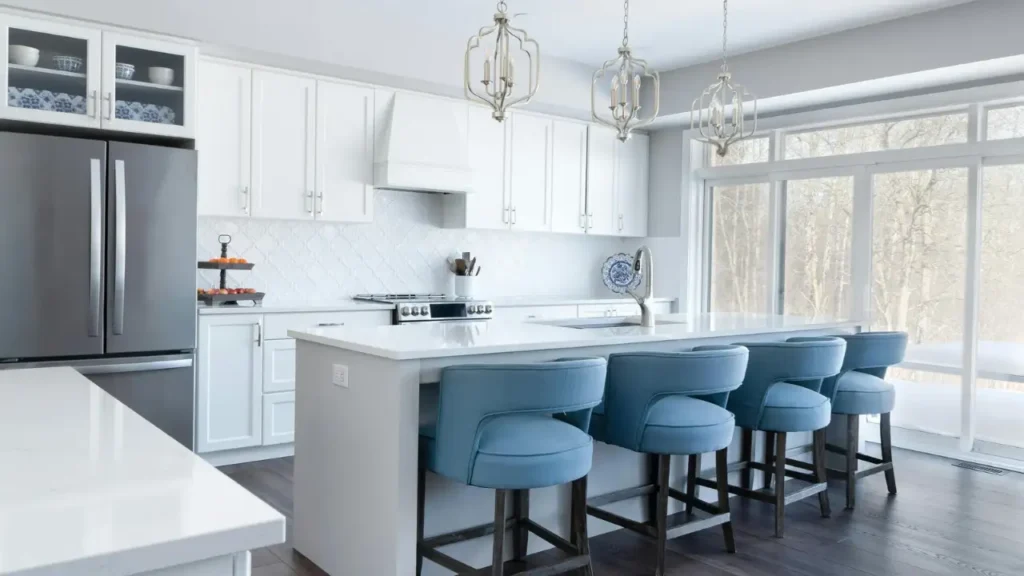
Whether you have a large kitchen island, a compact breakfast counter, or a small apartment kitchen, this guide will help you choose seating that looks good and works well.
Best Kitchen Bar Stools at a Glance
| Stool Type | Best For | Main Benefit |
|---|---|---|
| Counter-height stools | Kitchen islands | Everyday seating |
| Swivel stools | Entertaining | Easy movement |
| Backless stools | Small kitchens | Space-saving |
| Upholstered stools | Comfort | Softer seating |
| Wooden stools | Warm interiors | Natural look |
| Metal stools | Modern kitchens | Durable construction |
| Adjustable stools | Flexible spaces | Variable height |
The right choice depends on your counter height, available floor space, preferred comfort level, and kitchen design.
What Are the Best Kitchen Bar Stools?
The best stool isn’t necessarily the most expensive or the most fashionable option. It is the one that fits your kitchen and your daily routine.
Before buying, look at four basic qualities: comfort, height, construction, and maintenance.
Comfortable Seat
If your stools will be used for breakfast, homework, coffee, casual meals, or long conversations, comfort matters.
Look for a seat with a shape that supports your sitting position without putting unnecessary pressure on your legs. A little cushioning can make upholstered stools more comfortable, while a well-shaped wooden or molded seat can also work well without padding.
Seat depth is another consideration. A very shallow seat may feel restrictive during longer meals, while a deep seat can take up more room around a compact island.
Correct Height
Height is one of the most important factors when shopping for kitchen counter stools.
A stool should allow you to sit comfortably without your knees feeling cramped against the countertop. There should also be enough space between the seat and the underside of the counter for comfortable leg movement.
Never choose a stool based only on appearance. Measure the actual height of your counter or island first.
Stable and Durable Construction
Kitchen seating gets plenty of everyday use, so stability matters.
Pay attention to the frame, legs, joints, base, and footrest. A stool should feel solid when someone sits down or shifts position.
For households with children or frequent guests, a sturdy construction can be especially important.
Easy-to-Clean Materials
Kitchens are naturally messy environments. Food, drinks, grease, and fingerprints can eventually find their way onto your seating.
If your stools sit close to a cooking or dining area, consider materials that can be wiped clean easily. For upholstered stools, look for practical fabrics or finishes and always check the manufacturer’s care instructions.
Counter-Height vs. Bar-Height Stools
One of the easiest mistakes to make is buying the wrong type of stool.
Counter-height and bar-height stools are designed for different surfaces, so measuring before shopping is essential.
What Are Counter-Height Stools?
Counter-height stools are generally designed for kitchen counters and islands that are lower than traditional bar surfaces.
They are often the natural choice for kitchen island seating because they create a more relaxed, everyday dining position.
If you’re furnishing a standard kitchen island, start by checking whether a counter-height stool matches the island’s actual dimensions.
What Are Bar-Height Stools?
Bar-height stools are taller and are intended for higher surfaces.
They can work well with dedicated home bars, elevated counters, or other tall surfaces, but they may feel awkward at a typical kitchen island if the seat is too high.
How to Measure for the Right Stool Height
Start with the floor-to-counter measurement.
Then consider the space between the top of the stool seat and the underside of the counter. You want enough clearance for your legs without making the seating position feel cramped.
A simple process is:
Measure Counter Height → Check Available Legroom → Compare Seat Height → Check Stool Width
Product descriptions can help, but measuring your own kitchen is more reliable than assuming every island has the same dimensions.
How Much Space Do You Need Between Kitchen Bar Stools?
Stool spacing affects both comfort and how easily people move around the island.
If stools are packed too closely together, people can bump elbows while eating or working. If they’re spaced too far apart, you may waste valuable seating space.
Consider:
- Stool width
- Armrests
- Seat shape
- Swivel movement
- Personal elbow room
- Island length
- Traffic around the kitchen
How Many Stools Fit Around a Kitchen Island?
There isn’t one universal number that works for every island.
A long island can accommodate several stools, while a smaller peninsula may only have room for two. The width of each stool also matters. Two narrow backless stools can require considerably less space than two wide upholstered stools with arms.
Measure the usable seating area rather than simply counting how many stools you would like to fit.
Also consider the ends of the island. End panels, cabinets, walls, appliances, and walkways can limit where a stool can comfortably sit.
Best Kitchen Bar Stool Styles for Different Homes
Your kitchen’s architectural style can help narrow down the right stool design.
Modern Kitchen Bar Stools
Modern kitchens usually benefit from clean, uncomplicated silhouettes.
Look for:
- Simple lines
- Minimal frames
- Neutral finishes
- Metal or molded materials
- Low visual clutter
Black, white, gray, natural wood, and muted upholstery can work particularly well in modern spaces.
Contemporary Kitchen Bar Stools
Contemporary stools can introduce more curves and mixed materials.
A curved upholstered seat, sculptural base, or combination of wood and metal can add personality without overwhelming the kitchen.
These work especially well when the kitchen already includes modern lighting, streamlined cabinetry, or a statement island.
Farmhouse Kitchen Bar Stools
Wooden stools are a natural fit for farmhouse interiors.
Consider:
- Natural wood finishes
- Turned or simple legs
- Woven seats
- Warm neutral upholstery
- Traditional silhouettes
The goal is to create warmth without making the kitchen feel overly coordinated.
Industrial Kitchen Bar Stools
Industrial interiors often pair metal frames with wood or leather-look seats.
Black or dark metal can complement exposed hardware, darker lighting fixtures, and other industrial details.
However, avoid choosing an industrial stool simply because it looks good in a photograph. A hard metal seat may not be comfortable for long periods unless the design provides appropriate support.
Scandinavian Kitchen Bar Stools
Scandinavian-inspired kitchens generally benefit from light, simple designs.
Light wood, soft neutral upholstery, curved backs, and slim profiles can make the room feel calm and uncluttered.
Japandi Kitchen Bar Stools
Japandi design combines the simplicity associated with Japanese interiors with the warmth of Scandinavian design.
For this look, consider:
- Natural wood
- Warm neutral tones
- Simple silhouettes
- Minimal hardware
- Soft, understated upholstery
The stool should feel like part of the overall room rather than the centerpiece.
Best Kitchen Bar Stools by Material
Material affects appearance, maintenance, comfort, and durability.
Wooden Bar Stools
Best for: Warm, traditional, farmhouse, Scandinavian, and organic kitchens.
Wood adds natural texture and can make a kitchen island feel more inviting.
Different wood tones can create very different results. Light oak can feel airy and casual, while darker wood can give an island a more substantial appearance.
Wood does require appropriate care, especially around moisture and spills. Follow the manufacturer’s recommendations for cleaning and protecting the finish.
Metal Bar Stools
Best for: Modern and industrial kitchens.
Metal stools are often practical because many finishes can be wiped clean.
They can also provide a visually lighter or more architectural appearance depending on the frame.
Check the finish carefully if the stools will be used heavily. Scratches and wear can be more noticeable on some painted or coated surfaces.
Upholstered Bar Stools
Best for: Kitchens where comfort is a priority.
Upholstered seating can make an island feel more like a dining area.
Look for durable, kitchen-friendly fabrics and consider how easy the material will be to clean. If you have young children or regularly eat at the island, stain resistance and maintenance should be part of the buying decision.
Plastic or Molded Stools
Best for: Casual and contemporary kitchens.
Molded stools can be lightweight, easy to clean, and available in many shapes and colors.
They’re particularly useful when you want a modern look without the visual weight of a large upholstered chair.
Mixed-Material Stools
Mixed-material designs combine qualities from different materials.
For example, a wood seat with a metal frame can provide warmth and structure. An upholstered seat with a metal base can provide comfort while maintaining a modern appearance.
These combinations are useful when you want the stool to connect different materials already present in the kitchen.
Best Kitchen Bar Stools for Comfort
A kitchen stool may look attractive in a showroom, but comfort becomes much more important once you use it every day.
Stools With Backs
Stools with backs generally provide more support and can be a better choice for longer sitting.
They work particularly well when the kitchen island functions as a primary dining or working area.
They do, however, take up more visual and physical space.
Backless Stools
Backless stools are useful when flexibility and compactness are priorities.
They can often slide completely underneath an island, making the kitchen feel less crowded when the stools aren’t being used.
They’re especially useful for small kitchens and minimalist spaces.
Swivel Bar Stools
Swivel stools make it easier to turn toward another person, reach for something nearby, or get in and out without moving the entire stool.
They’re often a practical choice for kitchens used for entertaining.
The tradeoff is that the swivel mechanism adds moving parts, and some designs need additional clearance.
Footrests and Leg Support
A footrest may seem like a small detail, but it can significantly affect comfort.
Without somewhere to support your feet, your legs may feel unsupported during longer periods of sitting.
Look for a footrest positioned naturally for the intended seat height. A sturdy footrest can also make getting onto and off the stool feel more comfortable.
Best Kitchen Bar Stools for Small Kitchens
Small kitchens need seating that works without creating unnecessary visual clutter.
Backless Stools
Backless stools are one of the easiest options to tuck away.
When pushed underneath the island, they can leave more of the floor visible, which may help a compact kitchen feel less crowded.
Low-Profile Designs
Avoid overly bulky silhouettes when space is limited.
A slim frame and simple seat can provide necessary seating without competing with cabinets, appliances, or walkways.
Stools That Tuck Completely Under the Island
A stool that disappears beneath the counter when not in use can be especially valuable in a narrow kitchen.
Before buying, check the complete dimensions rather than only the seat width.
Slim-Frame Stools
Slim legs and narrower profiles can preserve usable floor space.
However, don’t sacrifice stability simply to get the smallest possible stool.
Avoiding Oversized Armrests
Armrests can be comfortable, but they also add width.
If your island has limited seating space, compare the total width of stools with and without arms before deciding.
The goal is to maintain comfortable seating while keeping the main walkway clear.
How to Choose the Best Kitchen Bar Stools
Use this checklist before placing an order.
1. Measure Your Counter Height
Start with the actual height of your counter or island.
Don’t assume the surface is a standard size.
2. Check the Seat Height
Compare the stool’s seat height with your counter measurement.
Make sure the resulting sitting position leaves enough legroom.
3. Measure Stool Width
Width determines how many stools you can realistically fit.
Remember to include armrests and the widest part of the stool.
4. Consider Back and Arm Height
A tall back or wide arm can affect how the stool fits underneath an island.
If you want the stools to tuck away completely, check their overall dimensions.
5. Check the Footrest
A properly positioned footrest can improve everyday comfort.
Look for a design that feels stable rather than one that simply adds decorative detail.
6. Choose a Kitchen-Friendly Material
Consider how the stools will be used.
Frequent meals and children’s activities call for different materials than occasional coffee seating.
7. Match the Stool to Your Kitchen Style
The stools don’t need to match everything exactly.
Instead, look for a relationship between the stool and existing elements such as cabinet hardware, lighting, flooring, or the island.
8. Consider Maintenance
Think realistically about cleaning.
A beautiful fabric that requires delicate care may not be the best choice for a busy family kitchen.
9. Check Stability and Construction
Sit, lean, and move naturally if you’re shopping in person.
For online purchases, look carefully at construction details, dimensions, materials, and the manufacturer’s specifications.
10. Think About How You Actually Use the Kitchen
This is often overlooked.
If the island is mainly used for a quick breakfast, compact stools may be ideal. If family members regularly eat, work, study, and socialize there, more supportive seating may be worth the additional space.
Should You Choose Bar Stools With or Without Backs?
Both designs have a place in a well-designed kitchen.
| Feature | With Back | Backless |
|---|---|---|
| Comfort | Better for longer sitting | Better for shorter sitting |
| Space | Requires more physical and visual space | More compact |
| Storage | May not tuck away as easily | Usually easy to tuck under |
| Style | More substantial | Minimal |
| Small kitchens | Can feel bulky | Often a practical choice |
If comfort is the priority, a stool with a supportive back is often worth considering.
If floor space is limited, a backless stool may be the better compromise.
Swivel vs. Stationary Kitchen Bar Stools
Swivel Stools
Pros:
- Easy movement
- Convenient for conversation
- Useful when entertaining
- Easier to turn toward different areas
Cons:
- More moving components
- May require additional clearance
- Mechanisms can eventually need maintenance
Stationary Stools
Pros:
- Simple construction
- Stable
- Often less expensive
- Fewer moving parts
Cons:
- Less flexible movement
- May need to be pulled away from the island to get in or out
Choose based on how your household actually uses the kitchen rather than assuming swivel is automatically better.
How to Match Bar Stools With Your Kitchen Design
The best kitchen seating usually relates to several elements in the room rather than matching just one.
Consider your:
- Kitchen cabinets
- Countertops
- Flooring
- Hardware
- Lighting
- Island finish
- Dining furniture
White Kitchen
White kitchens can support both contrast and subtle coordination.
Black stools can create definition, while natural wood can add warmth. Upholstered neutral stools can produce a softer result.
Wood Kitchen
Wood kitchens can work well with either matching or contrasting stool finishes.
For example, light wood stools can reinforce an airy design, while darker or upholstered seating can create visual contrast.
Dark Kitchen
Lighter stools can prevent a dark kitchen from feeling overly heavy.
Natural wood, cream, beige, or lighter upholstery can introduce contrast without fighting the cabinetry.
Modern Minimalist Kitchen
Look for simple silhouettes and limited visual detail.
Backless stools, molded seats, slim metal frames, and understated upholstery can all work well.
Warm Neutral Kitchen
Warm kitchens benefit from materials that reinforce their comfortable character.
Wood, woven textures, tan upholstery, cream fabric, and warm metal finishes can create a cohesive look.
Best Bar Stool Colors for a Kitchen
Color can influence how visually heavy or light your kitchen island feels.
Black
Black stools create contrast and can connect naturally with black hardware, lighting, or appliances.
White
White stools can blend into a bright kitchen and maintain a clean appearance.
They may require more frequent cleaning in busy households.
Natural Wood
Natural wood adds warmth and texture.
It’s especially useful in neutral, Scandinavian, farmhouse, and Japandi-inspired spaces.
Beige and Cream
These shades create a softer look than stark white while maintaining a light visual presence.
Gray
Gray is versatile and works particularly well with modern kitchens.
Green
Muted green can introduce color while remaining relatively easy to coordinate with natural materials.
Brown and Tan
Brown and tan tones pair naturally with wood, cream, brass, and warm neutral kitchens.
Instead of choosing a stool color simply because it’s currently popular, consider how it will work with the kitchen’s permanent elements.
Common Kitchen Bar Stool Buying Mistakes
Buying the Wrong Height
A stool can look perfect and still be unusable if it doesn’t match the counter.
Always measure first.
Choosing Style Over Comfort
A sculptural stool may look impressive but become uncomfortable after a few minutes.
Think about how long people will actually sit there.
Ignoring Stool Width
A small difference in width becomes significant when you need several stools around one island.
Forgetting Foot Support
A footrest can make a noticeable difference in everyday comfort.
Choosing Hard-to-Clean Upholstery
Kitchen seating is exposed to food and drinks. Consider maintenance before choosing delicate fabric.
Buying Too Many Stools
More seats aren’t always better.
Overcrowding can make the island uncomfortable and interfere with movement.
Ignoring Walkway Clearance
Don’t treat the island as an isolated piece of furniture.
People need space to walk behind seated guests and move between work zones.
Choosing a Stool That Is Too Visually Heavy
Large backs, thick upholstery, and oversized arms can make a compact kitchen feel crowded.
Choose proportions that suit the entire room.
How to Clean and Maintain Kitchen Bar Stools
Different materials require different care.
Wood
Dust regularly and clean spills promptly. Avoid excessive moisture unless the manufacturer’s care instructions specifically allow it.
Metal
Use a suitable soft cloth and the cleaning method recommended for the finish.
Avoid abrasive products that could damage coatings.
Upholstery
Vacuum or clean according to the fabric manufacturer’s instructions.
Address spills promptly and avoid harsh cleaners unless the manufacturer specifically recommends them.
Faux Leather
Wipe spills quickly and use only products appropriate for the material.
Avoid assuming that every faux-leather finish can tolerate the same cleaning products.
Plastic or Molded Materials
Many molded surfaces are relatively easy to wipe clean, but the recommended cleaning method still depends on the material and finish.
For every type, the manufacturer’s care instructions should take priority.
Are Expensive Kitchen Bar Stools Worth It?
Price alone doesn’t determine quality.
A more expensive stool may offer better materials, stronger construction, more comfortable upholstery, better finishing, or components designed for heavier everyday use.
Spending more can make sense when:
- The stools will be used every day
- Comfort is a major priority
- You want durable upholstery
- Construction quality is important
- The design needs to last for years
- Replacement parts or service matter
A budget stool can still be an excellent choice when it meets your needs and has appropriate construction.
The best purchase is the one that provides the right combination of comfort, dimensions, durability, maintenance, and appearance for your kitchen.
Best Kitchen Bar Stools for Different Budgets
Budget-Friendly Kitchen Bar Stools
Prioritize:
- Correct dimensions
- Stable construction
- Easy maintenance
- Simple designs
- Practical materials
You don’t need an elaborate design if the stools are mainly used for quick meals.
Mid-Range Kitchen Bar Stools
This category can be a good balance between appearance, comfort, and construction.
Look for better upholstery, stronger frames, more refined finishes, and designs that complement the rest of your kitchen.
Premium Kitchen Bar Stools
Premium seating can make sense when the stools are an important part of the kitchen and will be used frequently.
Look closely at material quality, construction, ergonomics, finish, and long-term care rather than paying simply for a recognizable design.
Quick Decision Guide: Which Kitchen Bar Stool Is Right for You?
| Your Priority | Recommended Type |
|---|---|
| Small kitchen | Backless stool |
| Maximum comfort | Upholstered stool with back |
| Easy movement | Swivel stool |
| Modern style | Minimal metal or molded stool |
| Warm look | Wooden stool |
| Easy cleaning | Performance-oriented material |
| Flexible height | Adjustable stool |
| Traditional kitchen | Wood or upholstered stool |
Use this table as a starting point, but always check your actual counter height and available space before buying.
Frequently Asked Questions About Kitchen Bar Stools
What is the best height for kitchen bar stools?
The best height depends on the height of your kitchen counter or island. Measure the actual surface and compare it with the stool’s seat height. You also need enough space between the seat and countertop for comfortable legroom.
What is the difference between a counter stool and a bar stool?
Counter stools are designed for lower counter-height surfaces, while bar stools are generally taller and intended for higher bar-height surfaces. Always compare the actual dimensions because product naming can vary between manufacturers.
How many bar stools should I put around a kitchen island?
It depends on the usable length of the island, stool width, desired personal space, and surrounding walkways. Rather than choosing a fixed number, measure the seating area and allow enough room for comfortable use.
Are backless bar stools good for small kitchens?
Yes. Backless stools can be particularly useful in small kitchens because they usually have a smaller visual footprint and can often slide completely underneath the counter.
Are swivel bar stools worth it?
They can be worthwhile if you frequently entertain or want easier movement when getting in and out. However, stationary stools may be preferable if you want simpler construction or have limited clearance.
What material is best for kitchen bar stools?
There isn’t one best material for every kitchen. Wood offers warmth, metal provides a modern or industrial appearance, upholstery can improve comfort, and molded materials can be practical and easy to clean.
Should kitchen bar stools have backs?
If people regularly sit at the island for long periods, stools with supportive backs may be more comfortable. For short meals or small kitchens, backless stools can be more practical.
How much space should be between kitchen bar stools?
The appropriate spacing depends on the width of each stool, whether it has arms, and how much elbow room users need. Wider stools require more space than slim backless designs.
Are upholstered kitchen stools difficult to maintain?
They can require more care than wood, metal, or molded materials, particularly in busy kitchens. Look for appropriate performance fabrics or easy-care upholstery and follow the manufacturer’s cleaning instructions.
How do I choose bar stools that match my kitchen?
Start with the kitchen’s existing materials and proportions. Look at cabinet color, countertop material, flooring, hardware, lighting, and the island. The stool can either complement these elements or provide intentional contrast.
Final Thoughts
The right kitchen seating should make everyday life easier, not simply make the island look finished.
Start by measuring your counter and deciding how the stools will actually be used. From there, consider comfort, width, legroom, construction, material, maintenance, and overall style.
For a compact kitchen, backless stools can save valuable space. For frequent meals, supportive stools with backs may be worth the extra room. Swivel designs can be useful for entertaining, while wooden, metal, upholstered, and molded options each bring different practical and visual qualities.
Ultimately, the best choice is the stool that fits your kitchen’s dimensions, supports the way your household lives, and still looks right with the rest of the room.