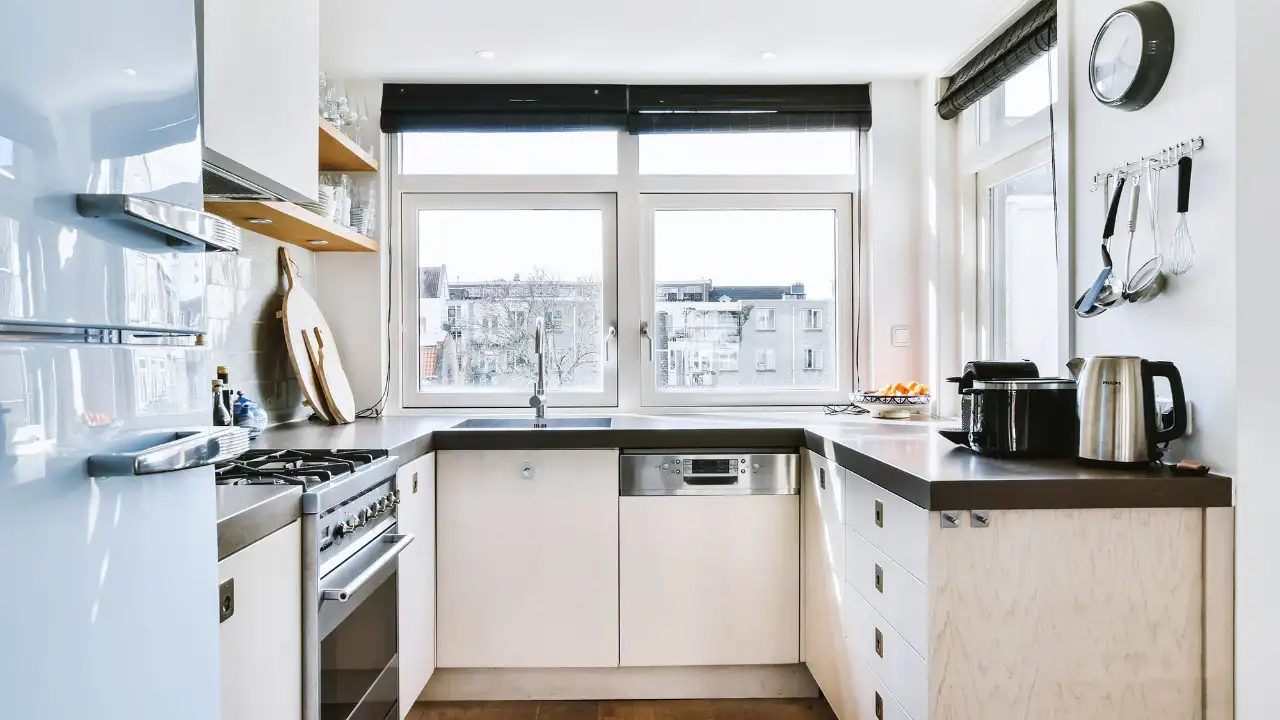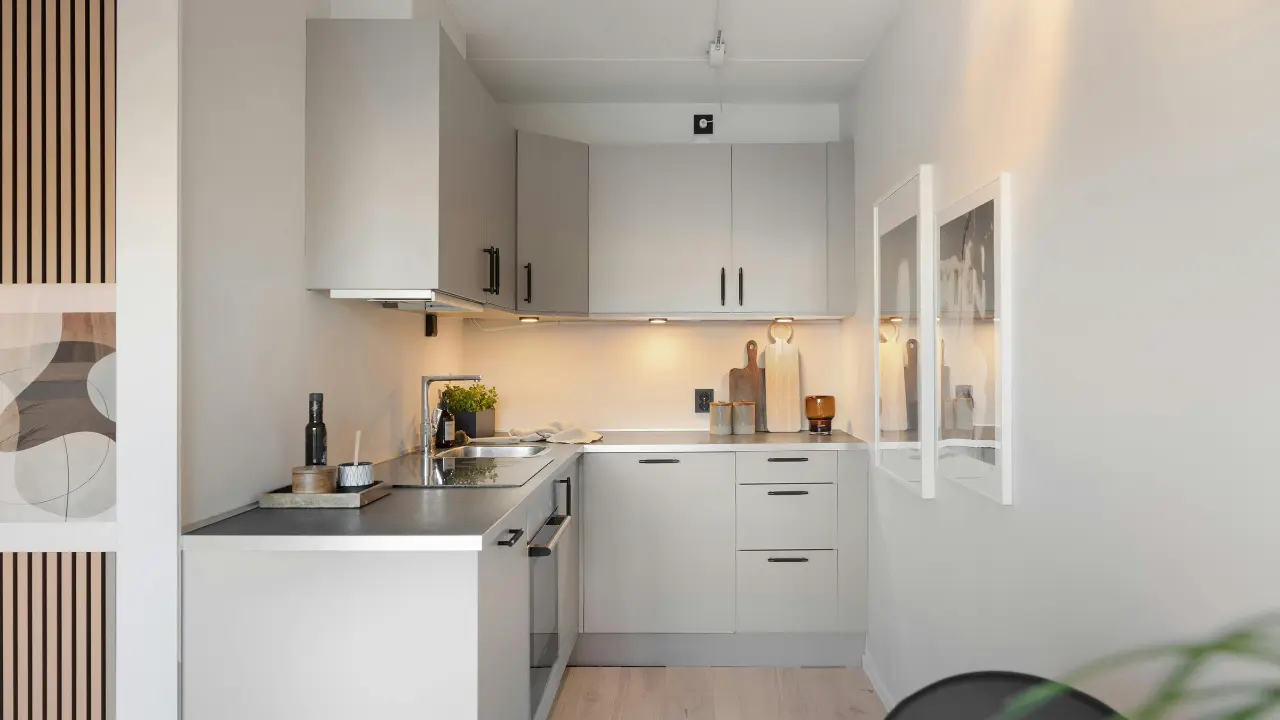
Dark countertops can make even a beautiful kitchen feel less practical. Ceiling fixtures provide general illumination, but they do not always light the work surface directly beneath wall cabinets. That is where under cabinet lighting can make a noticeable difference.
The best under cabinet lighting provides useful task lighting while also adding warmth and visual depth to the kitchen. LED light bars, strip lights, puck lights, rechargeable fixtures, and hardwired systems all have different strengths.
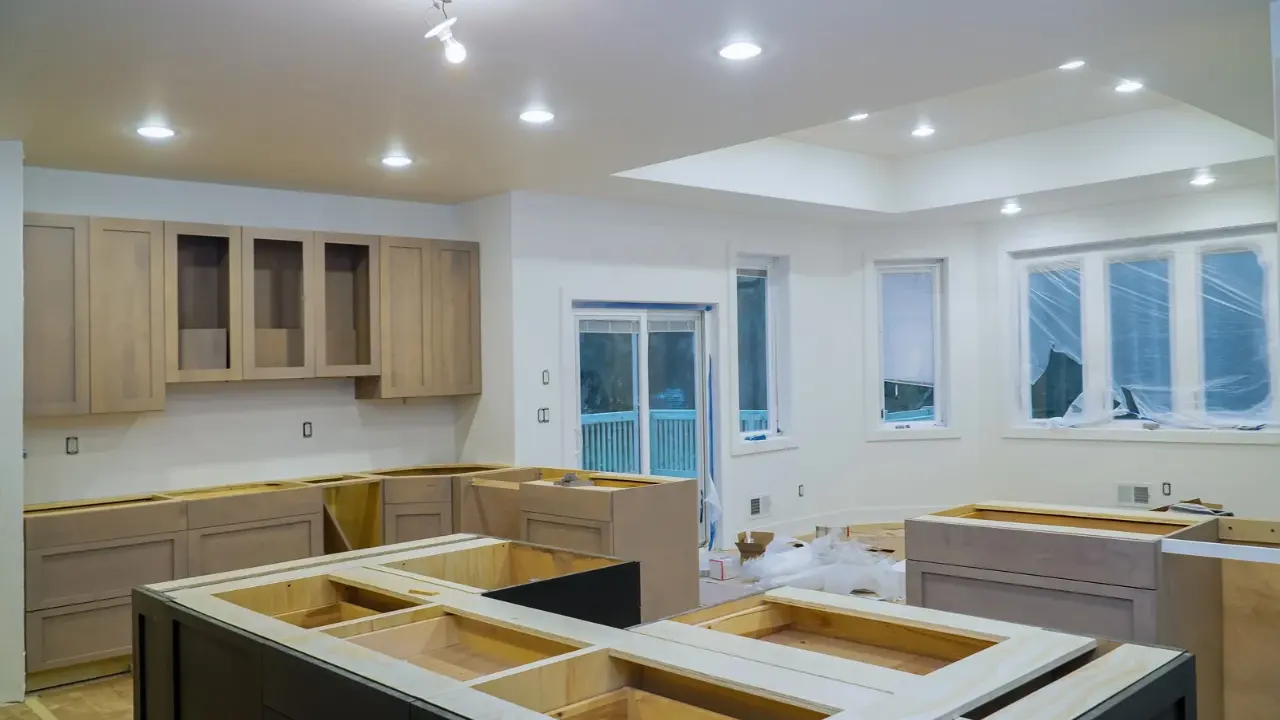
The right choice depends on your cabinet layout, countertop size, preferred brightness, color temperature, installation method, and how you plan to use the space. This guide explains the main options so you can choose under cabinet lighting that looks good and works well for your kitchen.
What Is Under Cabinet Lighting?
Under cabinet lighting refers to fixtures installed underneath wall-mounted kitchen cabinets. The lights direct illumination toward the countertop, backsplash, or work area below.
Unlike a ceiling light, which generally illuminates a broad area, cabinet lighting provides more focused illumination where kitchen tasks actually happen.
This makes under cabinet lighting particularly useful around food-preparation areas, sinks, coffee stations, and other sections of countertop.
Why Under Cabinet Lighting Is Useful
Good kitchen cabinet lighting can provide several practical and aesthetic benefits.
Better countertop visibility: Focused light makes it easier to see the work surface.
Food-preparation lighting: Additional illumination can be useful when chopping, mixing, cooking, or preparing ingredients.
Reduced shadows: Lights positioned correctly beneath cabinets can reduce shadows created by overhead fixtures or your own body.
Improved ambiance: Lower-level lighting can create a softer atmosphere when bright ceiling lights are unnecessary.
Highlighting materials: Lighting can emphasize a backsplash, stone countertop, tile, or other design features.
Nighttime convenience: A dimmed cabinet-lighting system can provide enough illumination for quick kitchen visits without turning on every overhead fixture.
The key is to treat under cabinet lighting primarily as task lighting, while recognizing that it can also contribute to the overall design.
What Is the Best Under Cabinet Lighting?
For most modern kitchens, LED under cabinet lighting is the most versatile option. LEDs are available in light bars, strips, puck lights, and other formats, making them suitable for everything from a small apartment kitchen to a large remodeled space.
The best format depends on your priorities.
Best for Most Kitchens — LED Light Bars
LED light bars are a practical choice when you want relatively even illumination across a countertop.
They typically provide a defined fixture that can be mounted underneath the cabinet. A good-quality bar can illuminate a useful section of counter without requiring numerous individual fixtures.
Light bars work especially well when:
- You want consistent countertop illumination
- You prefer a simple installation
- You do not want to cut or shape LED strips
- You want a fixture that is relatively easy to replace
Their main disadvantage is that the fixture can be more visible than a concealed LED strip.
Best for Custom Layouts — LED Strip Lights
LED strip lights are flexible and can work well along long or irregular cabinet runs.
They are particularly useful when you want a continuous line of light rather than several separate bright spots. Because the strip is relatively low-profile, it can also create a clean appearance when installed correctly.
LED strips are a good choice for:
- Long cabinet runs
- Custom layouts
- Minimalist kitchens
- Continuous countertop lighting
- Installations where a discreet fixture is preferred
However, strip systems can require additional components such as a compatible power supply, connectors, channels, or controls.
Best for Focused Lighting — Puck Lights
Puck lights are compact, round fixtures that provide localized illumination.
They can work well when you want individual lighting zones or have cabinet sections that do not require continuous lighting.
Puck lights are useful for:
- Small cabinet sections
- Focused countertop illumination
- Display-style kitchens
- Areas where individual light placement is helpful
One drawback is that individual puck fixtures can create noticeable bright spots if they are spaced poorly or installed without considering the countertop surface.
Best for Easy Installation — Rechargeable Lights
Rechargeable under cabinet lights are convenient when you want to avoid electrical wiring.
Many models use rechargeable batteries and may include features such as motion sensors or touch controls. They can be particularly attractive for renters, temporary upgrades, or small areas where installing permanent wiring is unnecessary.
The trade-off is that rechargeable fixtures need to be charged periodically. Battery performance also varies by fixture, brightness setting, usage pattern, and battery capacity.
Types of Under Cabinet Lighting
Different lighting formats suit different kitchens and installation situations.
| Type | Best For | Main Advantage | Potential Drawback |
|---|---|---|---|
| LED Light Bars | Most kitchens | Even illumination | More visible fixture |
| LED Strip Lights | Long cabinet runs | Seamless appearance | May need additional components |
| Puck Lights | Focused lighting | Compact design | Can create bright spots |
| Rechargeable Lights | Renters and DIY projects | No wiring | Requires charging |
| Plug-In Lights | Easy upgrades | Simple setup | Requires cord management |
| Hardwired Lights | Permanent installations | Clean finished look | More installation work |
LED Light Bars
Light bars are often a straightforward solution for homeowners who want a defined fixture with broad illumination.
When choosing one, consider its length, brightness, mounting method, controls, and compatibility with any dimmer or power system you plan to use.
LED Strip Lights
LED strips offer greater flexibility and can be installed beneath long cabinet runs.
For a cleaner installation, an aluminum channel or diffuser may help protect the strip and soften the appearance of individual LED points, depending on the product design.
Puck Lights
Puck lights can provide attractive pools of light beneath cabinets. They are especially useful when you want to emphasize particular countertop areas.
Spacing matters. Too few fixtures can leave dark sections, while poorly positioned fixtures can create distracting bright spots.
Rechargeable Under Cabinet Lights
Rechargeable lights are among the easiest options for a basic upgrade.
They are useful when you cannot easily access electrical wiring. Before buying, check charging requirements, battery capacity, charging method, sensor behavior, and whether the fixture can remain mounted while charging.
Plug-In Under Cabinet Lights
Plug-in fixtures offer a middle ground between permanent wiring and battery-powered lighting.
They can be relatively simple to install, but the power cord needs to be routed carefully so it does not become a visual distraction or interfere with kitchen activities.
Hardwired Under Cabinet Lighting
Hardwired lighting provides a more integrated appearance because the electrical connection can be concealed.
It is particularly suitable for new kitchens or major renovations where wiring can be planned before cabinets and finishes are completed.
Because electrical work can involve safety and local code requirements, hardwired installations may be better handled by a qualified electrician.
LED vs Other Under Cabinet Lighting Options
LED lighting has become a practical choice for kitchen cabinet lighting because it is available in many formats and can provide a combination of efficient operation, low heat output, flexible design, and different lighting colors.
Advantages of LED Lighting
Common advantages include:
- Energy-efficient operation
- Relatively low heat compared with older lighting technologies
- Long operating life
- Multiple color temperatures
- Dimming options
- Flexible strip and fixture designs
- Compatibility with various control systems
However, not every LED product offers the same quality.
What to Consider Before Choosing LED
Look beyond the word “LED” and examine:
Light quality: A fixture should produce comfortable, useful illumination rather than harsh or uneven light.
Brightness: Compare the actual light output rather than simply counting bulbs or LEDs.
Color rendering: A higher-quality light source can make food, countertops, cabinets, and finishes appear more natural.
Installation: Check whether the fixture requires direct wiring, a plug, a driver, a transformer, or a specific power supply.
Driver requirements: Some LED systems require separate drivers or power components.
Dimming compatibility: A fixture should be compatible with the dimming system you intend to use.
How Bright Should Under Cabinet Lighting Be?
There is no single brightness level that works perfectly for every kitchen.
The appropriate amount of light depends on countertop depth, cabinet height, room size, surface color, fixture placement, and whether the lighting is intended mainly for task work or ambiance.
Lumens can help you compare light output, but the number alone does not tell the whole story. Light distribution and placement also have a major effect on how bright a countertop actually feels.
Brightness for Food Preparation
Food-preparation areas generally benefit from stronger, more useful task lighting.
The goal is not simply to make the counter extremely bright. Instead, aim for enough illumination to clearly see ingredients, utensils, cutting surfaces, and other work areas without creating uncomfortable glare.
Brightness for General Countertop Lighting
For everyday countertop use, moderate and evenly distributed illumination can often work better than one extremely bright fixture.
Continuous light bars or properly installed LED strips can help minimize large differences between illuminated and dark sections.
Brightness for Decorative Ambiance
If your primary goal is atmosphere, you may prefer lower brightness combined with dimming.
This allows the same cabinet lights to provide functional illumination during cooking and softer light during evenings.
Why Too Much Brightness Can Be a Problem
More light is not always better.
Excessive brightness can produce:
- Glare
- Reflections on polished countertops
- Harsh shadows
- Uncomfortable visual contrast
- Distracting hotspots
A dimmer can make a fixed lighting system much more versatile.
What Color Temperature Is Best for Under Cabinet Lighting?
Color temperature is measured in Kelvin (K). In simple terms, it describes whether a light appears warmer and more yellow or cooler and more blue-white.
The right under cabinet lighting color temperature depends on the atmosphere and materials in your kitchen.
Warm White
Warm white lighting can work particularly well with:
- Traditional kitchens
- Natural wood cabinets
- Warm-toned flooring
- Cream or beige interiors
- Cozy kitchen designs
It can create a comfortable, inviting appearance.
Neutral White
Neutral white offers a balanced appearance and can work well for everyday kitchen task lighting.
It is often a good middle ground when you want countertops and food to appear clear without creating an overly warm or cool atmosphere.
Cool White
Cooler white light can suit:
- Contemporary kitchens
- High-contrast interiors
- Crisp white cabinetry
- Modern spaces where a brighter, cooler appearance is preferred
However, cool lighting can sometimes make a warm kitchen feel less inviting.
Should Kitchen Under Cabinet Lights Match Ceiling Lights?
Matching does not always have to mean using exactly the same fixture or brightness.
However, dramatically different color temperatures can make a room feel visually inconsistent.
If your ceiling lighting is warm, a similar under cabinet lighting color will generally create a more cohesive appearance. If your kitchen uses neutral lighting throughout, neutral cabinet lighting can maintain that balance.
Best Under Cabinet Lighting for Different Kitchen Styles
The fixture should complement the overall kitchen rather than looking like an unrelated addition.
Modern Kitchens
Choose slim LED bars or discreet LED strips for a clean, contemporary appearance.
A continuous line of light often works particularly well with flat-panel cabinets and minimalist hardware.
Minimalist Kitchens
Low-profile LED strips are an excellent option when you want the lighting to blend into the architecture.
Keep visible wires and bulky fixtures to a minimum.
Farmhouse Kitchens
Warm white lighting can complement natural wood, painted cabinetry, and traditional finishes.
A discreet light bar can provide practical illumination without competing with decorative details.
Traditional Kitchens
Warm or neutral lighting can work well with raised-panel cabinets, natural stone, and classic finishes.
The main priority should be comfortable illumination that complements the room’s existing lighting.
Warm Wood Kitchens
Warm wood cabinetry can pair beautifully with warm or balanced neutral lighting.
Avoid choosing a light temperature without first considering how it affects the appearance of the wood and countertop.
Small Kitchens
Small kitchens benefit from low-profile fixtures that provide useful light without adding visual clutter.
LED strips or compact light bars can illuminate countertops while maintaining a clean appearance.
Luxury Kitchens
In a luxury kitchen, lighting should look intentional rather than added as an afterthought.
A concealed LED system with consistent illumination, good color rendering, dimming, and clean cable management can complement high-end cabinetry and countertop materials.
Under Cabinet Lighting Features Worth Considering
Not every feature is necessary. Focus on the ones that improve how you actually use the kitchen.
Dimming
Dimmable under cabinet lights give you more control over the space.
You can use brighter illumination while preparing food and reduce the brightness when you want a softer evening atmosphere.
Motion Sensors
Motion sensor cabinet lights can be convenient when you want hands-free operation.
They can work especially well for:
- Nighttime kitchen use
- Hands-free areas
- Pantry-style applications
- Frequently used small spaces
Check how the sensor activates and whether its sensitivity can be adjusted.
Touch Controls
Touch controls provide a convenient way to turn lights on or off without reaching for a wall switch.
They can be particularly useful for small under cabinet systems.
Remote Controls
Remote controls can make it easier to adjust brightness or switch lighting modes from a distance.
They are useful when the fixture itself is difficult to reach.
Smart Home Compatibility
Some under cabinet lighting systems can connect with smart-home platforms such as Alexa, Google Home, or Apple Home.
Smart controls can be useful if you want voice commands, schedules, scenes, or integration with other kitchen lighting.
Always verify compatibility with the specific product and smart-home system before purchasing.
Color Temperature Adjustment
Tunable white lighting allows you to adjust the appearance of the light.
For example, you may prefer a warmer setting in the evening and a more neutral setting while working at the countertop.
Rechargeable Batteries
Rechargeable batteries are convenient because they eliminate the need for permanent wiring.
However, convenience comes with maintenance. Consider how often the fixture will need charging and how easy it is to remove or recharge.
Best Under Cabinet Lighting for Small Kitchens
Small kitchens need lighting that improves functionality without making the room feel crowded.
Low-profile fixtures are usually a strong choice because they can provide countertop illumination without adding much visual bulk.
Continuous LED strips can be particularly useful along long cabinet runs. They can create a more consistent appearance than several large fixtures.
For small kitchens, also consider:
- Using low-profile fixtures
- Lighting dark corners
- Avoiding unnecessary visible hardware
- Keeping cables organized
- Using dimming when possible
- Directing light toward the working surface
- Avoiding excessive brightness
If you’re planning a compact kitchen makeover, under cabinet lighting can work especially well alongside other small kitchen ideas focused on storage, layout, and visual simplicity.
Under Cabinet Lighting Placement Guide
Placement can matter just as much as the fixture itself.
Even an excellent light can perform poorly if it is positioned incorrectly.
The goal is to illuminate the countertop while minimizing glare and visible hotspots.
Where Should Under Cabinet Lights Be Installed?
Under cabinet fixtures should generally be positioned so that their light reaches the working area rather than being hidden behind the cabinet edge.
The exact position depends on the fixture’s beam angle and the cabinet construction.
How Far From the Cabinet Front Should Lights Be?
There is no universal measurement that works for every fixture.
Instead, consider the fixture’s light distribution and where the countertop needs illumination.
A fixture placed too far toward the back may leave the front edge of the countertop relatively dark. A fixture positioned too far forward may be more visible and potentially create glare.
Test the light position before permanently securing it when possible.
How to Handle Kitchen Corners
Corners can easily become darker than straight cabinet runs.
When planning lighting, consider whether the system can continue around the corner or whether separate fixtures are more appropriate.
For LED strips, compatible corner connectors or carefully planned routing may help create a continuous installation.
How to Hide Under Cabinet Lighting Wires
Good cable management can make an inexpensive lighting system look much more polished.
Depending on the installation, you can:
- Route cables along the underside or rear of cabinets
- Use appropriate cable clips
- Conceal wiring where cabinet construction allows
- Keep excess cable neatly secured
- Plan power locations before installation
Avoid routing cables where they could interfere with drawers, appliances, sinks, or food-preparation areas.
Hardwired vs Plug-In vs Rechargeable Under Cabinet Lighting
The best installation method depends on whether you’re renovating, upgrading an existing kitchen, renting, or simply looking for the easiest DIY option.
| Installation Type | Best For | Pros | Cons |
|---|---|---|---|
| Hardwired | Permanent renovations | Cleanest finished appearance | More installation work |
| Plug-In | Simple upgrades | Straightforward setup | Requires cord management |
| Rechargeable | Renters and DIY users | No electrical wiring | Requires charging |
| Battery Powered | Small areas | Very easy installation | Battery maintenance |
Which Installation Type Is Best for a Kitchen Remodel?
Hardwired lighting can be a strong choice during a kitchen remodel because electrical connections can be planned before the final finishes are installed.
It can produce a cleaner appearance, particularly when the wiring is integrated into the cabinetry and electrical plan.
Which Is Best for Renters?
Rechargeable or battery-powered fixtures are usually more practical when you cannot modify the electrical system.
They can be installed with minimal permanent changes, although battery maintenance becomes part of regular use.
Which Is Best for DIY Installation?
Plug-in and rechargeable systems are generally easier starting points for DIY projects because they can avoid complicated electrical work.
Always follow the manufacturer’s installation instructions and use products intended for the location where they will be installed.
How to Install Under Cabinet Lighting
Installation varies significantly between light bars, strips, puck lights, plug-in systems, and hardwired fixtures.
Use the manufacturer’s instructions for the exact product.
Step 1 — Measure the Cabinet Run
Measure the sections you want to illuminate.
Consider individual cabinet widths, corners, gaps, and areas where appliances may interrupt the cabinet run.
Step 2 — Choose the Lighting Format
Decide whether you need:
- Light bars
- LED strips
- Puck lights
- Rechargeable fixtures
- Plug-in lighting
- Hardwired lighting
Choose the format based on the desired appearance and practical requirements.
Step 3 — Plan Power and Controls
Determine where the power source will be located.
If you are using multiple fixtures, check whether the power supply and connectors are designed to support the complete system.
Also decide whether you need a wall switch, dimmer, touch control, motion sensor, remote, or smart control.
Step 4 — Position the Lights
Place the fixtures where they illuminate the countertop effectively.
Before permanent installation, test the position to check for glare, shadows, and uneven illumination.
Step 5 — Manage Cables
Route wires neatly and securely.
Keep them away from moving drawers, hot surfaces, water, and areas where they could be pulled or damaged.
Step 6 — Test Brightness and Glare
Turn the lights on at their intended brightness.
Check the countertop from normal standing positions and look for reflections, harsh hotspots, or dark areas.
Step 7 — Make Final Adjustments
Once you’re satisfied with the lighting distribution, complete the installation according to the manufacturer’s instructions.
Safety note: Hardwired electrical installation can involve electrical hazards and local requirements. If you’re not qualified to perform the work, use a qualified electrician.
How to Choose the Best Under Cabinet Lighting
A good buying decision starts with the kitchen rather than the fixture.
1. Measure Your Cabinets
Measure each cabinet section that needs illumination.
Do not assume every cabinet run is the same length.
2. Decide How the Lights Will Be Powered
Choose between:
- Hardwired
- Plug-in
- Rechargeable
- Battery-powered
Consider both installation difficulty and long-term convenience.
3. Choose the Right Brightness
Think about whether the lights will provide task lighting, ambient lighting, or both.
Prioritize comfortable and even illumination rather than simply choosing the brightest fixture available.
4. Select the Color Temperature
Choose warm, neutral, or cool lighting based on your cabinets, countertops, existing lighting, and preferred atmosphere.
5. Consider Color Rendering
Color rendering affects how naturally surfaces and objects appear under the light.
This can be particularly important in a kitchen where you regularly work with food and want materials and colors to look accurate.
6. Decide Whether You Need Dimming
Dimming is useful if you want one lighting system to work for both cooking and evening ambiance.
7. Consider Motion or Smart Controls
Motion sensors can improve convenience, while smart controls can be useful if your kitchen already uses a connected lighting system.
Do not pay extra for features you are unlikely to use.
8. Check Installation Requirements
Before buying, determine whether the fixture requires:
- A power adapter
- LED driver
- Transformer
- Electrical box
- Special dimmer
- Specific mounting hardware
9. Look at Wire Management
A good lighting system can still look messy if the cables are difficult to conceal.
Think about where the power source is located and how cables will travel between fixtures.
10. Consider Long-Term Maintenance
For rechargeable or battery-powered lights, consider charging or battery replacement.
For permanent systems, consider how easy it will be to replace a fixture, driver, or other component if something eventually fails.
Common Under Cabinet Lighting Mistakes to Avoid
Even simple cabinet lighting can look disappointing when the planning is rushed.
1. Choosing Lights That Are Too Bright
Extremely bright lights can create glare instead of better task lighting.
2. Ignoring Glare
Always check the lighting from normal eye level, especially when using glossy countertops or backsplashes.
3. Using Inconsistent Color Temperatures
Mixing noticeably different white-light temperatures can make different parts of the kitchen look disconnected.
4. Installing Lights Too Far Toward the Back
A fixture hidden too far behind the cabinet may fail to illuminate the front portion of the countertop effectively.
5. Leaving Visible Cables
Messy wiring can undermine an otherwise attractive kitchen.
6. Forgetting Corner Cabinets
Corners can become noticeably darker if the lighting plan only covers straight cabinet sections.
7. Buying Incompatible Dimmers
Not every LED fixture works with every dimmer.
Verify compatibility before connecting the system.
8. Ignoring Power Requirements
A multi-fixture system may require a specific driver or power supply.
Check the manufacturer’s requirements before connecting components.
9. Using Poor-Quality Adhesive for LED Strips
Some strips rely on adhesive mounting. Poor adhesion can cause the strip to loosen over time.
Use the mounting method recommended for the specific product and surface.
10. Ignoring Countertop Reflections
Highly polished surfaces can reflect bright fixtures.
Test the installation before permanently mounting everything.
Pros and Cons of Under Cabinet Lighting
Pros
- Better countertop visibility
- More useful task lighting
- Improved kitchen ambiance
- Multiple installation options
- Flexible LED designs
- Can complement backsplash and countertop materials
- Smart-home features are available on some systems
Cons
- Adds another lighting expense
- Wiring can complicate installation
- Poor placement can create glare
- Rechargeable fixtures require periodic charging
- Battery-powered systems require battery maintenance
- Low-quality fixtures can produce uneven or unpleasant light
Best Under Cabinet Lighting Buying Checklist
Before purchasing, check each of these items:
- ☐ Cabinet length
- ☐ Fixture type
- ☐ Brightness
- ☐ Color temperature
- ☐ Color rendering
- ☐ Dimming compatibility
- ☐ Power source
- ☐ Installation method
- ☐ Smart controls
- ☐ Motion sensor
- ☐ Wire management
- ☐ Warranty
- ☐ Product compatibility
If you are comparing several options, start with the features that directly affect everyday use—brightness, light quality, placement, power, and controls—before worrying about cosmetic extras.
Frequently Asked Questions About Under Cabinet Lighting
What is the best type of under cabinet lighting?
LED lighting is generally the most versatile choice because it is available in light bars, strips, puck fixtures, and other formats. The best format depends on your cabinet layout, installation needs, brightness requirements, and preferred appearance.
Are LED lights good for under kitchen cabinets?
Yes. LED fixtures are widely used for kitchen cabinet lighting because they are available in different brightness levels, color temperatures, shapes, and control options.
What color temperature is best for under cabinet lighting?
There is no universal answer. Warm white can complement traditional and wood kitchens, while neutral white can provide a balanced task-lighting appearance. Cool white may suit contemporary kitchens that favor a crisp look.
Are puck lights or LED strips better?
LED strips are often better when you want continuous illumination across a long cabinet run. Puck lights can be useful when you prefer individual lighting zones or have smaller sections to illuminate.
How bright should under cabinet lights be?
The ideal brightness depends on the kitchen, countertop, fixture placement, and intended use. Task-focused areas generally need more useful illumination than decorative lighting, but excessive brightness can create glare.
Can under cabinet lights be installed without wiring?
Yes. Rechargeable and battery-powered cabinet lights can often be installed without connecting to household wiring. They are convenient for renters and simple DIY projects.
Are rechargeable under cabinet lights worth it?
They can be worthwhile when easy installation is more important than having a permanent electrical connection. Their main trade-off is the need for periodic charging.
Should under cabinet lighting be dimmable?
Dimming is not essential, but it can be very useful. It allows the same lights to provide stronger task illumination during cooking and softer light when the kitchen is being used in the evening.
Can I install under cabinet lighting myself?
Some plug-in, rechargeable, and battery-powered systems are designed for relatively simple installation. Hardwired systems involve electrical work and may require a qualified electrician depending on the project and local requirements.
How do I hide under cabinet lighting wires?
Plan the cable route before installation. Wires can often be routed along the underside or rear of cabinets and secured with appropriate clips or other suitable cable-management methods. Keep cables away from water, heat, moving drawers, and areas where they could be damaged.
Final Thoughts
The best under cabinet lighting is not necessarily the brightest or most expensive option. It is the system that provides the right combination of useful illumination, comfortable light quality, attractive placement, and practical installation for your kitchen.
For many kitchens, LED light bars offer a straightforward way to achieve even countertop lighting. LED strips are a strong choice for long, seamless cabinet runs, while puck lights work well when focused lighting is preferred. Rechargeable options make sense when you want a simple installation without electrical wiring.
Before buying, pay particular attention to brightness, color temperature, color rendering, placement, power requirements, dimming, and cable management. When those details are planned properly, under cabinet lighting can improve both the functionality and atmosphere of the kitchen without overwhelming the design.