Introduction
The right kitchen island lighting can change how your entire kitchen looks and functions. A well-chosen fixture provides useful light for food preparation, creates a visual focal point, and adds personality without making the room feel crowded.
The best kitchen island lighting depends on more than appearance. Island size, ceiling height, kitchen layout, fixture scale, seating, and existing lighting all affect which option will work best.
Pendant lights are a popular choice, but they are not the only solution. Linear fixtures, chandeliers, recessed lighting, and other ceiling lights can also work beautifully when selected for the space.
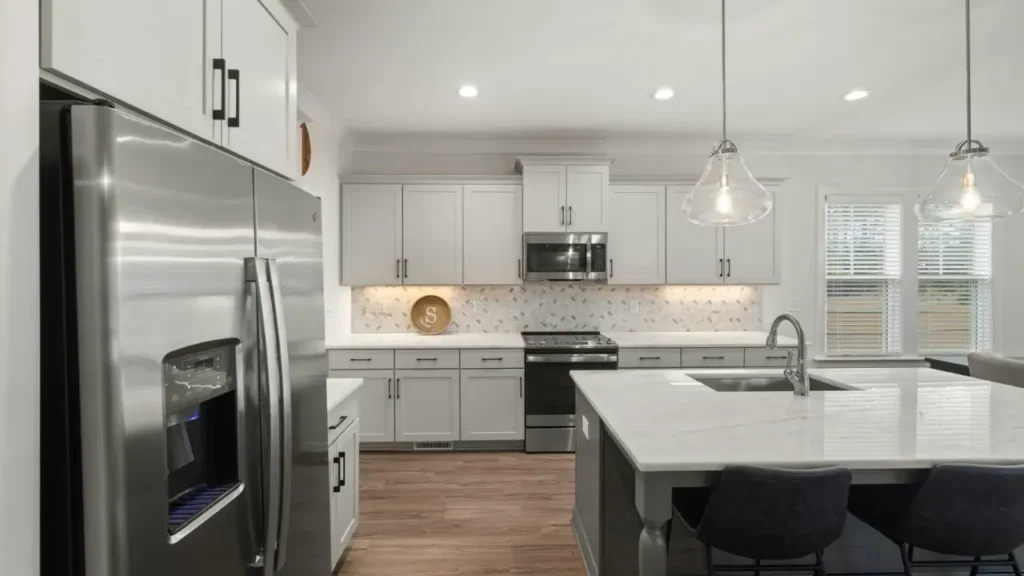
This guide explains how to choose kitchen island lighting based on style, size, placement, brightness, color temperature, and practical needs.
What Is the Best Kitchen Island Lighting?
For most kitchens, pendant lighting is one of the most flexible choices because individual fixtures can be selected and positioned according to the island’s size and design.
However, the best option depends on the room.
- Pendant lights: Best for most kitchen islands and flexible layouts
- Linear pendants: Excellent for long islands
- Chandeliers: Suitable for large islands and statement interiors
- Flush mounts: Useful when ceiling height is limited
- Recessed lighting: Good for clean, unobtrusive general illumination
- Track lighting: Useful when adjustable directional lighting is needed
The goal is to balance useful illumination with the visual scale of the kitchen.
Best Overall — Pendant Lights
Pendant lights work well because they provide focused illumination while also acting as decorative elements. They are available in many shapes, sizes, materials, and finishes.
Glass pendants can keep a kitchen feeling open, while metal or solid-shade designs can create a stronger visual statement.
Best for Large Islands — Linear Pendant or Chandelier
A long kitchen island can look unbalanced when paired with a tiny fixture. A linear pendant or appropriately scaled chandelier can provide better visual proportion.
Choose the fixture according to the island’s dimensions rather than simply choosing the largest available design.
Best for Minimalist Kitchens — Simple Globe or Cylinder Pendants
Minimalist kitchens generally benefit from uncomplicated shapes. Globe, cylinder, cone, and slim geometric pendants can provide lighting without competing with clean cabinetry and countertops.
Best for Farmhouse Kitchens — Metal or Glass Pendants
Farmhouse kitchens often pair naturally with aged metal, bronze, black, or glass fixtures. Simple silhouettes can complement wood cabinetry and traditional details without making the room feel overly themed.
Best for Small Kitchens — Compact Pendant Lights
Small kitchens usually benefit from fixtures that provide enough light without creating visual clutter.
Compact pendants, small globes, or slim fixtures can make the island feel finished while preserving an open sightline.
Types of Kitchen Island Lighting
Different kitchen island light fixtures solve different problems. Consider the following options before choosing a design.
| Lighting Type | Best For | Main Advantage | Potential Drawback |
|---|---|---|---|
| Pendant Lights | Most kitchens | Flexible and stylish | Can overwhelm small spaces |
| Linear Pendant | Long islands | Even coverage | Needs enough ceiling space |
| Chandelier | Large islands | Strong focal point | Can look oversized |
| Flush Mount | Low ceilings | Space-saving | Less decorative |
| Semi-Flush Mount | Medium-height ceilings | Balanced look | Less focused task lighting |
| Recessed Lighting | General illumination | Clean appearance | Less visual impact |
| Track Lighting | Flexible layouts | Adjustable direction | Can look busy |
| Under-Cabinet Lighting | Countertop support | Excellent task lighting | Does not replace island fixtures |
Not every kitchen needs every type. The best result usually comes from choosing lighting according to what the space actually needs.
Kitchen Island Pendant Lighting Ideas
Pendant lighting is one of the easiest ways to combine function and style over an island.
Single Statement Pendant
A single statement pendant can work especially well over a compact island or smaller peninsula.
Choose a fixture with enough visual presence to feel intentional, but avoid a diameter or shape that dominates the entire countertop.
Two Pendant Lights
Two pendant lights can create a balanced arrangement over a medium-sized island.
Place them symmetrically and consider the positions of stools, sinks, or preparation areas when determining their final locations.
Three Pendant Lights
Three pendants can work beautifully over a longer island. They create rhythm and can distribute light more evenly than a single central fixture.
Keep the fixtures visually related and allow enough space between them so the ceiling does not look crowded.
Four or More Pendant Lights
Four or more fixtures can work on very long islands, but more is not automatically better.
If the island is not large enough to support several fixtures, the ceiling may become visually busy. A longer linear fixture may be a cleaner solution.
Oversized Pendant Lights
Oversized pendants can create a dramatic focal point in a large kitchen.
The key is proportion. A large pendant should have enough surrounding space to breathe and should not interfere with sightlines across the kitchen.
Mini Pendant Lights
Mini pendants are useful when you want a lighter visual appearance.
They can work particularly well in small kitchens, kitchens with lower visual weight, or designs where cabinetry and countertops already provide strong focal points.
Kitchen Island Chandelier Ideas
A chandelier can be an excellent alternative to individual pendant lights when the kitchen calls for a stronger statement.
Modern Kitchen Island Chandeliers
Look for clean lines, geometric forms, simple metal finishes, or sculptural designs.
A modern chandelier can become a focal point without requiring elaborate decorative details.
Linear Chandeliers
Linear chandeliers are especially useful for long islands.
Instead of spreading several separate fixtures across the ceiling, a single linear design can visually follow the length of the island.
Farmhouse Chandeliers
Farmhouse chandeliers often combine wood, metal, or glass with relatively simple forms.
Choose a design that complements the kitchen instead of relying on overly rustic details.
Minimalist Chandeliers
Minimalist chandeliers use simple shapes and restrained materials.
They are useful when you want the lighting to feel architectural rather than decorative.
Statement Chandeliers for Large Islands
A large chandelier can anchor an expansive kitchen, but size alone should not determine the choice.
Consider the island dimensions, ceiling height, surrounding cabinetry, and visual weight of the rest of the room. A smaller but well-proportioned fixture can look better than an oversized one.
How Many Lights Should Go Over a Kitchen Island?
There is no single number that works for every island. The right quantity depends on the fixture size, island length, ceiling height, and desired lighting level.
Small Kitchen Island
A compact island may need only one appropriately sized pendant or a small pair of fixtures.
Avoid automatically adding three or four lights simply because that arrangement is popular in larger kitchens.
Medium Kitchen Island
Two or three pendant lights can provide a balanced appearance over many medium-sized islands.
The important thing is to maintain consistent spacing and keep the fixtures centered over the working area.
Large Kitchen Island
Large islands provide more flexibility.
You can consider multiple pendants, a linear fixture, or a chandelier depending on the kitchen’s style and ceiling height.
Consider Fixture Size, Not Just Fixture Count
Three small pendants and two oversized pendants can create completely different results.
Think about the combined visual weight of the fixtures rather than counting them alone.
How to Choose the Right Kitchen Island Light Size
Choosing the correct size is one of the most important parts of island lighting design.
Consider:
- Island length
- Island width
- Ceiling height
- Fixture diameter or length
- Number of fixtures
- Visual weight
- Seating arrangement
- Sightlines
Match the Fixture to the Island
A long island generally benefits from lighting that visually relates to its length.
A small island may look better with one compact fixture or a carefully spaced pair.
Avoid Fixtures That Are Too Small
A fixture that is technically functional can still look lost above a large island.
If the island is substantial, make sure the lighting has enough visual presence to connect with the countertop below.
Avoid Fixtures That Are Too Large
Oversized lighting can make a kitchen feel crowded and may interfere with sightlines.
Large fixtures need sufficient ceiling space and surrounding visual breathing room.
Think About the Kitchen as a Whole
Don’t select island lighting in isolation.
Consider how it interacts with cabinetry, hardware, countertops, dining lights, wall colors, and other decorative elements.
How High Should Kitchen Island Lights Hang?
The height of island lighting affects both comfort and appearance.
A fixture that hangs too low can interfere with conversations, sightlines, and everyday kitchen activities. A fixture that hangs too high may lose some of its visual connection to the island.
Standard Hanging Height
Many kitchen designs leave comfortable clearance between the bottom of a pendant and the countertop.
Rather than treating one measurement as universal, adjust the height according to the fixture, ceiling, seating, and people using the kitchen.
Adjust for Ceiling Height
Higher ceilings can accommodate longer drops and larger fixtures.
Lower ceilings usually call for shorter pendants or fixtures with a more compact vertical profile.
Adjust for Tall Family Members
Consider the height of the people who regularly use the kitchen.
If family members frequently walk, stand, or work beneath the fixture, make sure the installation does not create an uncomfortable obstruction.
Consider Sightlines
Stand at typical positions around the kitchen and check whether the fixtures block your view.
This is especially important in open-concept kitchens where the island connects visually with the dining or living area.
Check Seating and Conversation Areas
If the island includes stools, lighting should allow people to sit comfortably without feeling that the fixture is directly in their line of sight.
How Far Apart Should Kitchen Island Lights Be?
Spacing should create visual balance rather than follow a rigid formula.
Consider:
- Island length
- Pendant diameter
- Number of fixtures
- Island centerline
- Seating positions
- Sink or cooktop location
- Overall ceiling layout
Center the Lighting Over the Island
Island lighting should generally relate to the island rather than simply being centered in the entire kitchen.
If the island is offset from the room’s center, the fixtures should normally follow the island’s position.
Keep Spacing Visually Consistent
Uneven spacing can make a carefully designed kitchen look accidental.
When using multiple pendants, aim for a balanced rhythm across the island.
Don’t Place Lights Too Close to the Island Ends
Leaving appropriate visual space near the ends can make the arrangement feel more intentional.
The exact placement depends on the fixture size and island dimensions.
Best Kitchen Island Lighting by Kitchen Style
The fixture should complement the design language of the kitchen.
Modern Kitchen Island Lighting
Modern kitchens often work well with:
- Matte black fixtures
- Brushed metal
- Clear glass
- Geometric shapes
- Slim linear fixtures
Choose clean silhouettes that support the kitchen’s architectural lines.
Contemporary Kitchen Island Lighting
Contemporary lighting can mix materials and shapes while maintaining a refined appearance.
Globe pendants, sculptural fixtures, polished metals, and streamlined linear designs can all work depending on the rest of the room.
Farmhouse Kitchen Island Lighting
Farmhouse kitchens often pair well with:
- Aged metal
- Black finishes
- Bronze
- Clear glass
- Seeded glass
- Simple industrial details
The goal is warmth rather than excessive rustic decoration.
Traditional Kitchen Island Lighting
Traditional kitchens can benefit from classic lanterns, elegant pendants, glass shades, or fixtures with understated decorative details.
Transitional Kitchen Island Lighting
Transitional kitchens provide flexibility.
Look for fixtures that combine traditional proportions with contemporary simplicity.
Scandinavian Kitchen Island Lighting
Scandinavian-inspired kitchens often benefit from light visual weight, simple shapes, natural materials, and understated finishes.
Japandi Kitchen Island Lighting
Japandi kitchens typically suit quiet, minimal fixtures that emphasize natural textures and simple forms.
Warm finishes and soft illumination can reinforce the calm character of the space.
Luxury Kitchen Island Lighting
Luxury kitchen lighting does not have to mean the largest or most expensive fixture.
Focus on proportion, material quality, craftsmanship, and how the fixture interacts with cabinetry, countertops, and architectural details.
Best Kitchen Island Lighting for Different Kitchen Sizes
Small Kitchen
Small kitchens usually benefit from:
- Compact fixtures
- Minimal visual clutter
- Appropriate fixture scale
- Simple shapes
- Light visual weight
Glass or slim fixtures can help maintain an open appearance.
Medium Kitchen
Medium-sized kitchens allow more flexibility.
Two or three pendants, a linear fixture, or a carefully scaled statement piece can work depending on the island and ceiling.
Large Kitchen
Large kitchens can support larger fixtures and more substantial lighting arrangements.
A linear pendant or chandelier may provide a stronger relationship with a large island than several tiny fixtures.
Open-Concept Kitchen
Open-concept kitchens require extra attention to visual coordination.
Island lighting should complement nearby dining and living-area lighting without requiring every fixture to be an identical design.
Best Kitchen Island Lighting by Ceiling Height
Low Ceilings
Consider:
- Flush mounts
- Semi-flush fixtures
- Short pendants
- Low-profile designs
Avoid fixtures with excessive vertical drops that make the kitchen feel compressed.
Standard Ceiling Heights
Standard-height kitchens provide the most flexibility.
Pendant lights, compact chandeliers, and linear fixtures can all work when appropriately scaled.
High Ceilings
High ceilings can accommodate:
- Larger pendants
- Longer drops
- Chandeliers
- Linear fixtures
The fixture should still relate to the island below rather than simply filling empty ceiling space.
What Color Temperature Is Best for Kitchen Island Lighting?
Color temperature affects the atmosphere of the kitchen and how materials appear.
There is no single perfect temperature for every home.
Warm White
Warm white lighting can create a comfortable and inviting atmosphere.
It works particularly well with:
- Warm wood
- Cream cabinetry
- Traditional interiors
- Cozy kitchen designs
- Evening entertaining
Neutral White
Neutral white can provide a balanced appearance for kitchens where both appearance and everyday tasks matter.
It can work particularly well in contemporary and modern spaces.
Cool White
Cooler lighting can create a crisp appearance, but it may feel too stark in some residential kitchens.
Consider the existing lighting, cabinet colors, countertops, and overall atmosphere before choosing it.
Should Island Lighting Match the Rest of the Kitchen?
The lighting does not need to be identical throughout the kitchen.
Instead, aim for coordination.
For example, island pendants can have a slightly different shape from nearby lighting while sharing a related finish, color temperature, or design character.
Kitchen Island Lighting and Layered Lighting
Island fixtures should not be expected to perform every lighting job in the kitchen.
A well-designed kitchen typically benefits from several layers of illumination.
Ambient Lighting
Ambient lighting provides general illumination throughout the room.
This may come from recessed lights, ceiling fixtures, or other broad sources.
Task Lighting
Task lighting provides focused illumination for activities such as:
- Chopping
- Cooking
- Cleaning
- Food preparation
- Reading recipes
- Serving food
Island pendants can contribute to task lighting when positioned correctly.
Accent Lighting
Accent lighting highlights decorative or architectural features.
It can be used around:
- Display shelving
- Cabinet details
- Artwork
- Architectural features
- Decorative objects
Why Layered Lighting Works Better
Layered lighting allows different light sources to perform different jobs.
You can use brighter task lighting while preparing food, then reduce the intensity later for a softer atmosphere.
Best Kitchen Island Lighting Features to Consider
Dimmable Lighting
Dimming gives you greater control over the room.
Bright lighting can support food preparation, while lower levels can create a more relaxed environment during meals or entertaining.
Adjustable Hanging Height
Fixtures with adjustable cords or rods can make installation easier and provide flexibility when fine-tuning the final height.
LED Technology
LED lighting is widely available in modern fixtures and can offer efficient illumination with long operating life.
Check the fixture’s specifications to understand whether the LED source is replaceable or integrated.
Energy Efficiency
Consider how much the fixture will be used and choose an efficient lighting source appropriate for your needs.
Smart Lighting Compatibility
Smart-compatible fixtures can provide features such as app control, scheduling, voice control, or integration with a broader home system.
Only choose these features if you expect to use them.
Multiple Color Temperature Options
Some fixtures allow you to select different color temperatures.
This can be useful when you’re trying to coordinate island lighting with existing kitchen lights.
Easy-to-Clean Materials
Kitchen lighting can collect dust and cooking residue over time.
Simple shapes and accessible surfaces are generally easier to maintain than highly intricate designs.
Best Finishes for Kitchen Island Lighting
Matte Black
Matte black provides strong contrast and works especially well in modern, contemporary, farmhouse, and transitional kitchens.
Brass
Brass can introduce warmth and a refined decorative touch.
It pairs particularly well with warm wood, cream, white, and darker cabinetry.
Brushed Nickel
Brushed nickel offers a softer metallic appearance than highly polished finishes and works well in many contemporary and transitional kitchens.
Chrome
Chrome provides a bright, reflective appearance.
It can work particularly well where other polished metal elements are already present.
Bronze
Bronze can add warmth and depth, making it useful for traditional, farmhouse, and transitional interiors.
Glass
Glass is not a metal finish, but it plays an important role in fixture appearance.
Clear glass can maintain visual openness, while seeded or textured glass adds more character.
Mixed-Material Fixtures
Mixed materials can create a more layered appearance.
For example, a fixture might combine metal with wood or glass.
Use mixed materials thoughtfully so the lighting complements rather than competes with the rest of the kitchen.
How to Choose the Best Kitchen Island Lighting
Use this process before buying or installing a fixture.
Step 1: Measure the Island
Record the island’s length and width.
This gives you a starting point for determining the appropriate fixture size and quantity.
Step 2: Measure the Ceiling Height
Ceiling height affects which fixture shapes and hanging lengths will work comfortably.
Step 3: Identify Your Main Lighting Need
Decide whether your priority is:
- Task lighting
- General illumination
- Decorative impact
- A combination of all three
Step 4: Choose the Fixture Type
Compare pendants, linear fixtures, chandeliers, recessed lights, and other options.
Step 5: Determine the Number of Fixtures
Think about the island’s size and the visual weight of each fixture.
Step 6: Choose the Correct Size
Check both the fixture dimensions and its relationship to the island.
Step 7: Decide on Color Temperature
Consider how the light will look with your cabinets, countertops, flooring, and other lighting.
Step 8: Coordinate the Finish
Choose a finish that works with existing hardware and fixtures without forcing every metal surface to match exactly.
Step 9: Check Dimming and Controls
If you want different lighting levels for cooking and entertaining, dimming can be especially useful.
Step 10: Plan the Installation
Check electrical requirements, mounting hardware, ceiling conditions, and whether professional installation is appropriate.
Common Kitchen Island Lighting Mistakes to Avoid
Choosing Fixtures That Are Too Large
Large fixtures need enough surrounding space.
An oversized fixture can make a small kitchen feel crowded.
Choosing Fixtures That Are Too Small
Tiny fixtures may disappear above a large island and fail to create visual balance.
Hanging Lights Too Low
Low fixtures can interfere with conversations, sightlines, and movement.
Hanging Lights Too High
Fixtures that are excessively high can lose their visual relationship with the island.
Ignoring Island Length
A long island needs lighting that relates to its length.
Using Too Many Fixtures
More fixtures do not necessarily mean better lighting.
Too many can make the ceiling look cluttered.
Forgetting About Sightlines
Always consider what the fixture looks like from the surrounding kitchen and nearby rooms.
Using Only Decorative Lighting
A beautiful pendant does not necessarily provide all the illumination the kitchen needs.
Combine decorative fixtures with appropriate ambient and task lighting.
Ignoring Existing Ceiling Lights
New island fixtures should work with existing recessed or ceiling lights instead of creating competing lighting patterns.
Mixing Too Many Unrelated Finishes
Different finishes can work together, but too many unrelated finishes may make the kitchen feel visually disorganized.
Forgetting Dimmers
Without dimming, a fixture may feel too bright for relaxing or too dim for certain tasks.
Kitchen Island Lighting: Pros and Cons
| Pros | Cons |
|---|---|
| Improves task lighting | Some fixtures require professional installation |
| Adds a visual focal point | Oversized fixtures can overwhelm a room |
| Helps define the island | Hanging fixtures require proper clearance |
| Available in many styles | Cleaning can be inconvenient |
| Can improve kitchen ambiance | Poor placement can create glare |
| Dimmable options add flexibility | Some designs may require ceiling changes |
Kitchen Island Lighting Buying Checklist
Before purchasing, review this checklist:
- Measure island length and width
- Measure ceiling height
- Decide between pendant, chandelier, linear, or other lighting
- Determine the appropriate fixture quantity
- Check fixture dimensions
- Consider hanging height
- Consider spacing
- Choose the color temperature
- Coordinate the finish
- Look for dimming capability
- Check bulb or LED replacement requirements
- Confirm installation requirements
- Consider sightlines
- Consider seating positions
- Make sure the lighting works with the rest of the kitchen
Frequently Asked Questions About Kitchen Island Lighting
What is the best lighting for a kitchen island?
Pendant lighting is a versatile choice for many kitchens because it can provide focused illumination while adding decorative character. However, the best option depends on island size, ceiling height, layout, and personal style.
How many pendant lights should go over a kitchen island?
The right number depends on the island’s length and the size of each fixture. Smaller islands may work with one or two fixtures, while larger islands can accommodate several pendants or a linear fixture.
How high should lights hang over a kitchen island?
Island lights should be positioned high enough to provide comfortable clearance and preserve sightlines while remaining visually connected to the island. Ceiling height, fixture design, seating, and household needs should all be considered.
What size pendant lights should I use over an island?
Choose pendant size according to the island’s dimensions, ceiling height, and number of fixtures. Larger islands can generally support larger fixtures, while compact islands benefit from smaller designs.
Is warm or cool light better for a kitchen island?
Warm white can create a cozy atmosphere, while neutral white can provide a balanced appearance for everyday kitchen tasks. Cooler light can feel crisp but may appear too stark in some residential kitchens.
Can you use a chandelier over a kitchen island?
Yes. A chandelier can work especially well over a large island when its size, height, and visual weight are appropriate for the room.
Should kitchen island lighting match cabinet hardware?
It does not have to match exactly. Coordinating finishes can create a cohesive appearance, while carefully chosen mixed metals can add depth and character.
Do kitchen island lights need to be dimmable?
Dimming is not essential, but it is a useful feature if you want to adjust the lighting for different activities, from food preparation to casual dining and entertaining.
What lighting is best for a small kitchen island?
Compact pendants, mini pendants, slim fixtures, or other low-visual-weight designs can work well. The priority should be sufficient illumination without making the kitchen feel crowded.
Final Thoughts
The best kitchen island lighting is not simply the most attractive fixture or the largest statement piece. It is the lighting that fits the island, supports everyday tasks, complements the kitchen’s design, and remains comfortable to live with.
Start with the island’s dimensions and ceiling height. Then consider fixture type, quantity, size, spacing, color temperature, finish, and controls. Don’t forget to look at the kitchen’s existing ambient and task lighting.
Whether you choose simple pendants, a linear fixture, or a statement chandelier, the strongest result comes from balancing function, scale, style, and comfort.