Introduction
A kitchen can have plenty of cabinets and drawers and still feel cluttered. The problem is often not a lack of storage but the way available space is being used.
Deep cabinets can hide cookware, crowded drawers can become difficult to sort, and countertops can slowly fill with appliances and everyday items. In a smaller kitchen, even a few poorly organized areas can make the entire room feel cramped.
The best kitchen storage solutions do more than create additional places to put things. They make everyday items easier to reach, improve visibility, use overlooked areas, reduce countertop clutter, and fit the way your household actually cooks and shops.
That means you do not necessarily need an expensive remodel. Sometimes the biggest improvement comes from a pull-out shelf, a drawer divider, a narrow cart, or simply changing what belongs in each cabinet.
In this guide, you’ll find practical storage ideas for cabinets, drawers, pantries, countertops, islands, walls, narrow spaces, renters, and different kitchen layouts.
What Makes a Good Kitchen Storage Solution?
Good kitchen storage should make the room easier to use, not simply make it look organized for a few days.
Before buying organizers or changing cabinets, think about how you use the kitchen every day.
Uses Available Space Efficiently
Look beyond the obvious cabinets. Vertical walls, cabinet doors, deep drawers, narrow gaps, corners, and even the space under the sink can provide useful storage.
The goal is to make overlooked areas work without making the kitchen difficult to navigate.
Keeps Everyday Items Easy to Reach
Items you use every day should not be buried behind things you rarely touch.
Keep frequently used cookware, utensils, ingredients, mugs, and appliances in convenient locations. Less-used items can move to higher shelves or farther-back storage.
Improves Visibility
Storage becomes frustrating when you cannot see what you have.
Clear bins, shelf risers, pull-out shelves, and tiered organizers can make crowded areas easier to scan without having to remove everything.
Reduces Countertop Clutter
Countertops should support food preparation rather than become permanent storage.
A dedicated appliance area, wall-mounted rack, coffee station, or cabinet storage zone can help keep frequently used items accessible without covering the work surface.
Works With Your Kitchen Layout
A storage solution that works beautifully in a large walk-in kitchen may be impractical in a narrow apartment kitchen.
Consider your cabinet depth, available wall space, door clearance, traffic flow, and cooking habits before choosing an organizer.
Is Easy to Maintain
The best organization system is one you can maintain without thinking too much about it.
If putting something away requires several steps, the system may not survive a busy week. Simple zones and accessible storage usually work better than complicated systems.
The key idea: More storage does not automatically mean better storage. The best solution makes frequently used items easier to find, use, and put away.
35 Best Kitchen Storage Solutions for 2026
1. Use Vertical Wall Space
Walls are often overlooked in kitchen planning. A suitable wall can hold floating shelves, rails, pegboards, hooks, or narrow storage units.
Use wall space for items you want within easy reach, such as cooking utensils, mugs, spices, or attractive everyday dishes.
Avoid filling every available wall. The goal is useful storage, not visual clutter.
2. Add Pull-Out Cabinet Shelves
Deep lower cabinets can provide plenty of capacity but still be frustrating because items at the back are difficult to reach.
Pull-out shelves bring the contents forward, making it easier to see and access cookware, food containers, cleaning supplies, or small appliances.
This is particularly useful for cabinets that are deep but poorly accessible.
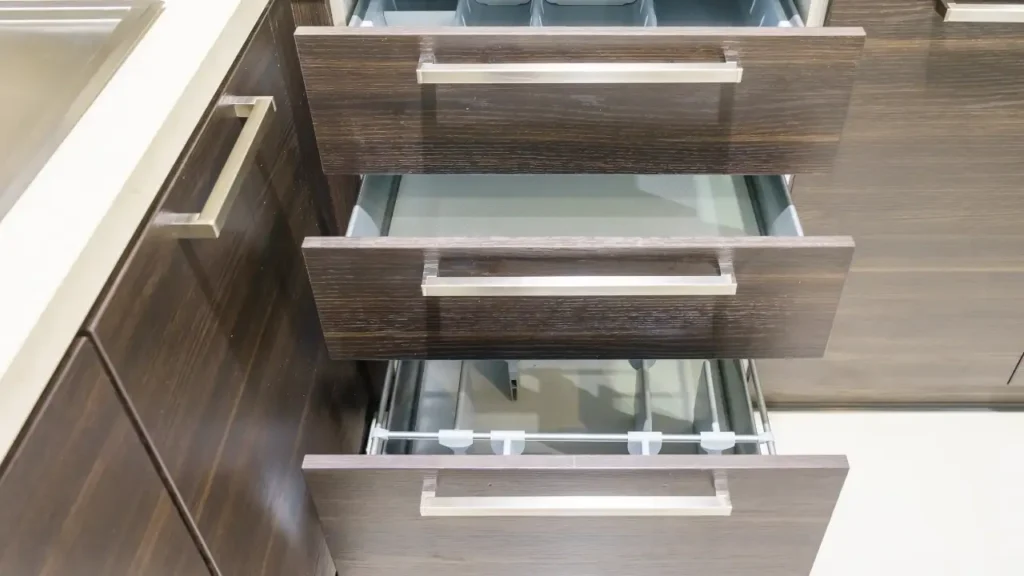
3. Install Drawer Organizers
A large drawer can quickly become a pile of utensils unless everything has a designated area.
Use dividers or adjustable inserts to separate:
- Cooking utensils
- Measuring spoons
- Cutlery
- Gadgets
- Kitchen towels
- Small accessories
Choose an organizer that leaves enough room for the drawer to close properly. Overfilling the drawer defeats the purpose.
4. Use Deep Drawers for Pots and Pans
Deep drawers are often easier to use than traditional lower cabinets for heavy cookware.
Instead of stacking several pans inside a dark cabinet, arrange them by frequency of use. Keep everyday cookware toward the front and specialty pieces farther back.
If possible, use dividers to keep lids and pans from becoming one large pile.
5. Add Shelf Risers
Shelf risers create another level inside a cabinet.
They are especially useful for:
- Plates
- Bowls
- Small jars
- Cans
- Mugs
- Short containers
Rather than stacking everything vertically, a riser lets you see more of what is stored.
6. Use Under-Sink Storage Organizers
The space beneath the sink can become one of the messiest parts of a kitchen because plumbing often creates awkward areas.
Use compact bins, pull-out organizers, or tiered shelves to store cleaning supplies, trash bags, sponges, brushes, and other essentials.
Always measure around the plumbing before buying an organizer.
7. Install a Lazy Susan in Corner Cabinets
Corner cabinets can be difficult to access because items often disappear into the back.
A lazy Susan can make bottles, sauces, oils, and other small products easier to reach.
Choose the size carefully. A rotating organizer that is too large can reduce usable cabinet space instead of improving it.
8. Use the Inside of Cabinet Doors
Cabinet doors provide additional vertical space without taking up floor area.
Narrow door-mounted racks can hold:
- Spices
- Wraps
- Small cleaning supplies
- Cutting accessories
- Lightweight kitchen tools
Check the door clearance before installing anything. The organizer should not interfere with shelves or cabinet hardware.
9. Create a Dedicated Spice Storage Area
Spices are easier to use when they are grouped in one convenient location.
Depending on your kitchen, you could use a shallow drawer, narrow pull-out cabinet, shelf riser, or door-mounted rack.
Arrange spices by frequency of use rather than trying to create a perfectly alphabetical system that becomes difficult to maintain.
10. Add a Narrow Pull-Out Pantry
Small gaps between cabinets and appliances can sometimes become useful storage areas.
A slim pull-out pantry can hold bottles, cans, spices, dry ingredients, or backup supplies.
Measure the opening carefully, including the available depth and door clearance, before choosing this type of storage.
11. Use Stackable Food Containers
Stackable containers can make pantry and cabinet storage more efficient by using vertical space.
Choose container sizes based on what you actually buy and use. Oversized containers may look uniform but can waste valuable shelf space.
Clear containers can be particularly useful when you need to quickly see how much of an ingredient remains.
12. Add Open Shelving Where Practical
Open shelving can provide easy access while making a kitchen feel more open.
It works particularly well for frequently used dishes, mugs, cookbooks, or attractive containers.
However, open shelves require more visual maintenance than closed cabinets. If the shelves become crowded, they can make the kitchen look messier rather than more organized.
13. Use Vertical Dividers for Baking Sheets
Baking sheets, cutting boards, serving boards, and trays can take up excessive cabinet space when stacked horizontally.
Vertical dividers allow these items to stand upright, making individual pieces easier to remove.
This also prevents the common problem of having to lift several heavy trays just to reach the one underneath.
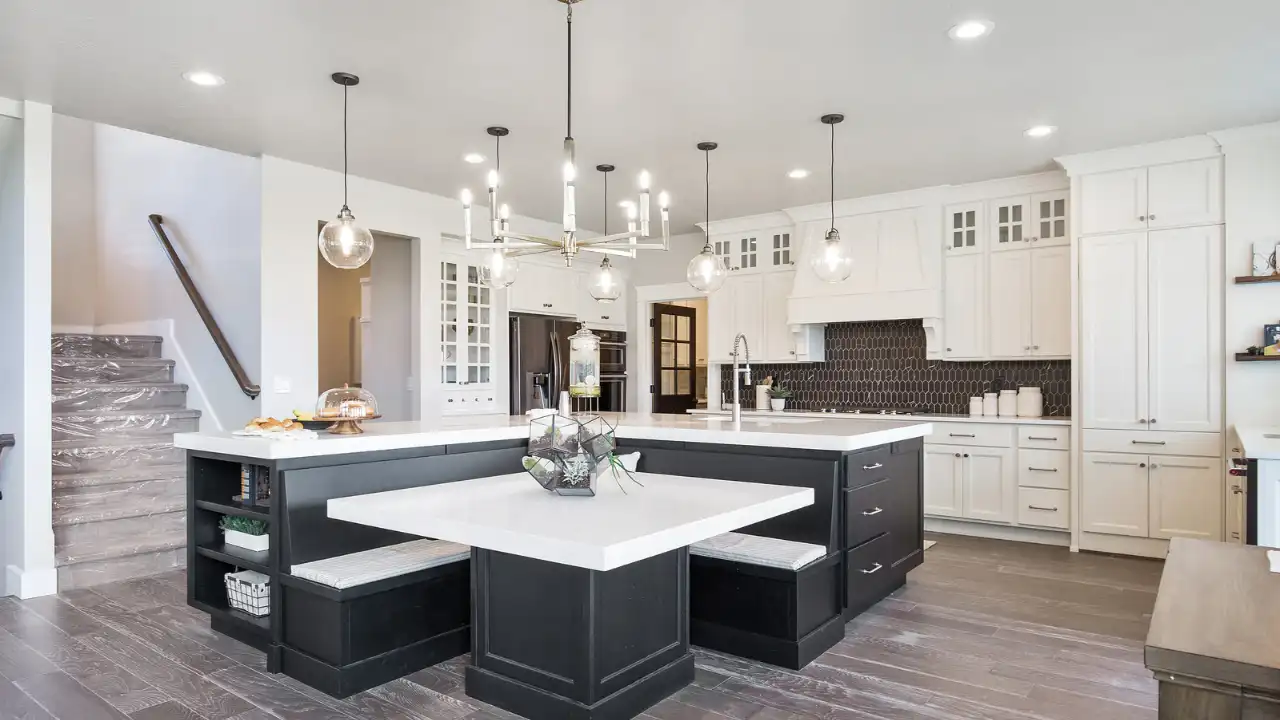
14. Maximize Kitchen Island Storage
A kitchen island can provide much more than countertop workspace.
Depending on its design, use the island for:
- Deep drawers
- Pull-out cabinets
- Tray storage
- Cookbooks
- Small appliances
- Beverage supplies
- Everyday cookware
Keep items related to food preparation close to the work areas where they are used.
15. Create a Coffee Station
If coffee is part of your daily routine, give it a dedicated zone.
Keep the coffee maker, mugs, coffee, filters, sweeteners, and frequently used accessories together.
A coffee station can be located on a countertop, inside a cabinet, or within a built-in nook depending on the available space.
The goal is to keep everything needed for the routine in one convenient area.
16. Use a Dedicated Breakfast Zone
A breakfast zone can make busy mornings easier.
Group commonly used foods such as cereal, oatmeal, bread, spreads, and breakfast dishes in one area.
If children use the kitchen independently, place suitable items at an accessible height while keeping anything requiring supervision elsewhere.
17. Add a Pantry Door Organizer
The inside of a pantry door can provide valuable storage without reducing shelf capacity significantly.
Use it for smaller items such as:
- Snacks
- Spices
- Packets
- Wraps
- Small bottles
- Cooking accessories
Avoid putting too much weight on the door because excessive weight can affect hinges and door operation.
18. Use Clear Bins for Small Packaged Foods
Small packets and individually packaged foods can quickly spread across pantry shelves.
Open-front or clear bins keep similar products together and make it easier to see what you have.
Consider separate bins for snacks, baking packets, lunch supplies, or breakfast items depending on your household.
19. Add Tiered Organizers for Cans and Jars
Tiered organizers create a stepped surface so items at the back are easier to see.
They work well for canned goods, jars, sauces, and other small containers.
Do not stack products higher than is practical to reach. Accessibility matters more than maximum capacity.
20. Use Corner Shelves
Unused corners can sometimes become useful storage areas with the right shelving.
Corner shelves work well for decorative dishes, cookbooks, plants, or frequently used kitchen accessories.
For small kitchens, choose a design that provides storage without making walkways feel narrow.
21. Add Hooks Under Cabinets
The underside or side of suitable cabinets can sometimes support lightweight hooks.
Use them for mugs, towels, measuring tools, or other frequently used items.
Hooks are especially useful when you need small amounts of additional storage without adding another large organizer.
22. Use a Pegboard Storage Wall
A pegboard creates flexible wall storage because hooks and holders can be repositioned as your needs change.
Use one for cooking utensils, measuring tools, lightweight pans, or kitchen accessories.
Keep the arrangement intentional. Too many hanging items can quickly turn a useful wall into visual clutter.
23. Create a Dedicated Baking Zone
Frequent bakers can save time by keeping related ingredients and equipment together.
A baking zone might include:
- Flour
- Sugar
- Baking powder
- Measuring tools
- Mixing accessories
- Baking pans
- Decorating supplies
Keep heavy equipment on lower shelves or in deep drawers where possible.
24. Use Rolling Kitchen Carts
A rolling cart provides flexible storage and can be moved when you need additional preparation space.
Use it for:
- Produce
- Coffee supplies
- Baking ingredients
- Small appliances
- Cookbooks
- Serving items
It is also a practical option for renters because it does not require permanent installation.
25. Add a Slim Storage Cart
A narrow gap beside a refrigerator, cabinet, or island may be suitable for a slim rolling cart.
These carts are useful for bottles, spices, pantry items, cleaning products, or other narrow categories.
Measure the gap at several points because walls and cabinetry are not always perfectly square.
26. Create a Hidden Appliance Storage Area
Small appliances can quickly dominate countertops.
If you have enough cabinet space, create a dedicated appliance zone for items such as:
- Blenders
- Toasters
- Mixers
- Food processors
- Rice cookers
Keep appliances that are used daily in the easiest locations to access.
27. Use Appliance Garages Carefully
An appliance garage can hide frequently used small appliances while keeping them close to the countertop.
However, it still consumes cabinet and counter space. Before adding one, consider whether the appliance is used often enough to justify the dedicated area.
Storage should solve a real problem rather than simply hide visual clutter.
28. Organize Under the Kitchen Sink Vertically
Under-sink cabinets often have unused vertical clearance.
Use stackable bins or tiered shelves to separate cleaning supplies from smaller items.
Keep potentially hazardous cleaning products away from food, and consider child-resistant storage where appropriate.
29. Add Storage Above the Refrigerator
The area above the refrigerator can be useful for items that are not needed every day.
Consider storing:
- Specialty serving pieces
- Large trays
- Backup supplies
- Seasonal kitchen items
Avoid placing extremely heavy objects in difficult-to-reach locations.
30. Use the Space Above Cabinets Carefully
The area above upper cabinets can provide decorative storage, but it is not always practical for everyday items.
If you use it, choose lightweight pieces that are easy to clean.
In many kitchens, leaving this area visually simple can look better than filling it with miscellaneous objects.
31. Create a Backstock Zone
If you regularly buy groceries in bulk, separate unopened extras from the items currently in use.
A backstock zone might hold extra:
- Paper towels
- Canned goods
- Dry ingredients
- Snacks
- Cleaning products
This prevents multiple unopened packages from occupying the easiest-to-reach areas.
32. Use Uniform Containers Selectively
Matching containers can create a clean visual appearance, but you do not need to transfer everything into identical containers.
Use containers where they solve a specific problem, such as:
- Difficult-to-stack packaging
- Open dry goods
- Frequently used ingredients
- Small loose products
Keep original packaging when it provides useful information or when transferring the item would create unnecessary work.
33. Add Hidden Storage in Toe-Kick Areas
Some custom cabinetry can use the space beneath lower cabinets for shallow drawers.
Toe-kick storage can work for flat or less frequently used items such as baking trays or specialty kitchen tools.
Because this is a cabinetry modification, it is generally more appropriate during a remodel than as a simple organizational upgrade.
34. Use Multi-Purpose Storage Furniture
Freestanding furniture can add storage without changing the entire kitchen.
Consider:
- Storage benches
- Kitchen carts
- Freestanding cabinets
- Sideboards
Choose furniture that fits the room’s scale and leaves enough space for comfortable movement.
35. Leave Some Empty Space
It is tempting to fill every cabinet and shelf once you start organizing.
That can make the kitchen harder to use.
A little empty space gives you room to put groceries away, move items around, and accommodate new purchases. It also makes shelves easier to clean and visually calmer.
An organized kitchen should have enough capacity to function—not simply look full.
Kitchen Storage Solutions for Small Kitchens
Small kitchens benefit from thoughtful storage because every cabinet, wall, and countertop has to work harder.
Use Vertical Storage
If floor space is limited, look upward.
Tall shelves, cabinet extensions, wall rails, and vertical dividers can add capacity without taking valuable floor space.
Choose Narrow Organizers
A slim organizer can sometimes be more useful than a large storage bin that consumes too much cabinet space.
Look for solutions designed around the actual dimensions of your kitchen.
Maximize Cabinet Doors
The inside of cabinet doors can hold lightweight items such as spices, wraps, or cleaning accessories.
Use Pull-Out Storage
Pull-outs are particularly useful when cabinets are deep and difficult to access.
Reduce Countertop Clutter
Keep only the appliances and objects you use regularly on the counter.
Everything else should have a designated storage location.
Choose Multi-Purpose Furniture
A rolling cart or compact storage cabinet can provide extra capacity while remaining flexible.
Avoid Oversized Storage Containers
Large containers can actually make a small kitchen less efficient.
Before purchasing, measure both the container and the space where it will be stored.
Key takeaway: A small kitchen usually needs better accessibility, visibility, and vertical organization—not simply more storage products.
Kitchen Cabinet Storage Solutions
Cabinets provide most of the kitchen’s hidden storage, but poor organization can make them inefficient.
Pull-Out Cabinet Organizers
Use pull-outs for deep lower cabinets, pantry cabinets, and awkward storage areas.
Shelf Risers
Risers are useful when a shelf has unused vertical clearance.
Cabinet Door Racks
Use the inside of suitable doors for lightweight items.
Corner Cabinet Solutions
Lazy Susans, corner drawers, and specialized pull-outs can improve difficult areas.
Vertical Dividers
Use vertical dividers for trays, boards, baking sheets, and cutting boards.
Stackable Bins
Bins can group similar products while making small items easier to move.
Adjustable Shelves
Adjustable shelving lets you change cabinet heights based on what you actually store.
Quick Cabinet Storage Guide
| Cabinet Problem | Recommended Solution |
|---|---|
| Deep cabinet | Pull-out shelf |
| Crowded shelves | Shelf riser |
| Awkward corner | Lazy Susan |
| Baking sheets | Vertical divider |
| Small bottles | Door organizer |
| Heavy cookware | Deep drawer |
| Unused vertical space | Stackable organizer |
The right solution depends on the problem. Adding a storage product without addressing the underlying access issue can simply create another layer of clutter.
Kitchen Drawer Organization Ideas
Drawers can be some of the most convenient storage areas in a kitchen when they are properly divided.
Utensil Drawers
Use compartments for spatulas, serving spoons, tongs, peelers, and measuring tools.
Pots and Pans
Deep drawers can store heavier cookware. Use dividers to prevent lids and pans from becoming tangled.
Spice Drawers
A shallow drawer can make spices easy to scan from above. Keep frequently used spices toward the front.
Knife Storage
Use a dedicated drawer insert designed to keep knives separated and secure.
Food Storage Containers
Group containers by size and keep lids together. Avoid keeping dozens of mismatched pieces that rarely get used.
Junk Drawer Organization
Use small compartments for miscellaneous household items, but resist turning the drawer into a place for everything that has no home.
The best drawer organization is based on frequency of use and accessibility, not just appearance.
Pantry Storage Solutions
A pantry works best when its layout reflects how your household shops and cooks.
Create Pantry Zones
Group similar products together, such as:
- Snacks
- Baking
- Breakfast
- Pasta and grains
- Canned foods
- Sauces
- Backstock
Use Clear Containers for Suitable Foods
Clear containers can improve visibility for dry goods such as rice, flour, pasta, or cereal.
They are not necessary for every food.
Add Shelf Risers
Use risers for cans, jars, and smaller containers.
Use Pull-Out Bins
Pull-out bins are particularly useful for deep pantry shelves.
Organize Snacks Separately
A dedicated snack bin prevents small packages from spreading throughout the pantry.
Create a Baking Zone
Keep baking ingredients and equipment together.
Use a First-In, First-Out System
When adding new products, place newer items behind older ones when practical.
This can help you use older pantry items first.
Keep Backstock Separate
Do not allow unopened extras to crowd the everyday food zone.
A well-organized pantry should make it obvious what you have, what needs to be used, and what needs to be replaced.
Kitchen Countertop Storage Solutions
Countertops are valuable work surfaces, so storage should protect them from unnecessary clutter.
Use a Small Appliance Zone
If you use a coffee maker or toaster every day, keeping it accessible may make sense. Less frequently used appliances can go into cabinets.
Add a Countertop Tray
A tray can visually group everyday items such as cooking oils, salt, pepper, or frequently used condiments.
Use Wall-Mounted Storage
Move suitable items from the countertop to a nearby wall when practical.
Create a Coffee Station
Group coffee-related items together instead of spreading them across the kitchen.
Store Cooking Oils Together
A compact tray or dedicated cabinet zone can keep bottles organized.
Keep Only Frequently Used Items Visible
A useful rule is simple: if you rarely use it, ask whether it really needs to occupy prime countertop space.
Under-Sink Kitchen Storage Solutions
The area under the sink is often awkward but can still be highly functional.
Consider using:
- Cleaning supply bins
- Pull-out organizers
- Stackable shelves
- Door-mounted storage
- Recycling containers
- Trash-bag holders
- Sponge and brush holders
Measure around pipes and plumbing fixtures before purchasing anything.
Also keep cleaning chemicals separated from food, cookware, and food-storage products.
Kitchen Wall Storage Solutions
Wall storage can add capacity without taking up cabinet or floor space.
Floating Shelves
Good for dishes, mugs, cookbooks, or decorative storage.
Pegboards
Useful when you want a flexible arrangement for cooking tools.
Rail Systems
Rails can hold hooks, small baskets, or selected kitchen accessories.
Magnetic Knife Storage
A properly installed magnetic strip can keep knives accessible while freeing drawer space.
Wall-Mounted Baskets
Useful for lightweight pantry goods or produce where appropriate.
Hanging Hooks
Hooks work well for mugs, towels, utensils, and other lightweight items.
The important rule is to use wall storage to solve an actual storage problem. Filling an empty wall simply because it is available can make a kitchen feel busy.
Kitchen Island Storage Solutions
If your kitchen has an island, use the interior space intentionally.
Useful options include:
- Deep drawers
- Open shelves
- Pull-out cabinets
- Tray storage
- Cookbook storage
- Appliance storage
- Beverage storage
- Hidden compartments
Keep preparation-related items near the side of the island where food is typically prepared.
For an island used for seating, avoid storage arrangements that make legroom uncomfortable.
Kitchen Storage Solutions for Narrow Spaces
Narrow gaps are easy to overlook, but they can sometimes provide surprisingly useful storage.
Slim Rolling Carts
Good for spices, bottles, pantry supplies, and cleaning products.
Narrow Pull-Out Cabinets
Useful for purpose-built storage between larger cabinets or appliances.
Vertical Shelves
Use narrow shelving for trays, cutting boards, or small kitchen accessories.
Side-of-Cabinet Storage
A suitable cabinet side can support hooks, rails, or narrow shelves.
Refrigerator Gaps
A slim cart can sometimes fit beside the refrigerator, provided there is enough clearance for ventilation and the appliance door.
Narrow Pantry Areas
Use shallow containers and adjustable shelving rather than deep bins that make items difficult to reach.
Kitchen Storage Solutions for Renters
Renters can improve kitchen storage without making permanent changes.
Consider:
- Freestanding shelves
- Rolling carts
- Over-the-door organizers
- Removable hooks
- Countertop organizers
- Tension-style solutions where appropriate
- Portable storage cabinets
Before attaching anything to walls or cabinets, check your lease and the manufacturer’s installation instructions.
A rolling cart is particularly useful because it can provide storage, workspace, and flexibility without permanent construction.
Budget-Friendly Kitchen Storage Solutions
Better organization does not have to mean buying an entire matching container collection.
Declutter Before Buying Anything
First remove expired products, broken tools, unwanted duplicates, and items you never use.
You may discover that you already have enough storage.
Repurpose Existing Containers
Suitable containers you already own can sometimes organize small kitchen supplies.
Use Affordable Bins
Simple bins can group similar items without requiring a major investment.
Add Shelf Risers
One inexpensive riser can make a crowded shelf significantly easier to use.
Use Hooks
Hooks can add small amounts of useful storage without major installation.
Organize One Cabinet at a Time
Instead of trying to redesign the whole kitchen in one weekend, solve the most frustrating area first.
Prioritize the Biggest Storage Problem
If deep cabinets are your biggest issue, solve accessibility before buying decorative countertop organizers.
Remember: A well-organized kitchen does not require expensive matching containers. It requires a system that fits the way you actually use the room.
Kitchen Storage Solutions for Different Kitchen Layouts
Storage should work with the shape of the kitchen.
One-Wall Kitchen
Use vertical storage, upper cabinets, narrow pull-outs, and wall-mounted solutions to maximize limited linear space.
Galley Kitchen
Keep frequently used items within easy reach and avoid storage solutions that make the walkway feel narrower.
Use one side for preparation and the other for cooking or food storage when the layout allows.
L-Shaped Kitchen
Use corner cabinets carefully and take advantage of the two walls for complementary storage zones.
U-Shaped Kitchen
U-shaped kitchens can provide substantial storage, but corner areas need special attention.
Use drawers and pull-outs where deep cabinets become difficult to access.
Open-Concept Kitchen
Because the kitchen is visible from nearby living areas, closed storage can help hide visual clutter.
Use open shelving selectively for attractive items.
Small Apartment Kitchen
Prioritize vertical storage, slim carts, cabinet-door organizers, and multi-purpose furniture.
Avoid oversized organizers that consume more space than they create.
Kitchen Storage Solutions for Different Households
Storage should reflect the people using the kitchen.
Small Households
Avoid excessive bulk storage and keep everyday essentials within easy reach.
Families With Children
Create accessible zones for suitable snacks and everyday items while keeping hazardous products out of reach.
Frequent Home Cooks
Prioritize cookware, knives, utensils, spices, and ingredients around the main preparation areas.
Bakers
Create a dedicated baking zone for ingredients, pans, measuring tools, and equipment.
Meal Preppers
Use deep drawers, food-container organization, and refrigerator-adjacent storage for meal-preparation supplies.
Bulk Shoppers
Separate backstock from everyday supplies so unopened products do not take over the most accessible shelves.
How to Choose the Right Kitchen Storage Solution
You do not need to reorganize your entire kitchen at once.
Use this simple process.
Step 1: Identify the Problem
Is the issue lack of space, poor visibility, difficult access, clutter, or too many duplicates?
Step 2: Measure the Available Space
Measure cabinet width, depth, height, drawer dimensions, gaps, and door clearance.
Measure first, buy second.
Step 3: Check What You Actually Store
Look at the items currently occupying the area.
Do not design storage around an imaginary kitchen.
Step 4: Identify Frequently Used Items
Daily-use items should receive the easiest access.
Step 5: Choose the Simplest Suitable Organizer
If a shelf riser solves the problem, you do not necessarily need a complicated multi-level system.
Step 6: Test the System
Live with the arrangement before buying additional accessories.
Step 7: Adjust After Real Use
If something is difficult to put away, change the system.
Organization should adapt to your habits—not force your habits to adapt to the organizer.
Common Kitchen Storage Mistakes to Avoid
1. Buying Organizers Before Measuring
An organizer that does not fit wastes money and space.
2. Filling Every Inch of Space
Overfilled cabinets are difficult to use and clean.
3. Using Oversized Containers
Large containers can reduce the amount of usable shelf space.
4. Storing Everyday Items Too High
Frequently used products should be accessible.
5. Ignoring Deep Cabinet Problems
Depth is only useful if you can reach the items stored at the back.
6. Creating Too Many Categories
Organization should simplify decisions rather than create dozens of tiny zones.
7. Organizing Only for Appearance
A beautiful pantry is not useful if everyday items are difficult to reach.
8. Keeping Too Many Duplicate Items
Duplicates often consume the easiest storage space.
9. Making Labels Too Complicated
Labels should help people find things, not create extra work.
10. Forgetting Long-Term Maintenance
Every storage system needs occasional adjustment.
How to Keep Kitchen Storage Organized Long-Term
A kitchen does not stay organized automatically.
Do a Weekly Reset
Spend a few minutes returning misplaced items to their zones.
Return Items to Their Zones
When every item has a logical home, cleanup becomes easier.
Review Expiring Foods
Regularly check pantry and refrigerator items so older products do not disappear behind newer purchases.